Why Utility Trench Patches Fail - Beacon NY Medical Office Asphalt Paving Repair
Avello's take
This item looks at why a utility trench patch near a Beacon medical office can sink and how the cause shapes the repair. Loose backfill, wet soil, a damaged base, or a leaking line can all play a part. We explain what patch seams, loose edges, and lingering water can reveal, and why adding asphalt may not address movement below. The article also covers repair choices, from monitoring a stable dip to rebuilding the base or restoring the trench.
For Hudson Valley property owners and managers, the useful distinction is between a surface problem and a support or drainage problem. That matters when planning both the repair and access around a medical office. We see a sensible starting point in dated photos, records of earlier utility work, and a review of where water goes. If the cause remains unclear, pavement cores or small test openings may help shape the repair plan. Patient arrivals, parking, and walking routes belong in that planning as well.
Key Takeaways
- A sunken utility patch can be caused by loose backfill, wet soil, a damaged pavement base, or a leaking line, so added asphalt alone may not stop the movement underneath
- Warning signs worth tracking include cracks along the patch seams, loose edges, water that lingers after nearby pavement dries, and new changes after winter or heavy rain
- Repair options range widely, from monitoring a stable minor dip to milling and replacing asphalt, rebuilding the base, or re-excavating the trench entirely
- This city's sloped lots mean the finished repair grade has to work with the whole drainage path, not merely appear level at the patch itself
- Mapping patient arrivals, parking, and pedestrian routes before any trench repair begins at a medical office helps keep the facility accessible throughout construction
A dip near a medical office entrance is never just a cosmetic nuisance. It can mean loose soil, trapped water, or a damaged base working beneath the surface, and figuring out which one is happening determines whether a quick patch will hold or fail again within a season.
Why That Trench Patch Keeps Sinking
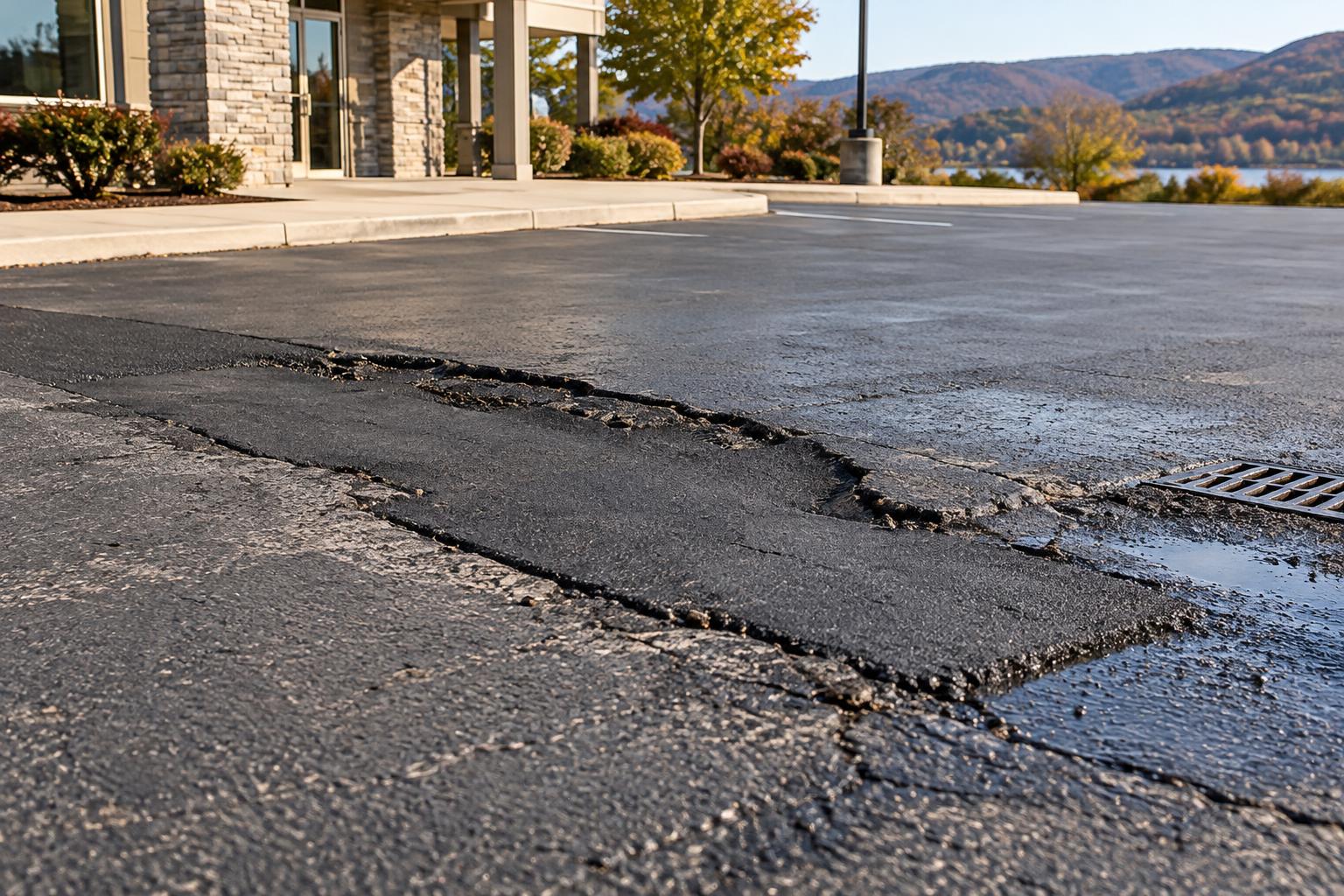
A utility trench disrupts ground that may have supported a parking lot for years. Once a water, sewer, electrical, or communications line goes in, the trench has to be filled back up, and if that backfill is placed too deep in a single layer, contains the wrong material, or gets compacted at the wrong moisture level, it tends to compress later under the weight of vehicles. Poorly compacted backfill combined with wet or frozen conditions is a known cause of settlement in utility-cut pavement restorations.
The cause is not always about compaction alone. A leaking pipe can slowly carry fine soil out of the trench, while rainwater that slips through an open pavement joint can soften the base from below. Weak support next to a utility structure can also create a localized dip even when the rest of the trench stays solid.
At a medical office, treating the dip with another layer of asphalt without identifying the cause leaves the underlying movement in place. Trench restoration works best as a support-and-drainage repair first, with the asphalt work planned around whatever routes the practice needs patients to use safely.
Signs the Problem Isn't Just Cosmetic
A shallow, smooth dip with intact asphalt reads very differently from a cracked, crumbling patch with open seams. Learning to read those differences early can save a property manager from a larger repair bill down the road.
Warning signs worth documenting
Certain details separate an old, settled-but-stable depression from one that is still actively failing. Watch for these conditions and record them with dates and photos whenever possible:
- A smooth, shallow dip with otherwise intact asphalt, which may simply reflect past settlement that has stopped
- Open seams running along both sides of the patch, a sign water may be working its way between old and new pavement
- Cracked, loose, or crushed pavement edges, which can mean the damage extends past the original patch
- Water that lingers in the area after nearby pavement has dried, pointing to a drainage low point rather than a simple surface flaw
- Visible wetness during dry weather, or soil washing out of the patch, which can indicate a leaking utility line
- New changes appearing after winter, heavy rain, or heavy delivery traffic, suggesting the ground underneath is still shifting
Photographs taken from the same spot over time, along with records of when the utility was installed and whether any earlier patch was labeled temporary, build a useful case file. A straightedge and basic elevation measurements can map the shape of the dip, but surface appearance alone cannot reveal what is happening below.
Testing what's hidden below the surface
When the visual signs raise questions, a contractor may recommend pavement cores or small test openings before settling on a repair plan. These checks can reveal asphalt thickness, wet aggregate, or loose fill that would otherwise stay hidden from view. Keep patients clear of any test openings, and have suspected utility leaks evaluated by the correct utility owner or qualified trade before paving work moves forward, since cutting into an active leak only complicates the repair.
Matching the Fix to What's Moving
Some settled patches need digging all the way down to the pipe, while others can be solved with a thin layer of fresh asphalt. The right answer depends on whether the support below is stable, whether water is part of the problem, and whether the finished surface can drain properly once the work is done.
From monitoring to full re-excavation
Repair options generally fall along a spectrum, and matching the method to the actual cause avoids wasted cost and repeat failures:
- Monitoring fits a minor, stable depression with no loose material, troublesome edges, or drainage concerns, paired with a set review date rather than an assumption that nothing will change
- A temporary surface correction can smooth an uneven transition while investigation or seasonal timing delays a permanent fix, as long as it is clearly labeled temporary
- Milling and replacing the affected asphalt works for a shallow surface defect sitting over otherwise sound supporting material
- Removing pavement and rebuilding the base addresses damaged asphalt sitting over weak or saturated aggregate, when the deeper trench fill is still in decent shape
- Re-excavating and restoring the trench becomes necessary when loose deeper fill, repeat settlement, voids, or a utility defect are involved
Why a thin leveling layer isn't always enough
A thin leveling layer only works when there is reliable support underneath and enough room to build proper transitions at the edges. A very thin edge can crack and break away under turning tires or a snowplow blade, undoing the repair within a single winter. Raising a patch without checking the surrounding grade can also redirect water toward an entrance or create an awkward crossing next to an accessible parking aisle. Repair boundaries should follow sound pavement and workable excavation space rather than simply tracing the outline of the visible dip, and any deeper excavation needs to protect the utility bedding, the material placed directly around the pipe or conduit.
Slopes, Drainage, and the Paving Season
This city's hillside geography means plenty of parking lots and driveways carry runoff downhill across buried utility lines. A trench patch sitting a little too high can act like a small dam; one sitting a little too low can turn into a collection channel that holds water against the pavement.
Why grade must fit the whole drainage path
The finished grade at a trench repair has to work with the entire drainage path across the property, while also appearing level immediately around the patch. Water can also move through the backfill itself, below the visible surface, and on a sloped site that underground path may carry moisture from higher ground directly into the repaired area. If wet material keeps reappearing after excavation, that pattern often points to a drainage issue that needs its own investigation rather than another round of replacing the same softened aggregate.
Weather windows versus foundation readiness
Hudson Valley freeze-thaw cycles make moisture problems worse. Water trapped in frost-susceptible soil can contribute to heaving during winter, followed by weaker support once the ground thaws in spring, which makes spring thaw a useful time to watch for recurring dips even though it is a poor time for permanent paving. The region's usual April through November paving season works best as a planning window rather than a guarantee that any given day is suitable, since air and pavement temperatures, rainfall, base condition, and the time available for proper compaction all affect whether permanent paving makes sense that day. A temporary correction can bridge the gap through unsuitable conditions, with the permanent fix scheduled once both the weather and the foundation are ready.
Keeping Patients Safe During Repair
A trench repair at a medical office carries different stakes than one in an empty storage lot. Wheelchairs, walkers, and patient transport vehicles all depend on a predictable, obstacle-free path, which makes planning the construction sequence around daily operations just as important as the paving work itself.
Mapping arrivals, parking, and pedestrian routes
Before construction starts, map out patient arrivals, staff parking, delivery schedules, and pedestrian travel paths, then identify which routes can stay safely separated from the excavation and equipment. Mapping the patient route from the parking stall all the way to the entrance, and scheduling the work in phases, helps preserve a usable path throughout construction. Giving clinical leadership the phased access plan before the contractor mobilizes equipment allows staff to redirect patients calmly instead of improvising on the day work begins. A loose board or an unplanned covering should never serve as a patient crossing; any temporary route needs to handle the expected loads and users with secure transitions, and one field contact should be available to explain schedule changes as they happen.
What belongs in the written repair scope
A written scope works best when it spells out exactly what will happen rather than offering a vague line item for "patch repair." A thorough scope should cover:
- Repair limits marked on a sketch or photograph, distinguishing confirmed work from possible additional work
- Removal depth, where it has already been established, along with proposed replacement materials and compacted thicknesses
- Compaction requirements for each layer of backfill and base material
- Drainage elevations, joint treatment, and how the new surface will transition into the surrounding pavement
- Utility coordination, including locating services and protecting existing lines during excavation
- How concealed conditions discovered during the work will be documented, approved, and priced
Spelling out these details in advance protects both the property and the contractor if excavation reveals something unexpected below the surface, and it gives the facility a clear basis for approving any added cost.
A Lasting Patch Starts Beneath the Surface
A sunken trench patch is a visible symptom of something happening out of sight, whether that is loose backfill, a water path, or a weakened base. Treating only the surface, patch after patch, rarely solves the real problem and often costs more over time than addressing the cause directly.
The more durable path starts with reading the damage carefully, matching the repair depth to what is actually moving, accounting for how water travels across and through a sloped property, and building the construction sequence around the people who need safe, predictable access to the building every day. Getting those pieces right the first time means fewer repeat repairs and a smoother, safer route for patients and staff alike.
For a property manager weighing the next step, a clear written scope and an honest look at what lies beneath the pavement make the difference between a quick cover-up and a lasting fix. Avello Asphalt & Construction provides a professional pavement assessment as a practical next step before scheduling any trench repair work.
Company: Avello Asphalt & Construction Corp City: Poughkeepsie Address: 141 Daley Road Website: https://www.avelloasphalt.com
Mentioned in this blog post: Poughkeepsie service area, Beacon service area
Have a property like this?
Tell us what you're seeing. We'll walk the site, explain the options plainly, and give you a clear scope.
Related Avello guidance
More blog posts
- Speed Bumps at Housing Authorities: Placement & Plow Clearance - Poughkeepsie
- Does Restriping Fix ADA Bank Parking? - East Fishkill Paving Contractor Explains
- 10-Year Asphalt Pavement Plan for Office Parks - Poughkeepsie Paving Contractor
- Can a Medical Office Stay Open During Paving? Fishkill Contractor Explains