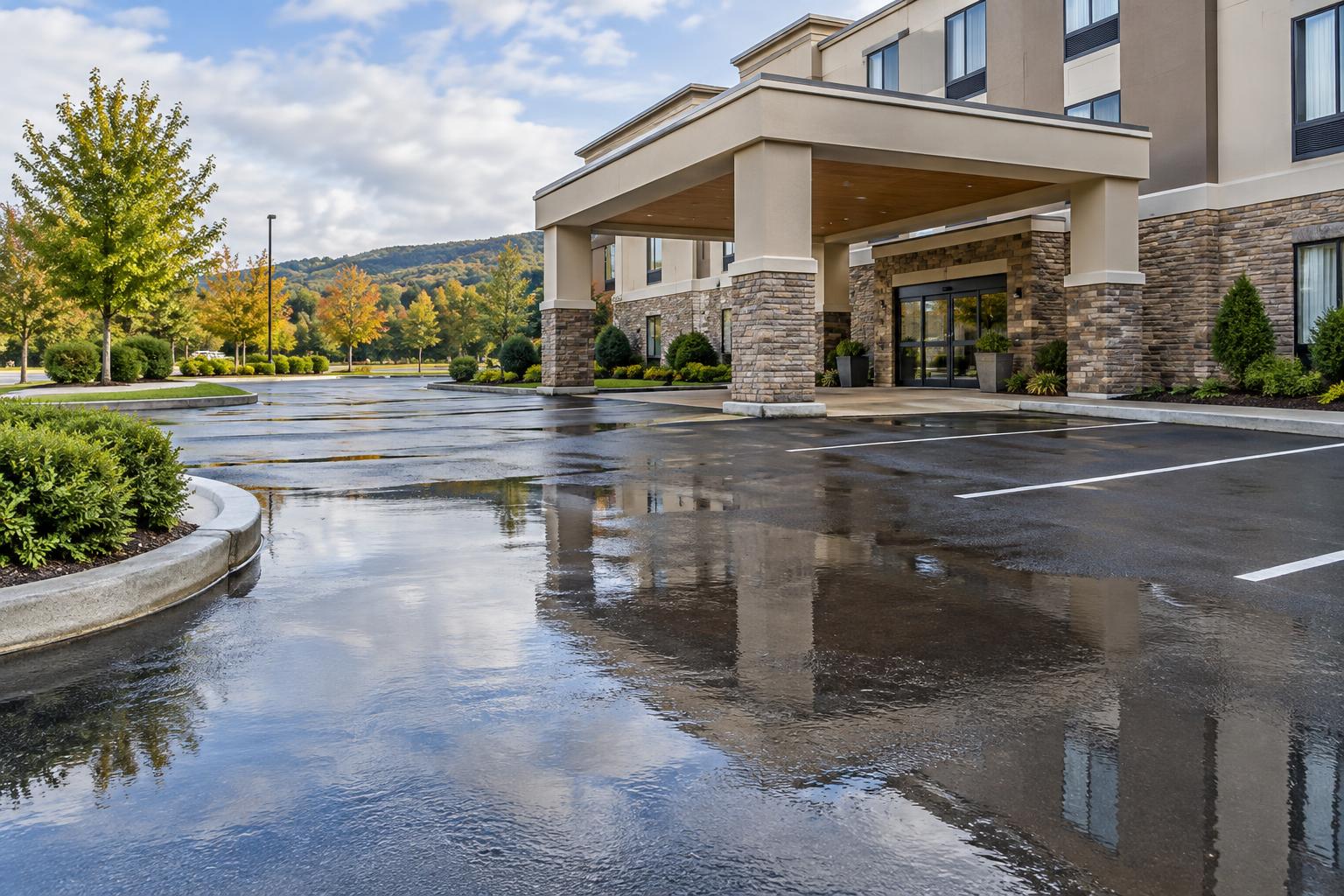
Hotels in Pleasant Valley fix storefront ponding by identifying where water comes from, measuring pavement elevations, and restoring a dependable route to an approved drainage outlet. The right repair may involve cleaning an existing drain, regrading a localized depression, rebuilding wet pavement, or installing a properly designed drainage structure. Adding asphalt without checking doorway and sidewalk elevations can make the problem worse. This guide explains how to diagnose the cause, compare practical options, phase work around hotel operations, and document a clear scope that accounts for Hudson Valley weather and guest access.
How do hotels in Pleasant Valley fix water ponding in front of storefronts?
Hotels fix storefront ponding by correcting the path water takes, not simply covering the puddle with fresh asphalt. First, determine whether the problem is a blocked drain, a pavement depression, runoff arriving from uphill, or an outlet that cannot carry water away. Then select the smallest practical repair that addresses the full cause while protecting doors, sidewalks, and guest access.
A hotel frontage may include a lobby, restaurant, café, or leased shop, each with a different threshold elevation. That makes this more than an ordinary parking-space repair. Raising the pavement beside one entrance can send water toward the next storefront or create an awkward transition for luggage carts and wheelchair users.
The usual solution is some combination of restoring existing drainage, reshaping the asphalt surface, and repairing any weakened material underneath. Where gravity cannot move runoff away across the surface without compromising entrance elevations, a drainage inlet or channel may be appropriate. Any new collection point needs a verified, lawful discharge location.
At Avello, we approach drainage correction and parking lot repair as connected tasks. A sound pavement surface needs support beneath it and somewhere for water to go. For a Pleasant Valley hotel, the useful starting question is therefore not “How much asphalt fills this puddle?” but “What route will this water follow after the work is complete?”
Read the puddle, pavement, and outlet before choosing a repair
Observe the frontage during rain and again afterward, when it is safe to do so. Record where water arrives, where it stops, and whether the puddle drains slowly or remains after surrounding pavement dries. Photographs from the same locations help distinguish a persistent low spot from a drain temporarily covered by leaves.
Next, examine the pavement when it is dry. An intact surface with a shallow depression may need elevation correction rather than extensive reconstruction. Connected cracks, loose aggregate, sunken patch edges, or movement under ordinary traffic suggest the problem extends below the surface and deserves further investigation.
- Sediment lines showing the puddle boundary and the direction runoff traveled.
- A drain grate sitting higher than the surrounding asphalt, leaving water trapped beside it.
- Downspouts, canopy drains, or irrigation discharging directly onto the walking route.
- Cracks and settlement concentrated near a drainage structure or previous repair.
- Water returning from uphill pavement even after the immediate entrance area is cleared.
A contractor should measure elevations at doors, sidewalks, curbs, low points, and drainage structures. These measurements show whether there is enough fall—the drop in elevation needed for gravity drainage—to make a surface repair work. Looking across the lot is not a reliable substitute, especially where small changes matter at a doorway.
Inspection should follow the drainage system beyond the grate. A clean inlet can still connect to an obstructed pipe or a submerged outlet. Where the condition is uncertain, cleaning, pipe inspection, or limited exploratory work may be needed before a final repair design is settled.
To understand the work behind these options, compare Avello’s drainage correction, parking lot repair services.
Match the repair to the cause, not just the wet footprint
The best option depends on pavement support, available elevations, and the receiving drainage system. A small puddle can require work beyond its visible edge because the surrounding grades control its escape route. Conversely, a broad wet area does not automatically mean the entire frontage needs replacement.
- Clean and restore existing drainage when debris or sediment prevents an otherwise suitable inlet, pipe, or outlet from working. Confirm flow afterward rather than assuming cleaning resolved the problem.
- Mill and repave a localized depression when the supporting pavement is sound but the surface shape is wrong. Milling removes asphalt so new pavement can establish drainage without unnecessarily raising the frontage.
- Rebuild a localized pavement section when wet or unstable material beneath the asphalt is contributing to settlement. Remove unsuitable material, restore support, and correct the water source before placing new asphalt.
- Reset or repair a drainage structure when its elevation or condition prevents water from entering properly. Coordinate the surrounding pavement shape so runoff reaches the grate.
- Install a trench drain or catch basin when surface grading alone cannot provide a suitable route. A trench drain is a narrow collection channel; a catch basin is a collection structure connected to an outlet.
- Intercept uphill runoff when water crossing a larger portion of the property overwhelms the entrance area. A designed swale, channel, or drainage structure can redirect it before it reaches the storefront.
An overlay across the frontage is appropriate only when the underlying pavement and proposed elevations support that choice. It should not bury curbs, reduce doorway clearance, or shift ponding to a neighboring entrance. Thin asphalt feathered to nothing at a door also creates a vulnerable edge rather than a durable transition.
Some sites need a drainage designer or engineer, particularly where several drainage areas converge or a new outlet is proposed. For a constrained hotel frontage, measured grades and a coordinated design are more useful than choosing a drain from a catalog.
Account for Pleasant Valley slopes, winter weather, and discharge rules
On a sloped Pleasant Valley property, the storefront puddle may begin well uphill of the storefront itself. Parking aisles, landscaped banks, and roof leaders can concentrate runoff into a narrow entrance area. The repair must consider that contributing area, not just the final few feet beside the door.
Hudson Valley freeze-thaw cycles make persistent wet spots especially troublesome. Water entering cracks or saturated support materials can contribute to movement as temperatures change. During spring thaw, softened ground and snowmelt may reveal drainage problems that were less visible during dry summer weather.
Snow storage deserves a place in the plan. A pile that melts across the storefront route can recreate icing even after a pavement depression is corrected. Plowing routes, snow-storage locations, and salt-laden runoff should be considered when choosing drain placement and planning seasonal maintenance.
Drain frames and grates should be suitable for the traffic and winter equipment that cross them. Raised edges can interfere with plowing, while sediment and winter debris can reduce collection capacity. The hotel’s snow contractor should know where new drainage features are located and which areas must remain clear.
April through November is the usual regional planning window for asphalt paving, not a promise that every day is suitable. Air and surface temperatures, rainfall, ground condition, and the planned asphalt placement determine the workable schedule. Spring investigation may proceed before conditions are suitable for permanent paving.
Before changing a discharge point or connecting to roadside drainage, confirm requirements with the Town of Pleasant Valley building department and the appropriate engineering or highway authority. County or state review may also apply, depending on the road and outlet involved. A culvert is not automatically the answer; it needs a suitable crossing location, capacity, and permitted destination.
Sequence frontage work around guests, tenants, and deliveries
Hotel drainage work should begin with an access plan, not demolition. The general manager, maintenance team, and affected tenants should agree on which doors and walking routes remain available during each phase. Guest access must be understandable from the parking area, including after dark and during a staff shift change.
- Confirm elevations, the drainage outlet, utility locations, required approvals, and the work limits before excavation.
- Establish barriers, directional signs, alternate guest routes, and designated delivery arrangements before closing the work area.
- Complete pipe, inlet, outlet, and below-ground repairs before final pavement grading. Where practical, work from the receiving end toward the collection point so the outlet is available.
- Remove worn pavement and unsuitable supporting material, then prepare and compact the replacement base.
- Place and compact asphalt to the planned elevations, completing transitions at sidewalks, doors, curbs, and adjoining pavement.
- Check drainage behavior and finished transitions, restore markings where affected, and reopen each area when the contractor determines it is ready.
Phasing may mean working on one storefront bay while directing guests through another suitable entrance. It may also mean keeping the main arrival route open while repairing a separate runoff source uphill. Temporary routes need to be usable and appropriately accessible, not simply marked with an arrow toward stairs or uneven ground.
Coordinate noisy work, restaurant deliveries, group arrivals, and waste collection with the actual construction sequence. Avoid promising reopening solely by the clock; asphalt temperature, weather, compaction, and any concrete work can affect readiness. Keep a weather contingency in the operating plan so a delayed phase does not leave staff improvising guest directions.
Put elevations, drainage connections, and verification in the written scope
A clear scope explains the intended drainage result and the work needed to achieve it. “Patch puddle at entrance” is not enough because it leaves the repair boundaries, outlet, and finished elevations undefined. The hotel should be able to understand where the water will go and how the work connects to the existing property.
- The observed ponding cause, the proposed correction, and any conditions that still require investigation.
- A sketch or marked plan showing removal limits, drainage structures, flow directions, and the receiving outlet.
- Critical finished elevations at storefront thresholds, sidewalk transitions, curbs, grates, and adjoining pavement.
- Excavation and base preparation requirements, asphalt materials and placement requirements, and treatment of joints and edges.
- Drain and pipe details, traffic suitability, connection methods, and responsibility for confirming outlet condition.
- How accessible routes, door clearance, and required access will be maintained during work and after completion.
- Utility coordination, permits, debris removal, protection of adjacent features, and restoration of affected markings or landscaping.
- Phasing, weather allowances, reopening criteria, drainage verification, and the process for authorizing unforeseen work.
If unsuitable material may be found beneath the pavement, identify how that discovery will be documented and priced before additional work proceeds. The same applies to damaged pipe uncovered during excavation. Clear assumptions let the owner distinguish planned correction from work that depends on hidden conditions.
Verification should be specific but realistic. Survey checks and a controlled water test can help confirm surface flow and reveal local depressions, but a hose does not reproduce every storm. Where system capacity is part of the problem, design calculations and outlet evaluation matter alongside the finished-surface check.
Prepare the property and avoid repairs that move the puddle elsewhere
The owner or manager can improve planning by gathering information the contractor cannot see during a dry-weather visit. Include photographs after rain, tenant reports, drain-cleaning history, roof-drain changes, and any available site drawings. Note whether the puddle changes with snowmelt, irrigation, or unusually heavy rainfall.
- Mark affected doors and provide dated photos of standing water.
- Share drainage drawings and known private utility locations.
- Identify guest, staff, delivery, and required access routes.
- List tenant operating hours and scheduled group arrivals.
- Arrange vehicle relocation, irrigation shutoff, and movable-item removal.
- Assign one property contact for daily coordination and approvals.
The most common mistake is adding material before measuring elevations. A raised patch can act like a small dam, trapping water against the sidewalk or redirecting it toward another tenant. Another mistake is installing a drain without checking where its pipe ends or whether that outlet can receive the flow.
Surface repairs also disappoint when softened supporting material remains underneath. If settlement is active, reshaping the top alone may not hold its intended grade. Likewise, correcting pavement while leaving a downspout aimed at the doorway addresses only part of the problem.
Finally, do not treat storefront access as a leftover construction detail. A convenient drainage slope is not acceptable if it creates an unsuitable pedestrian transition. Pavement grades, drainage placement, and entrance requirements should be resolved together before the crew begins.
Check the finished drainage and maintain the corrected frontage
At completion, walk the frontage with the contractor and review the intended flow path. Look at doorway transitions, grate seating, pavement joints, and any areas where runoff changes direction. Confirm that construction debris has been removed from drainage structures and that maintenance staff understand the new arrangement.
After the next rain, photograph the same viewpoints used before construction. Note whether water reaches the intended inlet and whether any accumulation remains at adjacent entrances. A comparison is more useful than relying on memory, especially if the original problem appeared only under particular runoff conditions.
Good asphalt parking lot maintenance guidelines include keeping inlets clear, checking visible outlets where safely accessible, and inspecting the frontage after winter. Staff should also report loose grates, new settlement, displaced downspouts, and recurring sediment deposits. Drainage maintenance supports the repair; it does not replace correction of a persistent grading problem.
Keep the final scope, drainage sketch, photographs, and maintenance notes with the property records. They help future managers and snow contractors avoid changes that recreate the original ponding. For hotels, the goal is a frontage that works as a connected system: pavement, drainage, storefront entrances, and everyday operations.
To discuss drainage correction or parking lot repair for your Pleasant Valley hotel, call Avello Asphalt & Construction at 845-454-3650 or request a free quote.
2027 Commercial Pavement Budget Planner
A contractor-built worksheet for budgeting parking lot and roadway work: cost ranges by scope, a condition-scoring sheet, phasing guidance, a bid-comparison checklist, and the questions to ask before you sign.
Common questions
Can we fix a storefront puddle by adding asphalt to the low spot?+
Sometimes, but only after checking the surrounding elevations and pavement support. Added asphalt must give water a continuous route away without raising the surface too close to doors or creating an unsuitable sidewalk transition. Milling and repaving may be better because it allows reshaping without increasing the overall height. If the supporting material is wet or unstable, that condition also needs correction.
Is a trench drain better than regrading outside a hotel entrance?+
Neither is automatically better. Regrading can be a straightforward solution when sufficient elevation difference exists and runoff has a suitable destination. A trench drain may fit a constrained frontage where doors and sidewalks limit surface changes. It still needs a designed outlet, suitable grates, and cleaning access. The choice should account for guest travel, luggage carts, vehicle crossings, snow removal, and the amount of incoming runoff.
Can the hotel and its restaurant stay open during drainage repairs?+
Often they can, provided the work can be separated from occupied areas and suitable access remains available. The plan should identify alternate entrances, pedestrian routes, delivery arrangements, and construction barriers for each phase. Some individual doors or frontage areas may need temporary closure. Coordinate those limits with hotel staff and tenants before work starts, and avoid assuming guests can use an alternate route that has not been evaluated.
Would culvert installation solve ponding at a Pleasant Valley hotel?+
A culvert carries water beneath a driveway or similar crossing, so it fits only certain site layouts. It will not correct every storefront depression or blocked inlet. First establish the runoff source, crossing needs, available elevations, and receiving outlet. Work involving roadside ditches or public drainage may require review by the town and the relevant road authority. A designed inlet, surface regrading, or upstream interception may be more appropriate.
When should we schedule a permanent repair in the Hudson Valley?+
Plan around the usual April–November paving season while allowing for actual weather and ground conditions. Spring observations can be useful because thaw and snowmelt expose drainage patterns, but saturated support material may need attention before paving. Cold or wet conditions can limit asphalt placement. The best schedule combines suitable construction conditions with a workable hotel access plan, rather than selecting a date based only on occupancy.
How can we tell whether the repair worked after construction?+
Review the finished elevations and intended flow path with the contractor, then observe the frontage during subsequent rain. Compare dated photographs with the original ponding area and check nearby entrances for redirected runoff. Confirm that inlets remain clear and water reaches the intended outlet. A controlled water test can identify local surface issues, but evaluating drainage capacity may require design review rather than a hose test alone.
Avello provides free commercial pavement assessments across the Hudson Valley. No obligation — you keep the documentation either way.