Crack Filling
Hot-applied rubberized crack sealant for working cracks in asphalt parking lots and roads — keeps water out of the base before potholes and alligator cracking take hold.
- Licensed & fully insured in NY
- Free written scope & budget range
- Commercial · Municipal · Industrial
Get a free Pavement Risk Snapshot
Answer a few questions about the property and get a prioritized repair-vs-resurface plan with a realistic budget range. No site visit, no obligation.
Free · 2 minFree Pavement Risk SnapshotAvello's process
- Inspect crack network and route hairline cracks if needed
- Clean cracks with high-pressure air and heat lance
- Heat sealant to ASTM D6690 application temperature (380°F+)
- Apply hot rubberized sealant flush to surface
- Squeegee for clean band and dust with toner if needed
- Cure and reopen to traffic
- Written scope with quantities, materials, and a realistic budget range you can hand to ownership, a board, or a finance director
- Pre-construction notice package with dates, affected areas, and access maps so tenants, staff, or residents are never surprised
- Post-work walkthrough with photo documentation and a punch list closed out before final invoicing
What you get
- Hot-applied ASTM D6690 rubberized sealant
- Cleaned and properly prepared crack channels
- Flush, sealed surface ready for traffic
- Linear-foot documentation of work performed
- Workmanship warranty on the sealant
- Photo-documented before-and-after record for your maintenance and liability file
- A prioritized follow-up plan showing what should be scheduled next season and roughly what it will cost
Warning signs you need this work
- Linear cracks wider than 1/4" but narrower than 1"
- Water visibly entering cracks after rain
- New cracks forming parallel to existing ones
- Cracks at transverse joints in newer pavement
- Edge cracks at curb lines
- Water standing on the pavement more than 24 hours after rain
- Repairs made in the last two seasons that are already failing again
Ideal for
- Lots in years 3–7 of life with mostly intact pavement
- Properties on a preventive-maintenance budget
- Municipal road segments between resurfacing cycles
- Sites scheduled for striping or overlay work
- Owners and managers who need a written, defensible scope rather than a one-line verbal number
- Properties that must stay open and accessible while the work is completed
FAQ
When is crack filling not enough?+
Once cracks branch into alligator patterns or pavement is spalling, sealant won't stop the failure. Those areas need patching or overlay.
How long does crack sealant last?+
3–8 years depending on traffic, climate, and prep quality.
Cold pour vs hot pour?+
Avello uses hot-applied rubberized sealant only. Cold pour is a homeowner product and fails within a season under commercial loads.
Can you stripe over fresh sealant?+
Yes — after 24 hours and a light toner application.
Crack Filling: illustrative project scenarios
Hypothetical town-level write-ups showing the scope, specifications, phasing and outcomes Avello builds into this work.
See all town-level project scenarios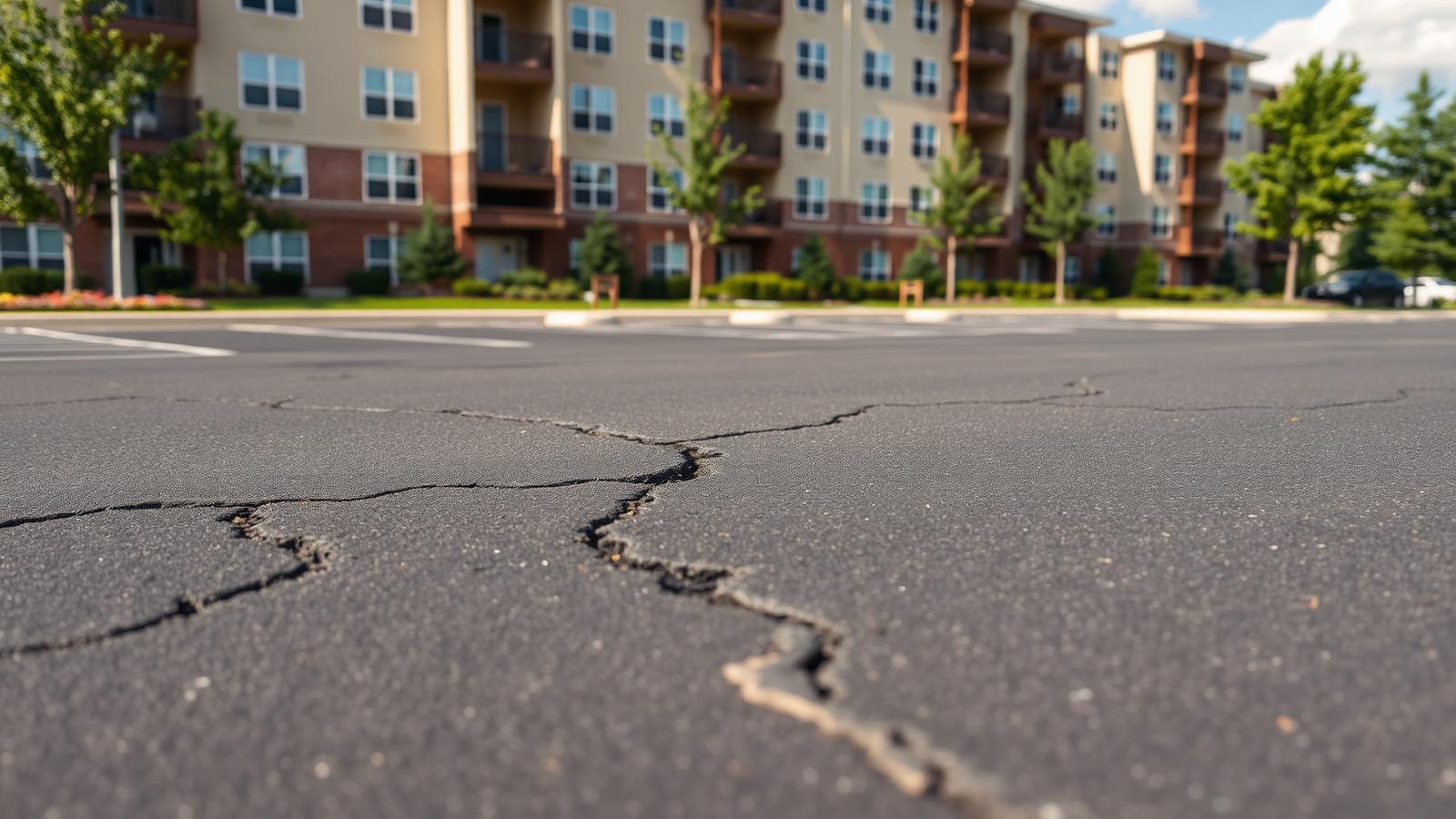
Crack Filling across the Hudson Valley
Avello provides crack filling for commercial and municipal property owners across 359 New York towns and cities.