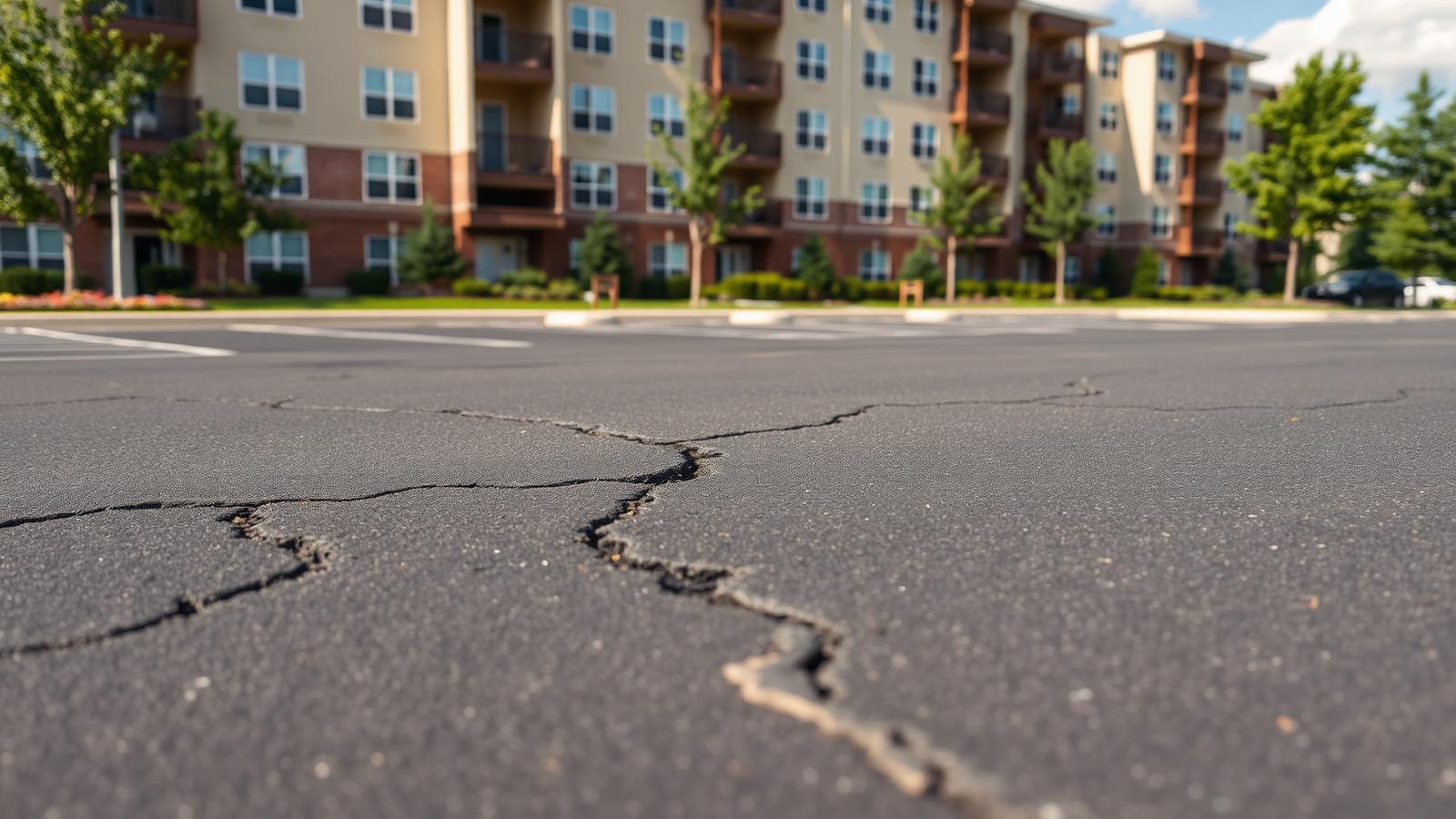
How a 340-unit East Fishkill community could buy seven more years of pavement
A worked example: a routed and sealed crack program priced at a fraction of the resurfacing it defers.
Have a property like this in East Fishkill?
Three quick steps. Free site walk, written scope, no obligation.
Illustrative scenario. This is a worked example of the scope, sequencing and specifications Avello uses on this type of property — written so you can see exactly how your project would be planned and priced. It is not a record of a specific named client project.
The situation we'd be walking into
Picture this: Ownership had a resurfacing proposal in hand and assumed the lot was finished. The pavement was structurally sound — the cracking was thermal, not load-related — but water was getting into the base through open cracks every freeze-thaw cycle. Left another two winters, the resurfacing assumption would have become true.
Example property profile: 340-unit apartment community, East Fishkill NY
Crack sealing is the least glamorous and most profitable thing a multifamily property can do to its pavement. It does not look like an improvement when it is finished — the lot looks the same, with black lines across it. What it actually does is stop water from reaching the base, which is the only thing that determines whether the property repaves in seven years or in eighteen.
This scenario shows how Avello Asphalt & Construction would run a preservation program at an East Fishkill apartment community: how we decide which cracks to seal and which to repair, why the preparation matters more than the sealant, how the work is scheduled around resident parking that is full every night, and what the program looks like over a decade.
It is an illustrative worked example of work Avello performs, not a record of a specific named client project.
If that sounds like your property, the rest of this page is the plan we'd put in writing for you — free, before you commit to anything.
Deciding what to seal and what to repair
Not every crack should be sealed. Working cracks — clean-edged transverse and longitudinal cracks in otherwise sound pavement — are ideal candidates, and sealing them delivers the highest return of any pavement dollar. Interconnected alligator cracking is not a candidate: it is a symptom of base failure, and sealing it just puts rubber over a structural problem.
On the walk we mark the property into three categories: seal, repair, and monitor. You get linear footage for the seal areas, square footage for the repair areas, and a note on the monitor areas explaining what we are watching and what would move them into a treatment category next year.
- Working cracks between roughly a quarter inch and one inch: seal
- Hairline cracking in sound pavement: monitor, do not seal
- Interconnected alligator cracking: full-depth repair, not sealant
- Cracks at basin rims and pavement edges: highest priority to seal
- Failed prior sealant or cold patch: remove and redo properly
Why preparation decides the result
Most crack sealing that fails, fails because of preparation, not product. Sealant applied into a crack that still holds dirt, vegetation or moisture will not bond, and it debonds within a season, leaving a channel that is worse than the original crack.
Our preparation sequence is routing where the crack condition justifies it, followed by compressed air cleaning, followed by immediate sealing while the crack is clean and dry. Hot-applied rubberized sealant is installed to a controlled band width and squeegeed flush so it does not track under tires or scalp under a plow blade in winter.
Scheduling around a lot that is full every night
Multifamily parking is the hardest scheduling problem in commercial pavement work because the lot is full precisely when residents are home. The plan has to be small-bite, predictable and communicated well.
We work in small sections, typically a bay or two at a time, and each section is sealed and back in service within hours rather than days. Sealant is walkable almost immediately and drivable after a short cure. We supply the resident notice, the cone and sign plan, and a section map for the property manager to post, so residents know which bays are affected on which morning.
- Bay-by-bay sections returned to service the same day
- Resident notice and section map supplied by us for posting
- Work performed during weekday daytime hours when the lot is emptiest
- Emergency vehicle and refuse access maintained throughout
- Rescheduling protocol communicated in advance for rain days
The ten-year preservation picture
Preservation is a program, not a project. Sealant has a service life, generally in the three to five year range depending on movement and exposure, and new cracks continue to form as pavement ages. A property that seals once and stops has bought a few years; a property that seals on a cycle can realistically push a repave out by a decade.
The program we recommend pairs sealing on a three-year cycle with an annual inspection, targeted repair of any area that has moved into structural failure, and a re-stripe when the markings fade. The combined annual cost is small, predictable, and easy to defend to an owner or board because it is visibly protecting a large asset.
What residents and owners actually notice
Owners should expect the property to look tidier and to stop generating pothole complaints. Neat, uniform sealant bands read as maintenance; ragged over-banded sealant that tracks onto shoes and into apartments reads as a cheap job, which is why band width control and flush finishing matter.
For the property manager, the practical win is fewer emergency calls. Most winter pothole complaints at multifamily properties originate at cracks that were open the previous fall.
What waiting another year costs
An unsealed quarter-inch crack admits essentially all the water that lands on it directly into the base course. Through a Hudson Valley winter, that water freezes, expands, widens the crack and softens the material underneath. Left alone for three to five years, individual cracks become interconnected alligator cracking, and the treatment changes from sealing at a few dollars per linear foot to full-depth repair at many dollars per square foot. Preservation deferred is almost always reconstruction purchased.
Scope & specification highlights
- Core samples at 5 locations to confirm base condition before recommending anything
- 14,800 linear ft routed to a clean reservoir, not surface-filled
- Hot-applied rubberized sealant, squeegeed flush
- Full-depth patching at 6 isolated alligatored areas that could not be sealed
- Catch basin rim repairs at 4 structures
- Building-by-building schedule with resident notices and towing avoided entirely
Materials we'd specify
- Sealant
- Hot-applied rubberized crack sealant meeting standard specification for pavement joint and crack sealing.
- Preparation
- Mechanical routing where justified, followed by compressed air cleaning immediately before placement.
- Repair patching
- Sawcut, full-depth removal and hot mix replacement in areas beyond sealing.
- Markings
- High-build traffic paint for stalls, fire lanes and numbered spaces.
How we'd run the project, step by step
- Step 1Honest assessment
We cored the lot and told the owner the resurfacing proposal they were holding was premature.
- Step 2Maintenance scope
A sealing and patching program priced against the resurfacing number so the savings were explicit.
- Step 3Resident communication
Building-by-building notices and a posted schedule; not a single vehicle towed.
- Step 4Execution
Rout, blow clean, seal, and patch by section over four days.
- Step 5Maintenance calendar
A written re-seal interval and inspection checklist for the property manager.
Typical time on site for a scope this size: 4 working days
What actually drives the price
Crack sealing is priced by linear foot of prepared and sealed crack, with mobilization and traffic control folded in. On a community of this size it is typically a small fraction of one percent of the value of the asset and a small fraction of the cost of the repaving it defers. Where an owner has limited budget, we prioritize by consequence: cracks in drive aisles and near catch basins first, because that is where water does the most damage, then parking bays, then perimeter. Areas where cracking has already become interconnected are quoted separately as repair, because sealing them is money spent on pavement that is already failing.
- Linear footage of qualifying crack
Measured on site rather than estimated, and split by priority zone so the program can be scaled to budget.
- Routing versus clean-and-seal
Routing costs more per foot and significantly improves bond and service life on wider or ragged cracks.
- Repair areas found during the walk
Alligator-cracked areas are priced as full-depth repair separately; sealing them is not appropriate.
- Traffic control and phasing
Small-section work in an occupied community requires more setups than an empty lot.
- Add-on striping
Re-striping while crews are mobilized is far cheaper than a separate trip.
The maintenance plan that protects the investment
- Year 1
Post-winter inspection. Spot-seal newly formed cracks and confirm no sealant debonding.
- Year 2
Re-stripe if markings have faded; repair any isolated structural failures found.
- Year 3-4
Full crack seal cycle repeated across the property.
- Year 6-8
Evaluate a thin overlay or sealcoat on the oldest sections; the goal is to reach year twelve or beyond without a repave.
What a scope like this is built to deliver
- Resurfacing deferred an estimated 7 years on a sound base
- Water infiltration through open cracks stopped before the following winter
- Zero resident vehicles towed during the program
- Owner now runs a scheduled maintenance calendar instead of reacting
What you'd have in hand for ownership or a board
- Return on spend
- The lowest cost per year of pavement life available on the property, and the easiest capital item to defend to ownership.
- Resident impact
- Bay-by-bay work with same-day return to service, plus a notice and map you can post.
- Complaint reduction
- Most winter pothole complaints trace back to cracks that were open the prior fall.
- Program predictability
- A three-year cycle with a known annual number that budgets cleanly year over year.
Your next step is simple
- 1. Tell us the property and what's failing (2 minutes, form above or a phone call).
- 2. We walk and measure the site — free, no obligation.
- 3. You get a written, line-itemed scope with phased options you can take to ownership or a board.
East Fishkill project questions
When is crack sealing enough?+
When the base is sound and the cracking is thermal. If the pavement is alligatored or moving under load, sealing is a bandage — that area needs full-depth repair.
Why rout the cracks instead of just filling them?+
A routed reservoir gives the sealant something to bond to and room to move. Surface-poured sealant pops out within a season.
How often should a multifamily lot be sealed?+
In Hudson Valley freeze-thaw, plan on inspecting annually and re-sealing roughly every 3–4 years.
Why commercial and municipal clients hire Avello
More projects like this
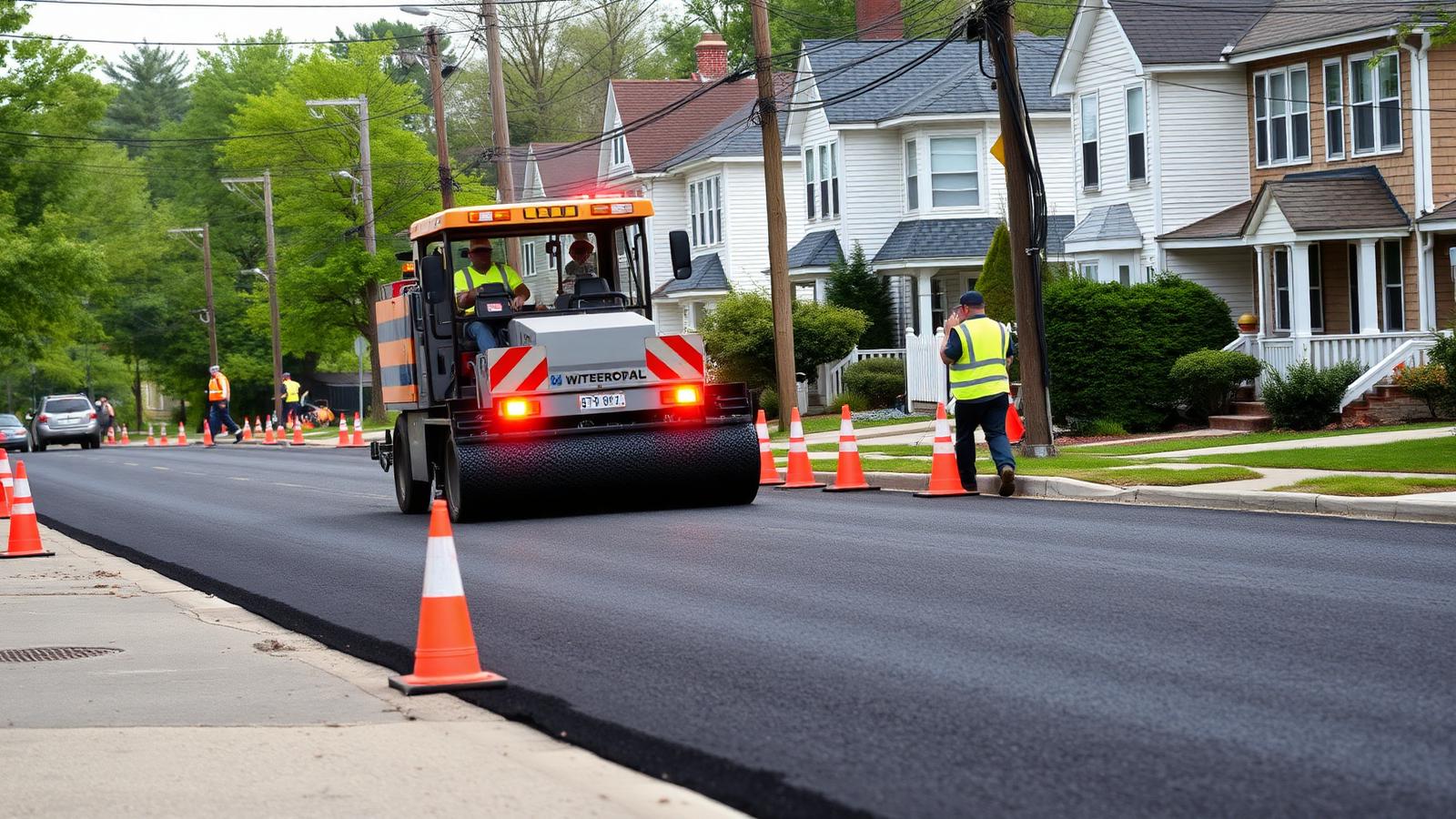
How a Beacon-style roadway program becomes a written, bid-ready plan instead of another pothole invoice
A worked example: milling, resurfacing and utility-trench restoration across seven residential streets under a public bid package.
See how we'd run it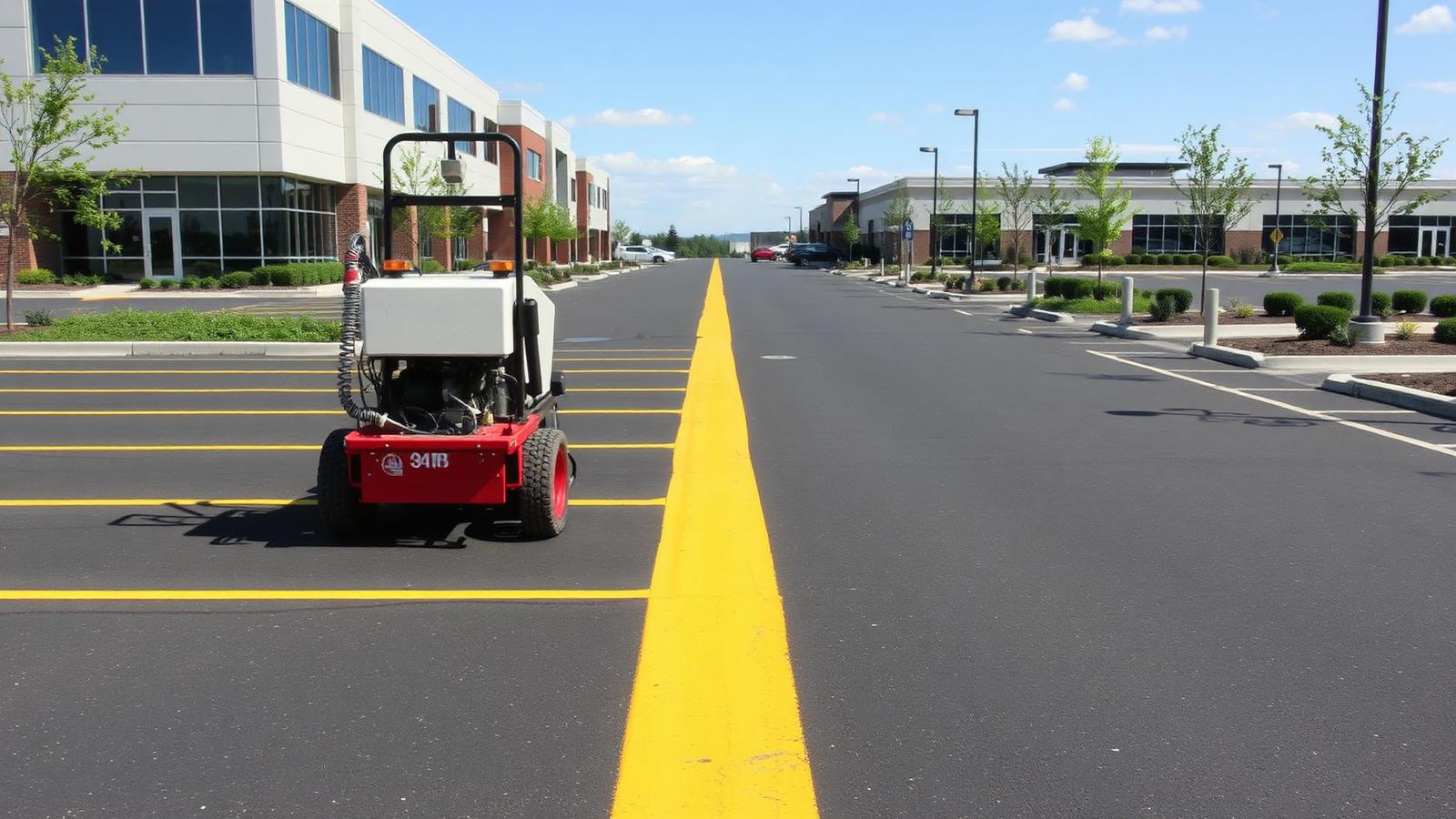
How a Hopewell Junction office park could recover 22 parking spaces with paint
A worked example: restriping and a redesigned circulation layout that adds capacity without adding an inch of pavement.
See how we'd run it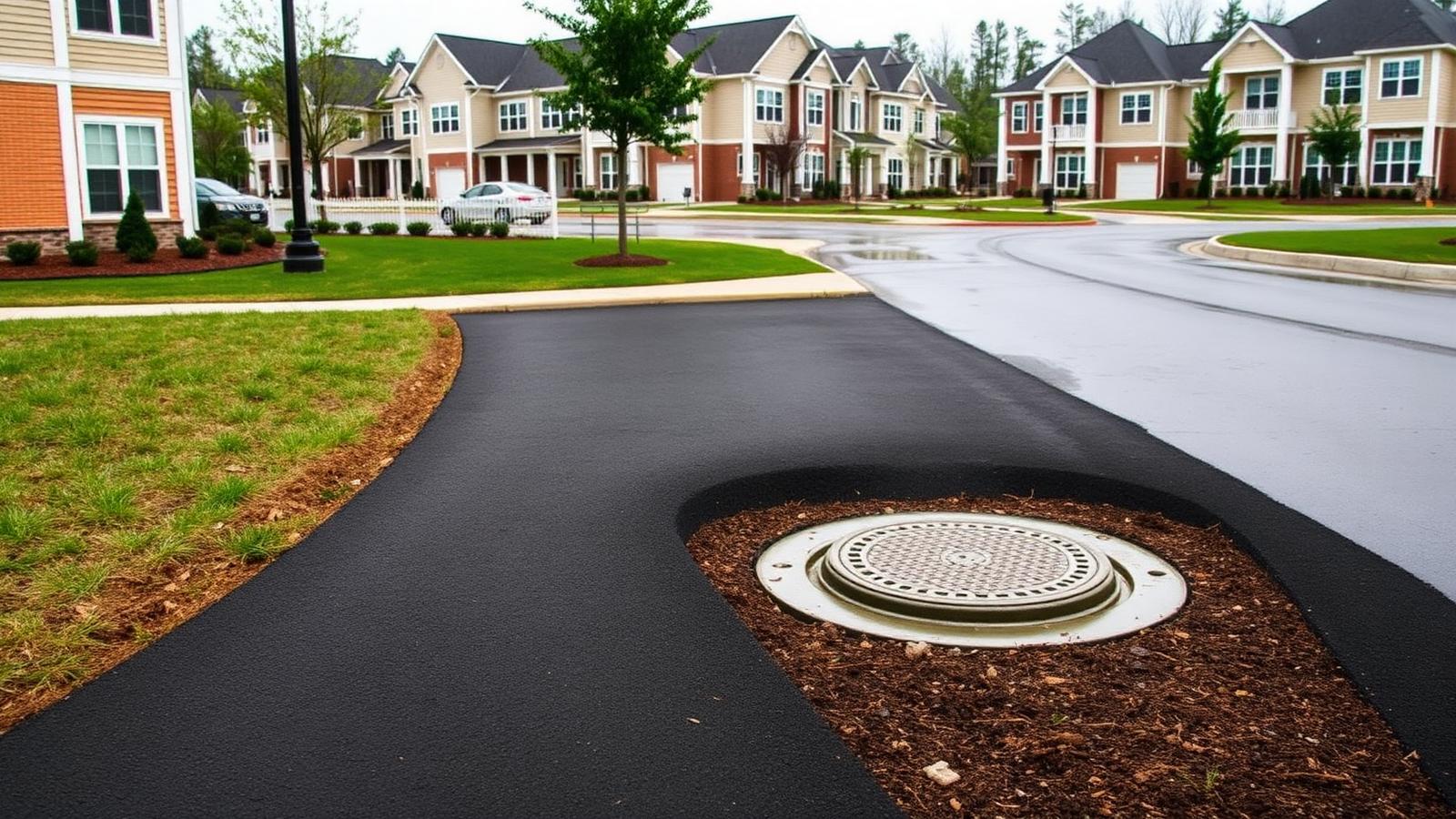
How a Rhinebeck condo community stops rebuilding the same pavement every three years
A worked example: regrading, new catch basins and a corrected swale that finally moves water off a 96-unit drive network.
See how we'd run itReady for a real number on your East Fishkill property?
Same process as this project: we walk it, measure it, and hand you a written, line-itemed scope with phased options.