How a Rhinebeck condo community stops rebuilding the same pavement every three years
A worked example: regrading, new catch basins and a corrected swale that finally moves water off a 96-unit drive network.
Have a property like this in Rhinebeck?
Three quick steps. Free site walk, written scope, no obligation.
Illustrative scenario. This is a worked example of the scope, sequencing and specifications Avello uses on this type of property — written so you can see exactly how your project would be planned and priced. It is not a record of a specific named client project.
The situation we'd be walking into
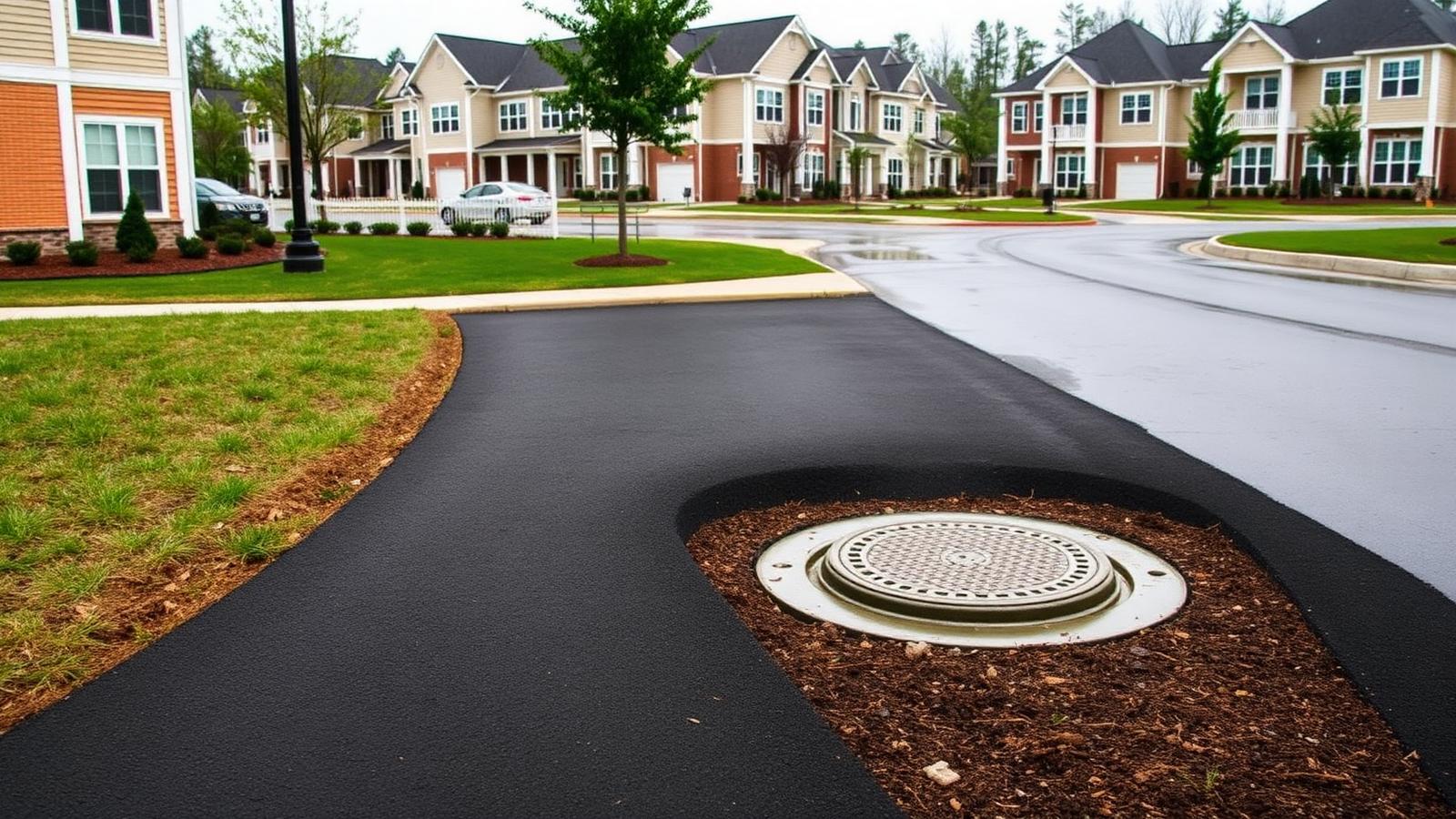
Picture this: The association had repaved the same low section three times in nine years. Water sat for days after every rain, froze in winter, and destroyed the surface each spring. Owners were frustrated with special assessments for work that never lasted.
Example property profile: 96-unit condominium association, Rhinebeck NY
Almost every pavement failure in a condominium community is a water failure wearing a costume. The board sees potholes and asks for paving. The actual problem is usually that water has nowhere good to go, so it sits on the surface, works into the base, freezes, and takes the pavement apart from underneath — and repaving over that condition simply buys a new surface that fails the same way.
This scenario shows how Avello Asphalt & Construction would approach a Rhinebeck condominium community with chronic ponding, ice complaints and recurring pothole locations. It covers how we trace where the water is going, what the drainage corrections actually consist of, how the pavement work follows the drainage work, and how a board can present and phase it to owners.
It is an illustrative worked example of work Avello performs, not a record of a specific named client project.
If that sounds like your property, the rest of this page is the plan we'd put in writing for you — free, before you commit to anything.
Tracing where the water actually goes
The investigation is straightforward but has to be done properly. We walk the property during or immediately after rain when we can, shoot elevations at the ponding areas, and follow the intended flow path from the high point to the outfall. Then we open the structures.
What we typically find at a community like this is some combination of catch basin rims sitting high after prior overlays, basins silted to the point that only a fraction of their capacity is available, a section of collapsed or root-intruded pipe between two structures, and one or more low areas that never had positive drainage in the first place. Each of those is a different fix, and knowing which one you have is the whole point of the assessment.
- Elevations shot at every ponding area and every structure
- Catch basin rims checked against surrounding finished grade
- Structures opened, measured for silt depth and inspected for damage
- Pipe runs between structures checked for collapse or root intrusion
- Downstream outfall confirmed to be open and functioning
What the corrections consist of
The corrections fall into four families. Cleaning and rehabilitating existing structures, which is the cheapest and sometimes solves most of it. Adjusting rims and frames to sit at true finished grade so water can actually enter. Replacing failed pipe runs or adding a new basin and lateral where an area has no inlet within reach. And regrading the pavement surface itself so water moves toward the inlets instead of sitting.
Surface regrading is where drainage and paving meet. A leveling course of asphalt can correct a shallow depression, but where the low area is deep or the required slope is significant, the correct answer is removal and reconstruction of that area to the proper grade. We say which one applies and why.
Sequencing: drainage first, always
The order of operations is not negotiable if the board wants the money to last. Structures and pipe are corrected first, because that work involves excavation that would destroy new pavement. Grade correction follows, then base repair in the areas that were compromised by the water, then the surface course, then striping.
This sequence also gives the association a natural phasing break. Completing the drainage in one budget year, allowing a winter to pass, and confirming that the ponding is genuinely resolved before committing to the surface work is a conservative and defensible approach that many boards prefer.
- Structures, rims and pipe corrected before any paving
- Excavation and backfill compacted in lifts and proof-rolled
- Grade correction verified with instruments, not by eye
- Base repair in areas softened by water
- Surface course and striping last
Living in the community while the work happens
Residents park at home, guests arrive without warning, and emergency access has to work every hour of every day. The plan reflects that. We work in small defined areas, keep at least one route to every building open at all times, and coordinate with the management company on temporary parking arrangements before mobilization rather than during it.
Open excavations are plated or fenced at the end of each day, and no resident is left without a way to reach their unit overnight. The board and the manager receive a written area-by-area schedule they can distribute to owners, which is usually the difference between a smooth project and a month of phone calls.
- Small work areas with same-day restoration where possible
- Access to every building maintained at all times
- Excavations plated or fenced overnight
- Temporary parking arranged with management in advance
- Written area-by-area schedule for distribution to owners
Presenting it to the board and the owners
Drainage work is difficult to sell to an ownership group because when it is finished, nothing looks new. The way to present it is by consequence: this is the work that stops the ice complaints, protects the curbs and garage aprons, and prevents the association from repaving twice.
We provide the scope with each component priced separately, photographs of the failed structures and pipe, and the elevations that show why the water is sitting where it sits. That package is designed to be handed straight to a board or included in an owner meeting packet without any translation.
What waiting another year costs
Standing water in a Hudson Valley community is a triple cost. It destroys the pavement from below, so the repave arrives years early. It freezes, which produces the ice complaints, the salt spend and the slip-and-fall exposure the board hears about all winter. And it undermines curbs, walks and garage aprons, which are more expensive per square foot than the asphalt itself. Every winter the condition persists, the eventual scope gets larger.
Scope & specification highlights
- Two new catch basins with 15 in. HDPE tie-ins to the existing storm line
- Cleaned and re-cored one silted existing structure
- Regraded 340 ft of drive to a documented minimum 1.5% pitch
- Reconstructed asphalt swale along the guest parking bay
- Full-depth reconstruction of the chronically failing low section
- 2 in. overlay across the remaining drive network after grading was verified
Materials we'd specify
- Structures
- Precast catch basins, new frames and grates, and rim adjustments set to true finished grade.
- Pipe
- Replacement storm pipe bedded and backfilled with compacted select material.
- Grade correction
- Asphalt leveling course, or full removal and reconstruction where the required correction is significant.
- Restoration
- Concrete curb and walk repair, topsoil and seed over disturbed areas.
How we'd run the project, step by step
- Step 1Water-flow assessment
We walked the property during and after a rain event to see where water actually goes, not where the plan says it should.
- Step 2Board presentation
A plain-English scope, cost and phasing package the board could present to owners without a translator.
- Step 3Drainage first
Structures and grading completed and verified before any new surface went down.
- Step 4Surface work
Reconstruction of the failed section, then overlay of the balance.
- Step 5Reserve-study handoff
Expected service life and maintenance intervals documented for the association's reserve study.
Typical time on site for a scope this size: 12 working days across 2 phases
What actually drives the price
Drainage work is priced by component, not by area: each catch basin, each length of pipe, each regraded area, each trench drain. That makes it very straightforward to phase. The board can approve the structures and pipe this year and the surface work next year, or address one problem area at a time. What we strongly advise against is the reverse order — paving first and correcting drainage later — because the paving dollars get spent twice. Where the association has reserve study obligations, we provide the scope in a format that maps to reserve components and expected useful life.
- Number of structures requiring work
Cleaning, rim adjustment, rebuild or full replacement — each priced per structure.
- Linear feet of pipe replaced
Depth of the run and what has to be excavated over it drive the unit cost.
- New inlets and laterals
Adding a basin where an area has no inlet within reach is the most effective fix for isolated ponding.
- Extent of grade correction
A leveling course is inexpensive; removing and rebuilding a deep low area to grade is not.
- Restoration
Curb, walk, landscaping and apron restoration over excavated areas.
The maintenance plan that protects the investment
- Year 1
Clean all structures after the first winter and confirm ponding is genuinely resolved after a heavy rain.
- Annually
Catch basin cleaning. Silt accumulation is what quietly reverses a drainage correction.
- Year 2-3
Crack seal the pavement so surface water stays on the surface and reaches the inlets.
- Year 5-8
Re-evaluate the surface. With drainage corrected, the pavement should now age at its intended rate.
What a scope like this is built to deliver
- Standing water gone — verified after two heavy rain events
- No winter ice sheet in the low section for the first time in a decade
- Association ended the three-year repave cycle and its recurring assessments
- Reserve study updated with a realistic pavement service life
What you'd have in hand for ownership or a board
- Board-ready package
- Component-by-component pricing, photographs of failed structures and elevation data explaining the ponding.
- Reserve study fit
- Scope organized so it maps to reserve components and expected useful life.
- Winter risk
- Ponding is the direct source of the ice complaints, salt spend and slip-and-fall exposure the board hears about.
- Phasing option
- Drainage this year, surface next year — a conservative sequence that confirms the fix before the larger spend.
Your next step is simple
- 1. Tell us the property and what's failing (2 minutes, form above or a phone call).
- 2. We walk and measure the site — free, no obligation.
- 3. You get a written, line-itemed scope with phased options you can take to ownership or a board.
Rhinebeck project questions
Why does our pavement keep failing in the same spot?+
Almost always water. If a low area holds water, freeze-thaw will destroy any surface you put there. Fix the grade and the drainage structures first.
Can you present to our board or owners?+
Yes. We regularly present scope, phasing and cost at board and owners' meetings in plain language.
Can the work be split across budget years?+
Yes, and it usually should be. Drainage first, surface second is both the correct sequence and the easier one to fund.
Why commercial and municipal clients hire Avello
More projects like this
How a Beacon-style roadway program becomes a written, bid-ready plan instead of another pothole invoice
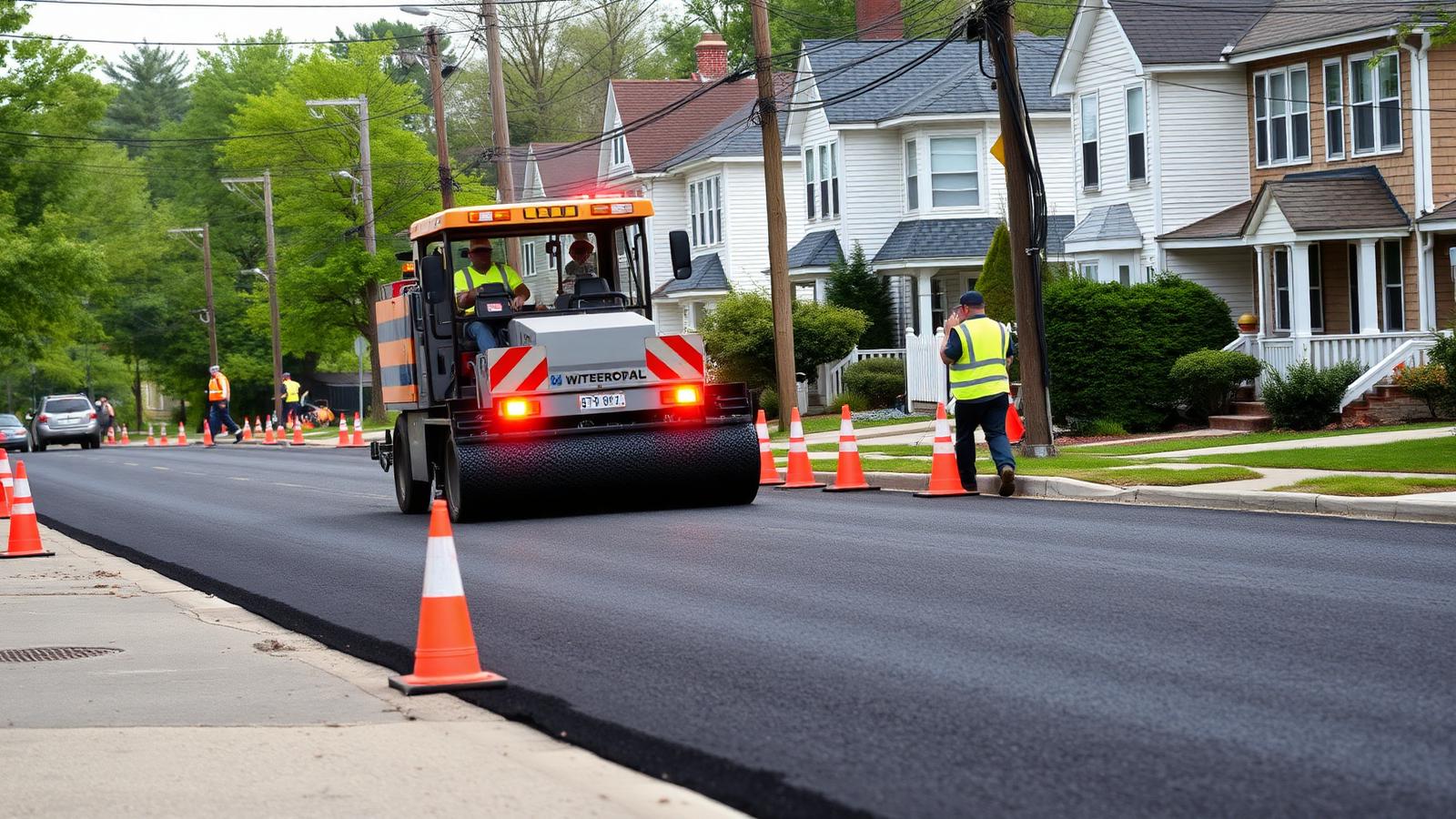
A worked example: milling, resurfacing and utility-trench restoration across seven residential streets under a public bid package.
See how we'd run it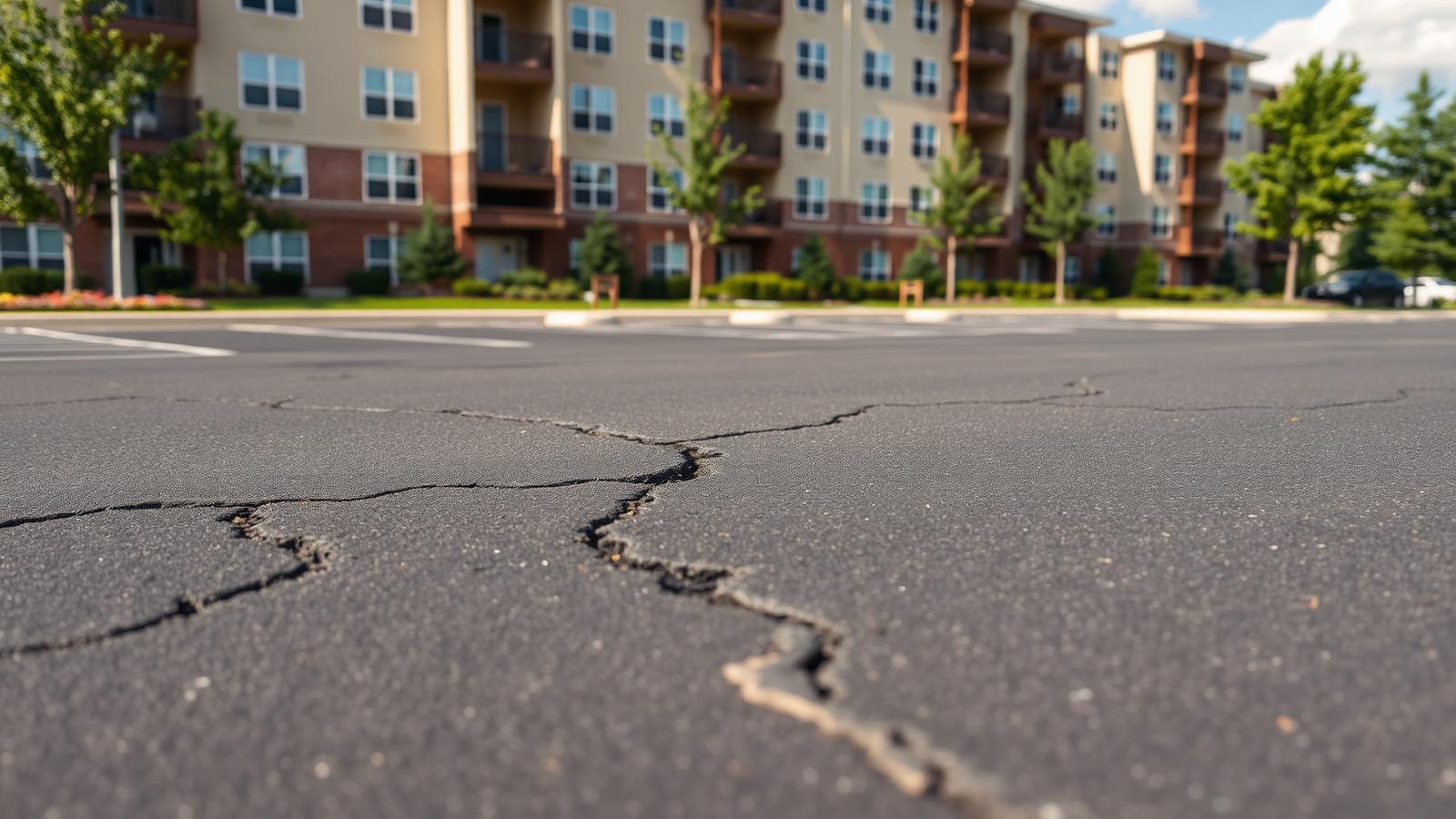
How a 340-unit East Fishkill community could buy seven more years of pavement
A worked example: a routed and sealed crack program priced at a fraction of the resurfacing it defers.
See how we'd run it
How a Hopewell Junction office park could recover 22 parking spaces with paint
A worked example: restriping and a redesigned circulation layout that adds capacity without adding an inch of pavement.
See how we'd run itReady for a real number on your Rhinebeck property?
Same process as this project: we walk it, measure it, and hand you a written, line-itemed scope with phased options.