How a Beacon-style roadway program becomes a written, bid-ready plan instead of another pothole invoice
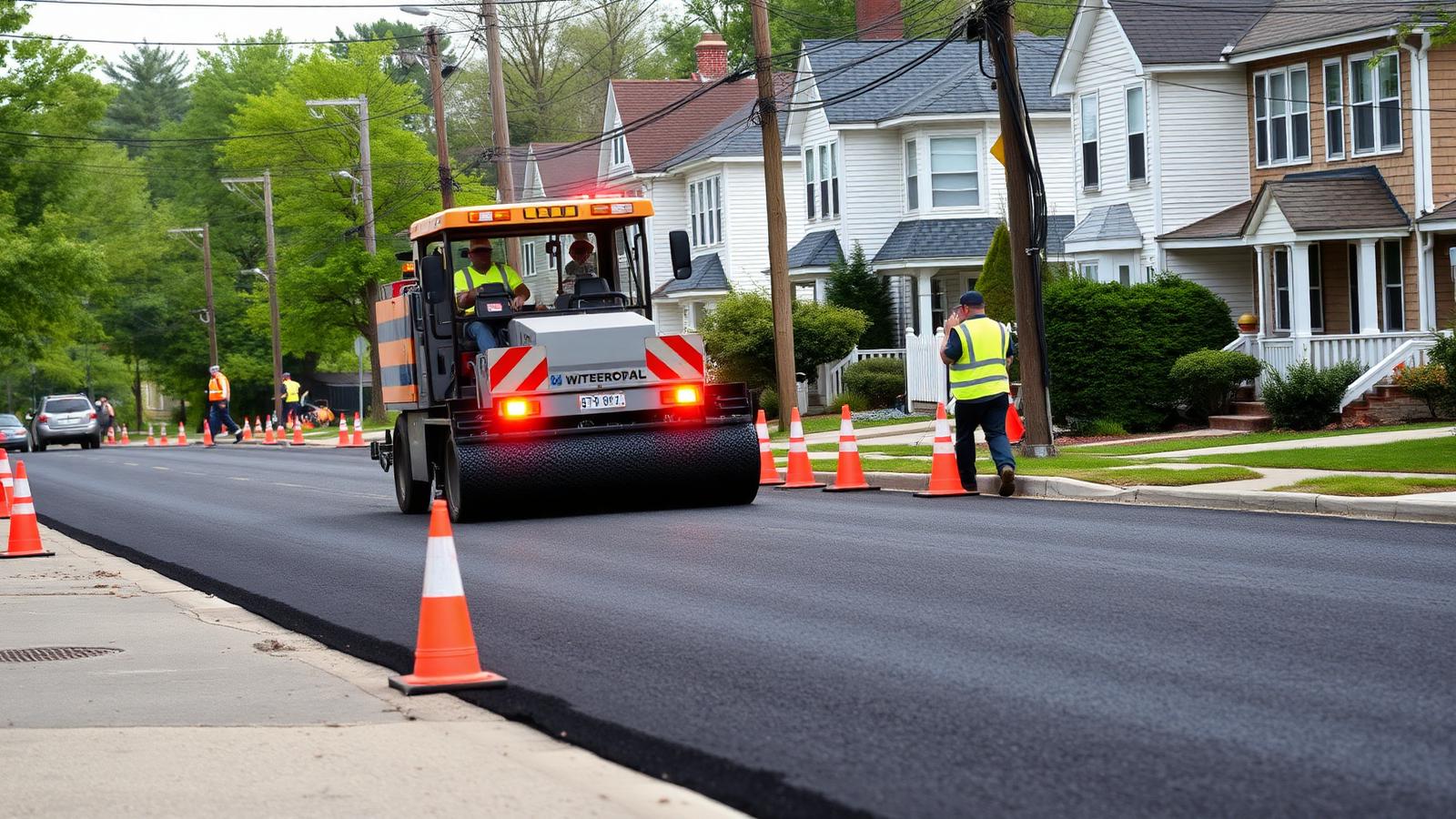
A worked example: milling, resurfacing and utility-trench restoration across seven residential streets under a public bid package.
Have a property like this in Beacon?
Three quick steps. Free site walk, written scope, no obligation.
Illustrative scenario. This is a worked example of the scope, sequencing and specifications Avello uses on this type of property — written so you can see exactly how your project would be planned and priced. It is not a record of a specific named client project.
The situation we'd be walking into
Picture this: The department was spending its maintenance budget on repeated cold-patch call-backs on the same seven streets. Residents were complaining every spring, and the highway superintendent needed defensible documentation to justify a capital request to the council.
Example property profile: Municipal public works department, Beacon NY
A municipality does not have a paving problem. It has a portfolio management problem. A city or town owns dozens of road segments in every possible condition, a fixed annual appropriation, a public that judges the whole system by the worst street they drive, and a board that has to defend the list in an open meeting.
This scenario shows how Avello Asphalt & Construction would support a Beacon-area roadway maintenance program: how the segment inventory gets rated, why the treatment for each street should differ, how the right mix of preservation and reconstruction stretches the same appropriation much further, and how the work is staged so residents and emergency services keep access.
It is an illustrative worked example of municipal work Avello performs, not a record of a specific named project.
If that sounds like your property, the rest of this page is the plan we'd put in writing for you — free, before you commit to anything.
Rating the system before spending anything
The first deliverable on a municipal program is not asphalt, it is information. Every candidate segment gets driven and walked, with distress type, extent and severity recorded: transverse and longitudinal cracking, alligator cracking, rutting, patching history, edge failure, drainage condition and ride quality.
That produces a condition rating for each segment and, more importantly, a recommended treatment and an estimated cost for each. The board can then see the entire system on one page and understand why a street that looks bad may be a crack-seal candidate while a street that looks acceptable may be about to fail.
- Segment-by-segment condition rating with photos
- Recommended treatment and cost estimate per segment
- Drainage and shoulder condition noted where it drives pavement failure
- Prior patch and utility cut history flagged
- A ranked list the board can adopt, amend or phase
Matching the treatment to the segment
Four treatments cover most municipal needs. Crack sealing extends life on structurally sound roads for a very small unit cost. Surface treatment or thin overlay restores a worn but sound surface. Mill-and-pave removes the failed surface course and replaces it, correcting ride and restoring drainage geometry without disturbing the base. Full-depth reconstruction rebuilds the road from the subgrade when the base is gone.
Applying the wrong treatment is the most common way municipal money is wasted. Overlaying a road with a failed base produces reflective cracking within a season or two. Reconstructing a road that only needed milling spends four times what was necessary. The scope we write states which treatment applies to which segment and why.
Utility coordination, drainage and the details that decide longevity
Municipal roads are full of things other people own: water valves, gas shutoffs, manholes, sewer laterals and prior utility cuts. Every one of them has to be located, protected, adjusted to finished grade and documented. Skipping castings adjustment is one of the fastest ways to make a brand-new road ride badly and fail early around structures.
Drainage deserves the same attention. Clogged or collapsed shoulder drainage, silted basins and a ditch line that no longer carries water will undo a new surface. Where we see it, we quote it — separately, so the municipality can decide whether it belongs in this year's program or the highway department can handle it in-house.
- Locate, protect and adjust all castings to finished grade
- Coordinate with water, gas and sewer departments before milling
- Address silted basins, ditch lines and shoulder drainage
- Document prior utility cuts and repair failing ones properly
- Restore shoulders and driveway aprons to a clean, consistent edge
Keeping the town moving during the work
Residents tolerate construction when they know what is happening. We supply a public-facing schedule and door notices for affected streets, coordinate directly with emergency services and the school transportation office, and keep at least one access route open to every residence throughout.
Milling and paving are sequenced so that no street is left milled overnight where it can be avoided, driveway access is restored each evening, and temporary ramps are placed at any transition a vehicle must cross. Flagging and traffic control follow an approved plan for each segment.
- Door notices and a published schedule for each street
- Coordination with fire, police, EMS and school transportation
- Driveway access restored at the end of every work day
- Temporary transitions and signage at all milled edges
- Approved traffic control and flagging plan per segment
Reporting the program back to the board
A municipal program should end with a document that makes next year easier. That means as-built quantities by segment, the treatment applied, the cost, and an updated condition rating for the segments that were not touched.
Over two or three cycles this turns into a real pavement management record: the board can see the average condition of the system moving in the right direction and can defend the appropriation with data rather than complaints.
What waiting another year costs
Pavement deterioration is not linear. A road stays in fair condition for years and then drops rapidly once water reaches the base. Delaying treatment on a segment that is still in the preservation window typically multiplies the eventual cost several times over, because the cheap treatment window closes permanently. Across a portfolio of segments, deferring maintenance for even two budget cycles usually moves a meaningful number of streets from the preservation tier to the reconstruction tier.
Scope & specification highlights
- 2 in. mill and 2 in. NYSDOT Type 6 top course, curb to curb
- Full-depth repair at 14 documented base failures before overlay
- Utility trench restoration to municipal standard with infrared joint sealing
- Casting adjustments at 31 structures — valves, manholes, catch basins
- Driveway apron feathering at every residential tie-in
- Centerline, stop bars and crosswalks re-marked to MUTCD
Materials we'd specify
- Wearing course
- NYSDOT-conforming hot mix asphalt appropriate to the classification of each segment.
- Crack sealant
- Hot-applied rubberized sealant, routed where crack width and condition justify it.
- Base repair
- Full-depth removal and replacement over compacted, proof-rolled subbase on reconstruction segments.
- Markings
- Center lines, edge lines, stop bars and crossings restored to the pre-existing or approved layout.
How we'd run the project, step by step
- Step 1Pavement condition survey
Every street rated and photographed, with a repair-versus-replace recommendation and a cost per lane mile.
- Step 2Bid-ready documents
Quantities and specifications formatted for the department's public procurement process.
- Step 3Utility coordination
Trench restorations completed and cured before the mill and overlay so the new surface stays monolithic.
- Step 4Mill and pave
Street-by-street, with resident notices, driveway access maintained daily.
- Step 5Program handoff
A 5-year prioritized program with rough order-of-magnitude budgets for future council cycles.
Typical time on site for a scope this size: 3 weeks, single mobilization
What actually drives the price
Municipal pavement money goes furthest when it is not all spent on the worst streets. A dollar spent on crack sealing and preservation on a road that is still structurally sound buys many more years of service life than the same dollar spent on a road that is already failed. The standard approach we recommend is a mixed program: a defined preservation tier that covers many miles cheaply, a rehabilitation tier of mill-and-pave on segments still worth saving, and a small reconstruction tier for the segments that are beyond rehabilitation. Each segment is priced individually so the board can move streets between tiers or between years without re-bidding.
- Treatment mix across the program
The ratio of preservation to rehabilitation to reconstruction determines how many miles the appropriation covers.
- Casting and structure adjustments
Number of manholes, valves and basins requiring adjustment to finished grade.
- Drainage and shoulder work
Ditching, basin cleaning and shoulder restoration, quoted separately from the roadway.
- Traffic control requirements
Segment geometry, traffic volume and detour feasibility drive flagging and signage cost.
- Mobilizations
Grouping segments geographically reduces mobilizations and lowers the total program cost.
The maintenance plan that protects the investment
- Year 1
Post-winter review of treated segments; seal any new reflective cracking at joints and utility cuts.
- Year 2-3
Crack seal the preservation tier again and re-rate the segments deferred from the prior program.
- Year 3-5
Execute the next tier from the ranked list, keeping preservation running alongside it every year.
- Ongoing
Update the condition inventory annually so the board is always working from current data.
What a scope like this is built to deliver
- Cold-patch call-backs on the seven streets dropped to zero the following spring
- All work delivered in compliance with prevailing wage and certified payroll requirements
- Superintendent received documented condition ratings to support the capital request
- A funded, prioritized 5-year paving program now drives the annual budget
What you'd have in hand for ownership or a board
- What the board gets
- A ranked, priced, segment-by-segment list with recommended treatments — adoptable as written or amendable line by line.
- Public communication
- Door notices, a published street schedule and coordination with emergency services, prepared by us.
- Procurement fit
- Specification-level quantities so the program can be bid or quoted on comparable terms.
- Long-term value
- A preservation-first mix that measurably raises average system condition per dollar appropriated.
Your next step is simple
- 1. Tell us the property and what's failing (2 minutes, form above or a phone call).
- 2. We walk and measure the site — free, no obligation.
- 3. You get a written, line-itemed scope with phased options you can take to ownership or a board.
Beacon project questions
Do you work under public bid and prevailing wage?+
Yes. We respond to formal bid packages, carry the required insurance and bonding, and file certified payrolls.
Can you help write the specification?+
We regularly provide quantities, condition ratings and draft specifications a department can put out to bid.
How do you handle utility trenches?+
Restore and let them settle before the overlay wherever the schedule allows. Paving over a fresh trench is the fastest way to a reflective failure line.
Why commercial and municipal clients hire Avello
More projects like this
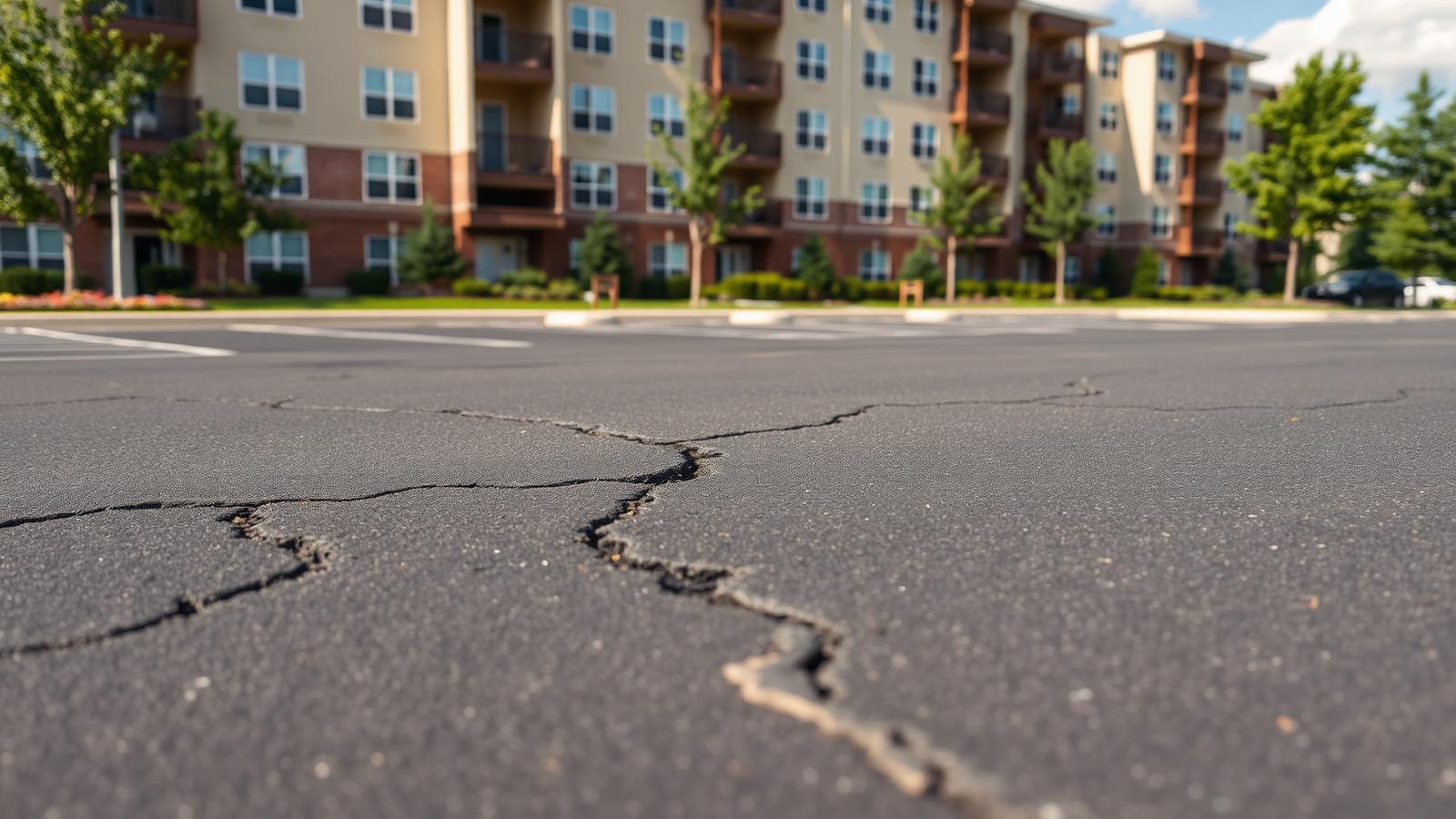
How a 340-unit East Fishkill community could buy seven more years of pavement
A worked example: a routed and sealed crack program priced at a fraction of the resurfacing it defers.
See how we'd run it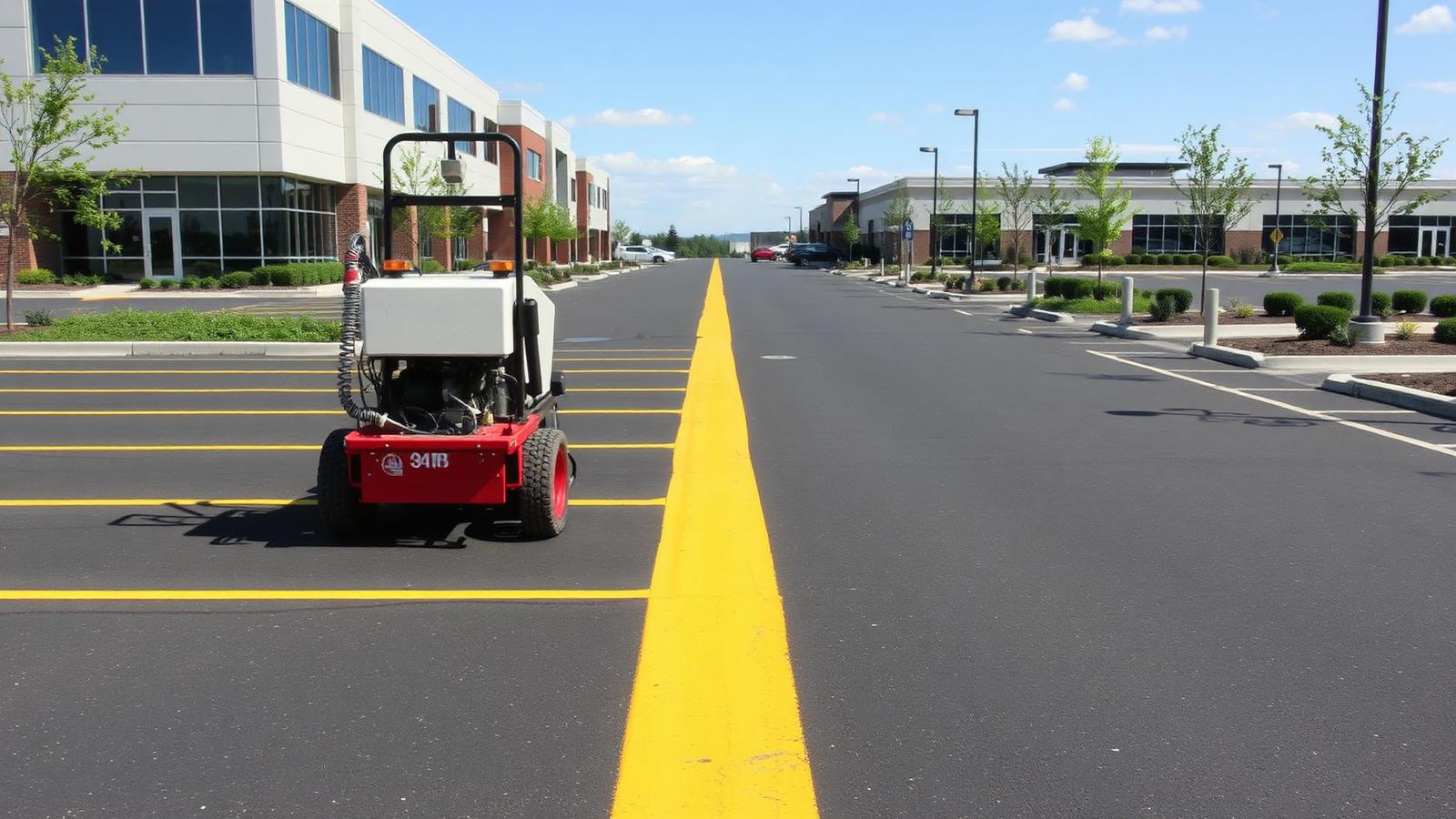
How a Hopewell Junction office park could recover 22 parking spaces with paint
A worked example: restriping and a redesigned circulation layout that adds capacity without adding an inch of pavement.
See how we'd run it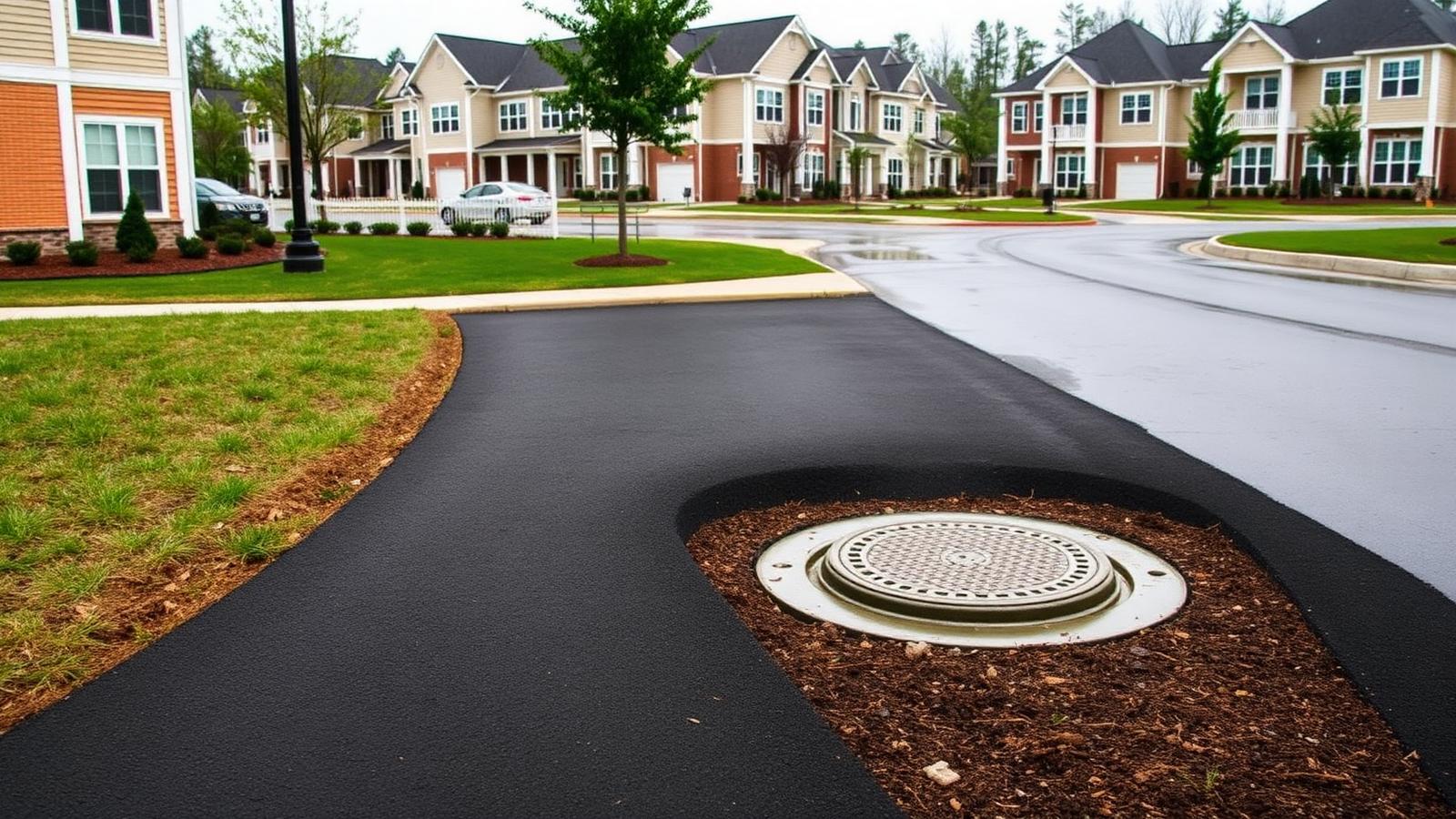
How a Rhinebeck condo community stops rebuilding the same pavement every three years
A worked example: regrading, new catch basins and a corrected swale that finally moves water off a 96-unit drive network.
See how we'd run itReady for a real number on your Beacon property?
Same process as this project: we walk it, measure it, and hand you a written, line-itemed scope with phased options.