
Why Do Patched Soft Spots Return? Staatsburg School Paving Contractor Explains
Avello's take
A smooth patch does not always tell the whole story. In this item, we explain why soft spots can return in school drive lanes when wet soil, weak base material, or loose utility trench backfill remains beneath the asphalt. We also cover how bus traffic and water movement help explain recurring dips. The distinction matters: shallow ruts in sound asphalt may need milling and replacement, while deeper support problems may call for removing material down to a stable layer.
For Hudson Valley property owners, managers, boards, and public works teams, this is a useful way to think beyond the surface when reviewing repairs. On school campuses, soft spots near bus stops and turning areas can affect boarding safety and daily operations. We see a sensible starting point in mapping the affected areas, reviewing past patches, and tracing water flow. A written scope can then define removal depths, repair limits, and how unexpected conditions uncovered during excavation will be priced and approved.
Key Takeaways
- Patches often fail again when weak, wet, or poorly compacted material is left beneath the new asphalt instead of being removed and corrected
- Mapping each rutted or soft area and tying it to bus routes, water flow, and past patch history helps separate surface wear from deeper support problems
- Shallow ruts in otherwise sound asphalt can often be fixed with milling and replacement, while isolated soft spots may call for full-depth patching down to stable material
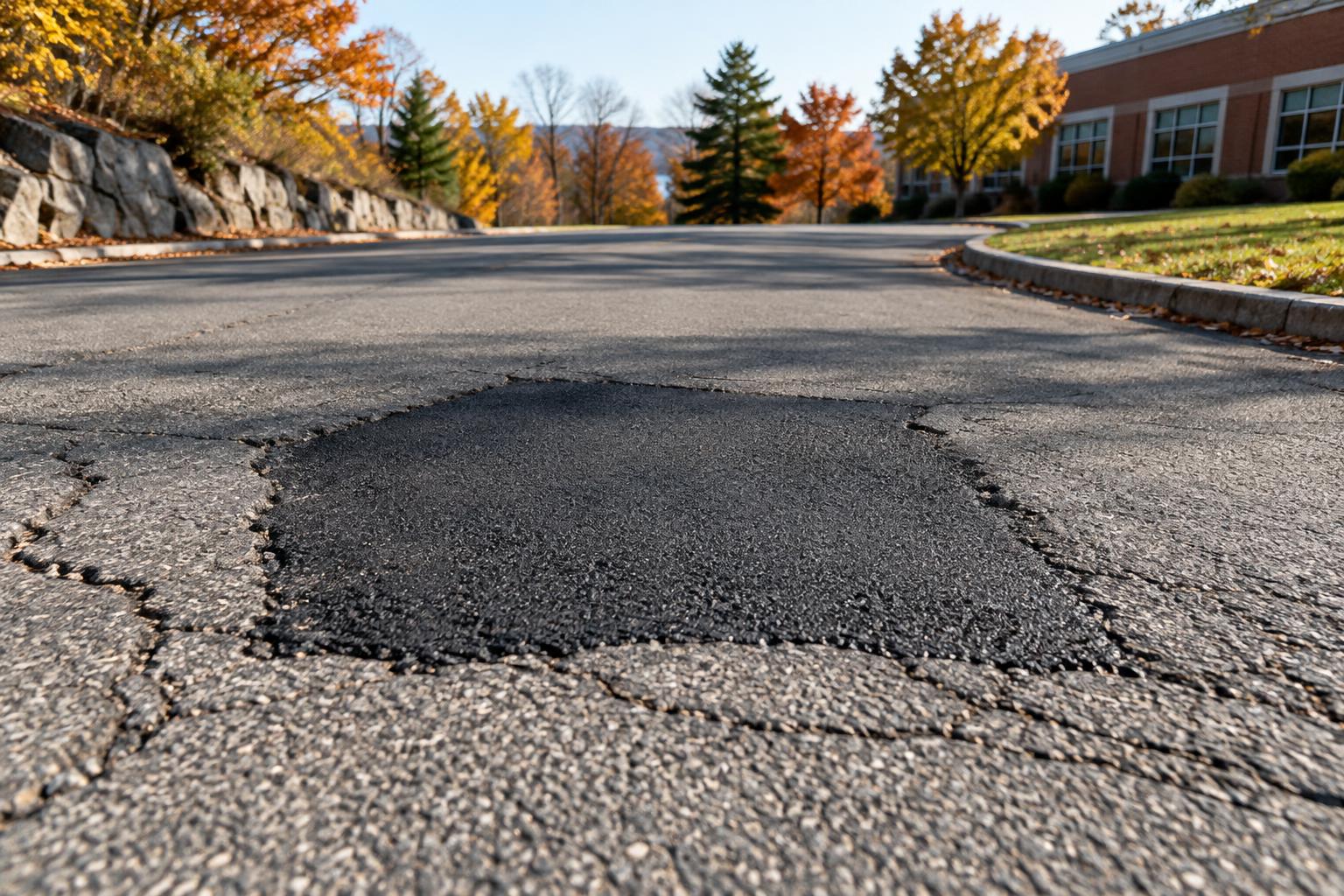
- A sunken rectangular patch over an old utility trench is a telltale sign of settled, poorly compacted backfill below the surface
- A written repair scope should define removal depths, repair limits, and how surprises found during excavation will be priced and approved, which matters even more on an active school campus
A newly patched soft spot in a school drive lane can look solid for weeks, even months, before the same dip reappears under the weight of a loaded bus. That pattern frustrates facilities teams because it looks like the repair should have worked. The asphalt was smooth, the edges were clean, and the problem still came back.
The Patch Looks Fine, Then Fails Again
A patch that settles again almost always points to something below the surface that was never fixed. Weak soil, trapped water, or loose backfill under an old utility trench can keep moving even after a new asphalt layer gets placed on top. The surface repair becomes a cosmetic fix sitting on an unresolved structural issue, and heavy, repeated bus loads make that gap show up fast.
For a campus like Staatsburg schools, the stakes go beyond appearance. Soft spots near bus stops or turning areas affect student boarding safety and daily operations, beyond just curb appeal. Avello Asphalt & Construction's school drive-lane guidance walks through how to tell a surface-only problem from one rooted in the ground underneath, and why that distinction changes the entire repair plan.
The good news is that repeat failures are usually preventable. Once a facilities director understands what is happening beneath a failed patch, the next repair can be scoped to actually hold up under bus traffic instead of needing attention again next season.
What's Really Happening Under That Patch
Asphalt is only as strong as what supports it. A rut or soft spot in a drive lane can form because the asphalt itself has distorted, because the base and subgrade underneath have weakened, or both at once. Figuring out which one is happening determines whether a simple surface repair will last or whether it is simply delaying the next failure.
Water, Weak Base, and Pumping Under Bus Loads
Water is usually the hidden driver behind a soft spot that keeps coming back. It can enter through cracks, joints, pavement edges, or gaps in the asphalt surface, then soak into the aggregate base and subgrade soil below. Once that material gets saturated, it loses much of its ability to resist the shearing forces created by heavy loads.
School buses make this worse in a specific way. A loaded bus rolling or braking over water-saturated base material can cause a pumping action, where water and fine soil particles get forced up through cracks and joints under pressure. That pumping erodes the support structure from below, even while the asphalt surface still looks intact. Clay-heavy subgrade soils are especially prone to this kind of weakening because they hold onto infiltrated water rather than draining it away.
Sunken Trenches: A Telltale Clue
A rectangular patch that sinks evenly, while staying otherwise intact, often marks the location of an old utility trench. When a trench gets backfilled without adequate compaction, the loose material beneath the surface continues settling over time, even if the original repair looked fine on day one. The asphalt above simply follows the ground down as it compresses.
That shape is a useful diagnostic clue. A sunken trench pattern points toward a backfill and compaction problem rather than a drainage issue or a surface wear problem, which changes what kind of repair makes sense. Recognizing that shape early can save a facilities team from approving the same shallow patch a second time.
Mapping Ruts and Soft Spots First
Before choosing a repair method, it helps to document every rutted or soft area on a simple campus map rather than relying on memory or a single walk-through. Each location should be recorded separately, along with photographs taken from a consistent viewpoint so changes can be tracked over time instead of guessed at.
Connecting Damage to Bus Routes and Water Flow
Bus movement patterns matter because buses follow predictable wheel paths, stop in the same places repeatedly, and make low-speed turns that put different stress on pavement than regular car traffic. A soft spot near a bus stopping zone may be responding to braking and turning loads in a way that a shallow rut in a lightly used lane is not. Mapping should note rut shape, visible movement under traffic, water puddling after rain, and whether an area has a history of settling after a previous patch.
Tracing water flow across the site is just as important as tracking bus routes. Runoff from an uphill parking area, walkway, or landscaped bed can travel toward a drive lane and enter through pavement edges, so the investigation should follow water back to its source rather than stopping at the puddle itself. Seasonal changes deserve attention too, since a spot that seems fine in dry summer weather may behave very differently after snowmelt or a heavy spring rain.
When to Dig Deeper Before Repairing
Some situations call for more than a visual inspection. Pavement cores or small test openings can reveal the actual asphalt thickness, the condition of the supporting layers, and whether the subgrade has been compromised. This kind of investigation becomes especially worthwhile when distress covers a wider area or when the repaired lane will carry substantial, repeated bus traffic.
The outcome of this mapping process should be a condition record, not a total square footage number. Marking which areas are stable, which are candidates for surface-only repair, and which require deeper investigation keeps the eventual repair plan grounded in actual evidence rather than guesswork.
Choosing the Right Repair for Each Spot
Once the condition map is in hand, the repair method should match what caused the damage in each specific location. Treating every rut and soft spot with the same fix tends to waste money on areas that did not need it while under-fixing the ones that did.
Shallow Ruts: Mill and Replace
When rutting is shallow and confined to otherwise sound asphalt, milling and replacing just the surface layer can be an appropriate fix. Milling removes asphalt to a controlled depth, which allows new material to go back in without building up the lane's height over time. This option depends on the remaining pavement and the support underneath both being structurally sound enough to carry ongoing bus traffic.
Isolated Soft Spots: Full-Depth Patching
An isolated soft spot surrounded by otherwise stable pavement often calls for full-depth patching. This means removing the asphalt, excavating any unsuitable base or subgrade material, and rebuilding the area with material that can be properly compacted before paving goes back down. Repair limits need to reach actual sound material, not stop at the edge of the visible depression, since cutting the repair short at a convenient boundary tends to leave weak material in place just outside the patch.
Widespread Damage: Rethinking Reconstruction
When ruts and soft spots stretch along much of a bus lane, stitching together repeated small patches can leave a collection of joints without ever correcting the underlying condition causing the movement. In that situation, broader reconstruction tends to make more sense than another round of localized patching. An overlay can renew a lane that is still structurally sound, but it should never be used to bridge active soft spots or hide settlement that has not actually been resolved.
Why Drainage Can't Be an Afterthought
Drainage correction deserves a place in nearly every repair option, because fixing the pavement while leaving water free to re-enter the base tends to recreate the same failure. Depending on the site, that might mean restoring a blocked outlet, correcting an edge elevation that traps runoff, intercepting water flowing downhill from elsewhere on the property, or designing a subsurface drainage system.
A drain only works if it has somewhere to send the water. Installing pipe or stone without a clear discharge point just moves the saturation problem a few feet rather than solving it, which is part of why surface drainage and subsurface drainage need to be considered as two separate, complementary systems rather than one catch-all fix. A pavement section with a positive slope toward a well-draining outlet reduces how much water ever gets the chance to soak into the structure in the first place, which is often cheaper and more durable than correcting saturation after the fact.
Writing a Scope That Prevents Repeat Failures
A repair scope that simply says "fix the soft spots and pave" leaves too many important decisions unresolved until crews are already mid-project. A stronger scope ties each repair location to the specific problem observed there and spells out what happens if excavation uncovers conditions nobody expected.
Setting Repair Limits and Removal Depths
The scope should identify each repair area on a plan or marked photograph, along with assumptions about how deep material will need to be removed and how final boundaries will be confirmed once work is underway. It should also describe the supporting stone, asphalt materials, compacted layer thicknesses, and any compaction verification appropriate for the project, since those details determine whether the new repair will actually hold up to bus loads over time.
Handling Surprises Found During Excavation
Excavation sometimes reveals wetter, weaker, or more extensive bad material than anyone anticipated before the project started. The scope should name who has authority to approve additional work once that happens, along with an agreed method for pricing it. Photographs, field measurements, and a clear pricing approach turn a hidden-condition discussion into something manageable instead of a point of friction mid-project. For a Staatsburg campus specifically, confirming local requirements with the Town of Hyde Park building or engineering department is worth doing early, since public-school work may also involve district procedures that town approval alone does not cover.
Lasting Repairs Start Below the Surface
A neat rectangle of fresh asphalt is not proof that the original soft spot has actually been solved. The only way to know is to check that the repair reached sound material, that water has somewhere appropriate to go, and that the work was done to a depth and extent matching the real problem underneath. Acceptance should include checking repaired elevations, surface transitions, and the intended drainage path, not just how the surface looks on the day crews pack up.
For a facilities director managing bus-lane safety, that extra diligence upfront pays off by avoiding a repeat call to the same spot next spring. Documenting what gets fixed, why, and how it will be checked gives a campus team durable pavement and a clear record to stand on if the same area ever needs attention again. For practical next steps on a drive lane that keeps softening despite past repairs, review options for repairing failing drive lanes before the next patch goes down.
Company: Avello Asphalt & Construction Corp City: Poughkeepsie Address: 141 Daley Road Website: https://www.avelloasphalt.com
Mentioned in this blog post: Poughkeepsie service area, Staatsburg service area, Hyde Park service area
Have a property like this?
Tell us what you're seeing. We'll walk the site, explain the options plainly, and give you a clear scope.
Related Avello guidance
More blog posts
- Speed Bumps at Housing Authorities: Placement & Plow Clearance - Poughkeepsie
- Does Restriping Fix ADA Bank Parking? - East Fishkill Paving Contractor Explains
- 10-Year Asphalt Pavement Plan for Office Parks - Poughkeepsie Paving Contractor
- Can a Medical Office Stay Open During Paving? Fishkill Contractor Explains