
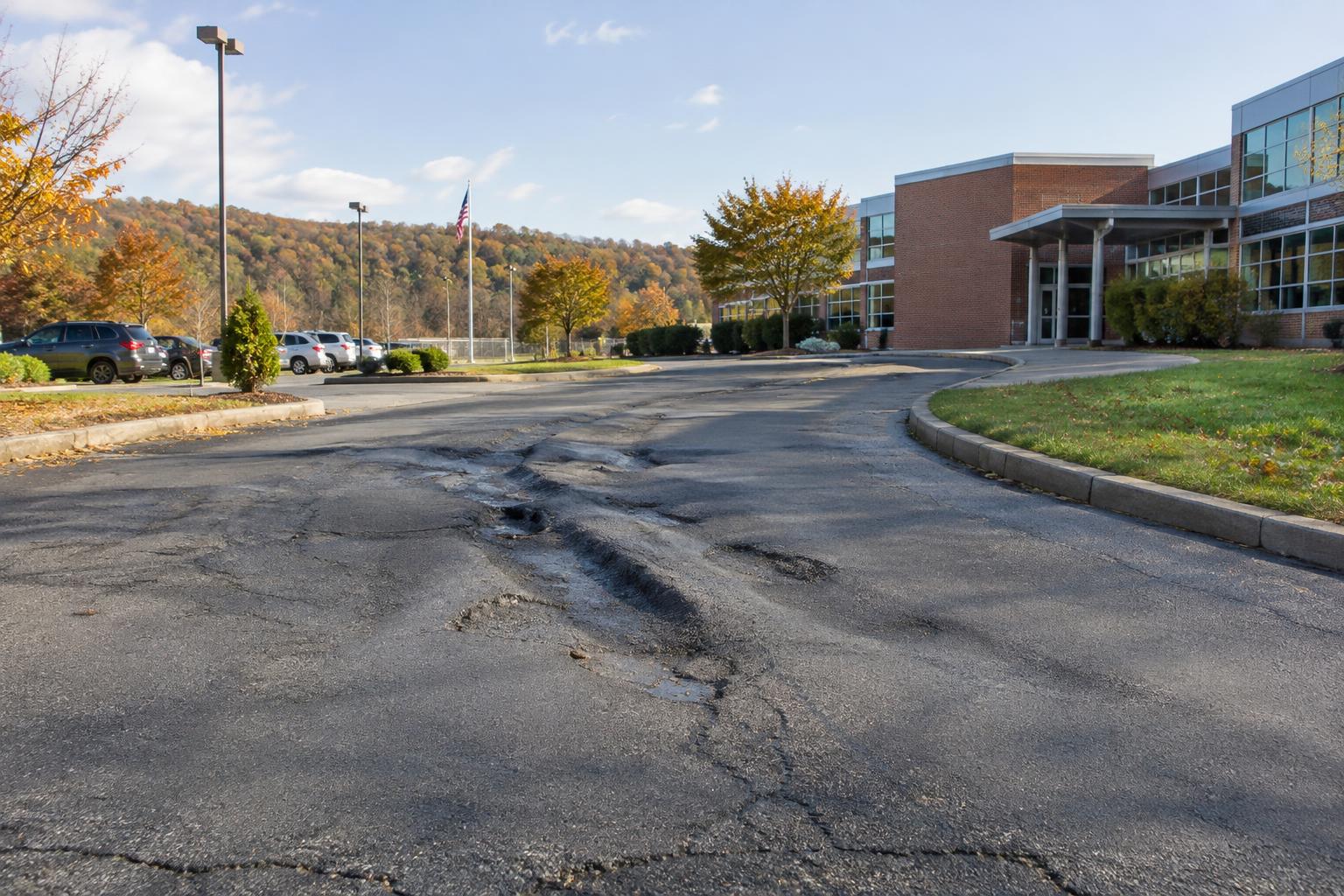
Ruts in a school drive lane may come from distorted asphalt, weak support underneath, or both. Soft spots deserve a closer look before anyone covers them with new pavement. For Staatsburg schools, the useful first step is to map the damage, observe it through wet weather and spring thaw, and check how buses load the affected area. Repairs can range from targeted surface replacement to excavation and rebuilding. A clear scope should connect each repair to its cause, define how hidden conditions will be handled, and preserve workable routes for school operations.
What ruts and soft spots in Staatsburg school drive lanes usually mean
Ruts and soft spots in school drive lanes should be repaired according to what is moving: the asphalt, the supporting stone, or the soil below it. A depression limited to the asphalt may need targeted removal and replacement. An area that flexes, settles repeatedly, or releases muddy water under traffic generally needs investigation below the surface before a lasting repair can be selected.
A rut is a lengthwise depression where wheels repeatedly travel. A soft spot is an area that moves or loses support under a load, although it may look fairly intact when no vehicle is on it. Neither condition can be diagnosed reliably from a photograph alone, and a smooth-looking patch can conceal weak material underneath.
School transportation patterns help explain where to look. Buses follow similar wheel paths, stop in predictable places, and turn at low speed. Braking and steering put different stresses on pavement than straight-through passenger-car traffic, so a distressed bus stopping area may need a different repair than a shallow depression in a lightly used lane.
At a Staatsburg campus, the right starting point is a joint walk-through with facilities and transportation staff. We would compare the damaged locations with bus movements, water flow, previous patches, and seasonal changes. The immediate operational decision is whether vehicles can keep using the area without worsening movement or creating an uneven boarding condition; the construction decision comes after the cause is better understood.
Read the pavement condition before choosing a repair
Begin with a simple campus map and label each affected area separately. Record whether the depression follows both wheel paths, appears beside a pavement edge, surrounds an old utility trench, or sits where buses turn. Include photographs from the same viewpoint so changes can be compared instead of relying on memory.
- Rut shape: a smooth depression, displaced asphalt along its sides, or broken pavement within the wheel path.
- Movement: visible deflection during normal traffic, loose pieces, or water and fine soil pushed through cracks.
- Water: puddles after rain, runoff entering from uphill ground, and damp edges that stay wet after nearby pavement dries.
- History: patches that settle again, recent underground work, and locations that become noticeably softer during spring thaw.
- School use: bus stopping points, tight steering movements, boarding locations, and nearby student walking routes.
Raised ridges beside a rut can suggest asphalt displacement, but they are not proof that the foundation is sound. Cracking and settlement across a wider area can point toward deeper movement. Staff should document normal vehicle use rather than deliberately driving a bus over a questionable spot to test it.
A contractor or pavement professional can measure the surface profile and evaluate drainage elevations. Where the cause remains uncertain, pavement cores or small test openings can reveal asphalt thickness, layer condition, and the supporting material. More extensive soil or pavement evaluation may be appropriate when distress is widespread or a planned repair carries substantial bus traffic.
The result should be a condition map, not just a total square footage. Mark stable pavement that can stay, surface-only repair candidates, and areas requiring deeper investigation. That distinction keeps the repair plan tied to evidence.
To understand the work behind these options, compare Avello’s parking lot repair, commercial paving services.
Match surface repairs and deeper rebuilding to the cause
For shallow rutting confined to otherwise sound asphalt, milling and replacing the affected surface can be appropriate. Milling removes asphalt to a controlled depth, allowing replacement without simply raising the lane. This option depends on the remaining pavement and underlying support being suitable for continued school bus use.
Localized full-depth patching fits isolated soft spots when adjacent pavement remains stable. The crew removes the asphalt, excavates unsuitable supporting material as needed, and rebuilds the area before paving. Repair limits should reach sound material rather than stop at the most visible edge of the depression.
When ruts and movement extend along much of a bus lane, repeated small patches may leave a collection of joints without correcting the underlying condition. Broader reconstruction may then make more sense. An overlay can renew a structurally suitable lane, but it should not be treated as a way to bridge active soft spots or conceal unresolved settlement.
Drainage correction may belong in any of these options. Depending on the site, that could mean restoring an outlet, correcting an edge elevation, intercepting uphill runoff, or designing subsurface drainage. A drain needs a suitable discharge point; burying pipe without resolving where the water goes is not a complete repair.
Temporary patching can make a localized surface more manageable while a permanent repair is arranged, but its limitations should be written down. At Avello, our parking-lot-repair and commercial-paving approach starts with separating repairable surface wear from weak support. Asphalt type, layer thickness, and any reinforcement should follow the observed conditions and intended loading, not a one-size-fits-all school detail.
Account for Staatsburg spring thaw, slopes, and winter maintenance
Hudson Valley freeze-thaw cycles can make an existing moisture problem more visible. Water entering cracks or pavement edges can freeze, expand, and contribute to movement. During spring thaw, water may remain above still-frozen ground, temporarily reducing the strength of the material supporting the lane.
A spot that looks firm during a dry summer visit may behave differently after snowmelt. School records describing when the rut appeared and whether it changes seasonally are useful evidence. Inspection during wet conditions, followed by another look when the site dries, can help distinguish a persistent drainage problem from surface distortion alone.
On sloped Staatsburg properties, trace water from above the damaged lane rather than looking only at the puddle. Runoff from an uphill parking area, walkway, or landscape bed may enter the pavement edge. Repair elevations must keep that water moving toward an appropriate outlet without redirecting it across student walking areas or onto neighboring property.
Plowing can catch raised patch edges, and snow stored beside a lane can feed meltwater into weak shoulders. Salt use and repeated thawing make it especially useful to watch where meltwater collects; salt alone does not explain every rut. A flush patch transition and a sensible snow-storage plan help avoid recreating the same exposure after construction.
April through November is the general Hudson Valley paving season, not a promise that every date is suitable. Actual placement depends on temperature, rain, ground condition, asphalt availability, and the proposed work. A school break provides access, but frozen, saturated, or otherwise unsuitable support still needs to be addressed before paving proceeds.
Phase repairs around bus movements and school-day responsibilities
Phasing should begin with the transportation plan, not the paving equipment. Identify which buses use each lane, where they wait, and whether an alternate route can accommodate their turns. Check delivery, food-service, waste-collection, and after-school movements as well as morning arrival and afternoon dismissal.
- Agree on a closure area and an alternate operating pattern before excavation begins. Verify bus turning space and maintain required responder access.
- Install barriers and clear directions that separate students, staff, and visitors from construction. Relocate boarding activity if necessary.
- Remove damaged pavement and expose the supporting material. Have the designated school representative available for decisions about additional excavation.
- Complete approved drainage and foundation work, then place and compact asphalt in the specified layers.
- Check transitions, clean the area, restore required markings, and reopen only after the contractor confirms the pavement is ready for the intended traffic.
Splitting a repair into very small pieces is not always the best way to preserve operations. Narrow work areas can restrict compaction equipment and place construction joints directly in bus wheel paths. Sometimes a short, coordinated closure of an entire lane produces a more practical repair than repeatedly working around moving vehicles.
No active excavation should be treated as a temporary bus route without an expressly designed arrangement. Likewise, keep pedestrians out of equipment paths even when crews are paused. The school should name one person to approve access changes and distribute the same plan to transportation staff, building staff, and affected families.
Reopening is a condition-based decision rather than a fixed clock time. New asphalt needs adequate cooling, and heavy buses making stationary or tight steering movements can mark a fresh surface. The handoff should state any initial operating restrictions and who communicates their removal.
Put repair boundaries, hidden conditions, and acceptance in writing
A useful written scope connects the observed problem to the proposed work. For a school bus lane, “repair soft spots and pave” leaves too many decisions unresolved. The document should identify each repair on a plan or marked photograph and explain what will happen if excavation reveals wetter or weaker material than expected.
- Repair locations, approximate boundaries, and how final limits will be confirmed in the field.
- Removal depth assumptions, treatment of unsuitable material, and the basis for pricing approved additional excavation.
- Supporting stone, asphalt materials, compacted layer thicknesses, and the compaction requirements or verification appropriate to the project.
- Drainage changes, finished elevations, pavement-edge support, and transitions to pavement that remains.
- Utility locating responsibilities, protection of existing features, and restoration of disturbed areas.
- Closure phases, pedestrian separation, bus access arrangements, markings, cleanup, and reopening responsibilities.
- Inspection points, acceptance criteria, and the process for documenting and approving changes.
Pay special attention to the decision point after excavation. The school should know who may authorize additional work and what documentation supports that decision. Photographs, field measurements, and an agreed pricing method make a hidden-condition discussion more useful than a vague allowance.
For a Staatsburg site, confirm applicable local requirements with the Town of Hyde Park building or engineering department, as appropriate. Public-school work may also involve district procedures and state review requirements, so town approval should not be assumed to cover every obligation. Drainage changes, work near a public road, and changes to site circulation deserve particular review.
Acceptance should address more than appearance. Agree on how the team will check repaired elevations, surface transitions, compaction documentation where specified, and the intended drainage path. A neat rectangle of new asphalt is not sufficient evidence that the original soft condition was addressed.
Prepare the school team and avoid repairs that repeat the problem
Before a site visit, gather old paving records, utility information, photographs, and notes from drivers or grounds staff. Even an approximate history of when a patch settled again can narrow the investigation. Identify irrigation lines, private utilities, and other underground features that may not appear in basic records.
Provide the contractor with the actual operating calendar, including summer programs, meal service, athletics, and deliveries. A building that is closed for instruction may still have substantial traffic. Explain whether buses can be staged elsewhere and which entrances must remain usable for staff and visitors.
One common mistake is filling the visible rut without checking why it formed. Another is approving the same patch detail everywhere, even where one location has stable support and another stays wet. Both approaches can leave the school paying for surface work that does not match the condition underneath.
A third mistake is adding asphalt until the depression disappears without checking elevations. That can move water toward a walkway, reduce curb exposure, or create an abrupt edge that catches a plow. Repairs also need enough working room for proper placement and compaction; an overly narrow patch can be difficult to build well.
Finally, avoid treating spring softness as either automatic proof of total reconstruction or something that will always disappear harmlessly. Seasonal movement is information to investigate. The goal is to establish whether the school needs localized support repair, drainage correction, broader pavement work, or a combination, and then document why that choice fits.
Use a short checklist to move from observation to a workable repair
The most useful asphalt parking lot maintenance guidelines for a school are observation-based: track changes, keep drainage paths open, and investigate recurring deformation. Drive lanes need particular attention because bus wheels repeatedly load a narrow strip. Include repaired locations in routine grounds inspections rather than treating the completion date as the end of the record.
- Each rut or soft spot is mapped, photographed, and connected to its traffic pattern.
- The proposed repair distinguishes surface distortion from weak supporting material.
- Water sources and suitable drainage outlets have been checked.
- The scope defines repair limits and approval of hidden-condition work.
- Bus routing, pedestrian separation, and reopening responsibilities are assigned.
- Required reviews, inspections, and final documentation are identified.
After completion, keep photographs and a marked plan showing the rebuilt areas. Ask transportation staff to note renewed movement, standing water, or unusual steering marks during normal use. Those observations are especially helpful after the first substantial rain, during spring thaw, and after winter plowing.
For Staatsburg schools, a good result is not simply a darker drive lane. It is pavement supported for its intended use, water directed appropriately, and a construction process that school staff can manage. We focus on defining the problem clearly so the repair effort goes where it is needed.
For help evaluating school drive-lane ruts and soft spots, call Avello Asphalt & Construction at 845-454-3650 or request a free quote.
2027 Commercial Pavement Budget Planner
A contractor-built worksheet for budgeting parking lot and roadway work: cost ranges by scope, a condition-scoring sheet, phasing guidance, a bid-comparison checklist, and the questions to ask before you sign.
Common questions
Can school buses keep using a lane with visible ruts?+
That depends on the depth, movement, water accumulation, and location of the rut. A shallow, stable depression is different from an area that shifts under a bus or creates an uneven boarding surface. Facilities and transportation staff should review the condition together, with a contractor or engineer where needed. If use is restricted, confirm that the alternate route accommodates buses and keeps students separated from vehicle movements.
Why does the same soft spot return after patching?+
Repeated settlement often means the earlier work addressed the surface without resolving weak support or incoming water. Other possibilities include an inadequately restored utility trench or a patch that did not extend to stable material. The next step is to review the repair history and investigate below the asphalt where appropriate. Another surface patch should not be assumed to solve a condition that has already returned.
Should we wait until summer to evaluate a spot that softens in spring?+
Summer may offer a convenient construction window, but spring observations can be important to the diagnosis. Document moisture, movement, and water flow while those conditions are visible. A later dry-weather inspection can then be compared with that record. Permanent paving should be scheduled around suitable ground and weather conditions, while any temporary traffic changes should reflect how the lane is behaving during current school use.
Do all ruts mean the entire school drive lane needs replacement?+
No. Some ruts are limited to the asphalt surface, while others reflect movement in the supporting layers. Isolated deeper problems may be handled with full-depth patches if surrounding pavement is sound. Widespread deformation may justify broader rebuilding. A condition survey, drainage review, and targeted testing where needed help establish the repair limits rather than assuming either the smallest patch or complete replacement is automatically appropriate.
How soon can buses return after new asphalt is placed?+
There is no single reopening interval that fits every school repair. Asphalt temperature, weather, pavement thickness, and the movements buses will make all matter. The contractor should confirm readiness and provide any initial restrictions, especially for tight turns or steering while stopped. Include that decision in the written phasing plan so transportation staff are not relying on an assumed reopening time.
What information helps Avello evaluate a Staatsburg school repair?+
A campus map, photographs, past patch records, and notes about seasonal changes are a useful start. Include bus routes, stopping locations, operating hours, and known drainage or utility concerns. Identify who can approve field changes and which areas must remain accessible. We can use that information during a site evaluation to discuss parking-lot repair or commercial paving options without assuming every damaged location needs the same treatment.
Avello provides free commercial pavement assessments across the Hudson Valley. No obligation — you keep the documentation either way.