What to Check Before Approving a Pre-Winter Crack Filling Bid in Dutchess County
Avello's take
This item looks at what belongs in a pre-winter crack-filling bid in Dutchess County. It explains why stable cracks need to be separated from broken or depressed pavement, and why drainage concerns deserve their own assessment. It also covers the details that make a written scope useful: included areas, excluded defects, the material and method, and who approves changes. Weather conditions matter too. Air temperature, pavement temperature, and moisture should guide when material can be placed, rather than the calendar alone.
For Hudson Valley property owners, managers, boards, and public works teams, those details create a shared understanding of the work before it begins. We see the value in having a scope that can be checked on the pavement, not just read at a desk. A sensible next step is a site review alongside the proposed scope, with unclear areas resolved in writing. Photos of treated and skipped locations also give spring inspections a useful reference.
Key Takeaways
- A strong bid separates stable, individual cracks from broken or depressed pavement, which usually needs patching or deeper repair instead of crack filler
- Weather requirements, not a date on the calendar, should decide when crews can place material, since air temperature, pavement temperature, and moisture all affect how well the product bonds
- A written scope should spell out included areas, excluded defects, the exact material or method being used, and who approves any changes once work starts
- Dutchess County municipalities must use formal competitive bidding once a public works contract passes $35,000, so procurement paperwork deserves as much scrutiny as the pavement plan
- Documenting treated and skipped locations with photos gives spring inspections something concrete to compare against
Approving a pavement maintenance bid sounds routine until the wording turns out to be too loose to enforce. A public works director signing off on pre-winter crack filling needs more than a lump-sum price and a start date. The bid document itself should answer the hard questions: which cracks actually get treated, what material goes into them, what weather conditions the crew is allowed to work in, and how the finished job gets verified before anyone calls it complete.
Why Bid Wording Matters Before Winter
Vague language creates vague accountability. A bid that simply promises to "fill all cracks in the lot" leaves too much room for disagreement later, especially when freeze-thaw cycles expose weak spots that were never meant to be treated with crack filler in the first place. Dutchess County's Hudson Valley climate means water sitting in an open crack through repeated freezing and thawing can turn a minor surface flaw into a much bigger repair bill by spring.
A practical write-up on crack filling public pavement before winter in Wappingers Falls breaks down how a municipal site inspection, a defined scope, and weather-based scheduling fit together for a public facility trying to stay operational during the work. That same framework applies just as directly to a public works garage, a library lot, or a police station parking area anywhere in the county.
The real test of a good bid is whether it holds up once a crew is standing on the pavement. If a crew shows up on a cold, damp morning and the paperwork does not specify a minimum temperature or a dry-surface requirement, there is no clear basis for telling them to wait. Specific, written standards protect both the municipality's budget and the contractor's workmanship.
Which Pavement Defects Actually Qualify
Not every crack belongs on a crack-filling list. Some openings are candidates for simple maintenance, while others are symptoms of a bigger structural issue that crack filler cannot fix. A bid that fails to separate these categories risks wasting material on pavement that needs excavation instead.
Stable Cracks vs. Broken or Depressed Pavement
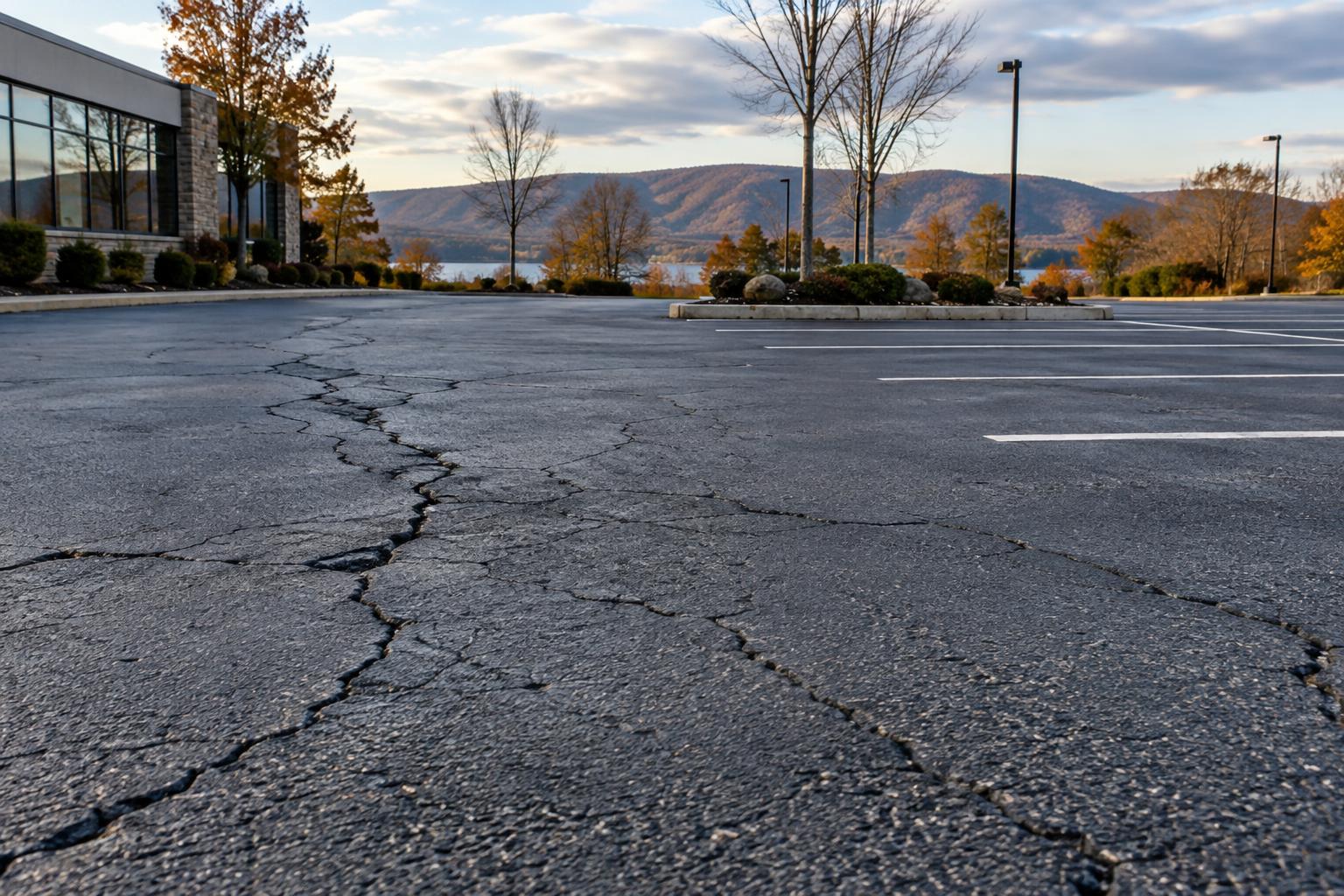
Individual cracks with firm, level edges are generally good candidates for filling or sealing. Cracks less than about 0.125 inch wide are generally not recommended for sealing at all, while cracks between roughly 0.125 and 1 inch are good candidates when secondary cracking around them stays limited. Anything wider than about 1 inch is typically better suited to patching rather than crack treatment.
Broken, displaced, or depressed pavement points to a different problem. Loose aggregate, edges that rock under traffic, or a cluster of connected cracks around a low spot usually point to a support problem below the surface. A bid should state plainly that these areas get flagged for separate assessment rather than folded into the crack-filling line item, since filler cannot restore structural support that has already failed.
Where Drainage Problems Need a Separate Fix
Standing water, stained runoff paths, or recurring puddles near a crack are signs the real issue may be drainage, not the crack itself. Treating the opening without addressing where the water comes from just delays the next round of damage. A sound bid asks the contractor to identify these locations and recommend drainage correction as a distinct scope item, priced and evaluated on its own.
This distinction matters most heading into winter, when water trapped under pavement freezes and expands repeatedly. A bid that lumps drainage repair in with crack filling makes it harder to track what was actually fixed and what was simply covered over for the season.
What a Complete Scope Document States
A scope document is the backbone of the bid. It should read like a checklist a field supervisor can actually follow, not a general description of intent.
Included Areas, Exclusions, and Approval Steps
A marked site plan or set of photographs showing exactly which pavement areas are included gives everyone a shared reference point. The document should also name which defects are excluded and need a separate assessment, along with the process for approving substitutions or added work once crews are on site. New York State's standard specifications treat crack sealing as work whose extent and requirements are defined by the contract's special specifications, which puts real weight on how carefully the project-specific bid is written.
Without a clear approval chain, change orders can pile up after the fact with little oversight. Requiring sign-off from a named contact, rather than a verbal go-ahead in the field, keeps the paper trail intact for budget reporting and for any questions that come up months later.
Filling vs. Flexible Sealing: Naming the Method
Contractors sometimes use "crack filling" and "crack sealing" interchangeably, but the two methods serve different purposes. Filling generally suits cracks with little horizontal movement, often using asphalt cement in a flush-fill configuration, and this approach is typically described for short-term performance of one to three years on low- to moderate-traffic pavement. Sealing is intended for working cracks that move more throughout the year, and a standard rubberized asphalt sealant applied in a simple band-aid configuration is similarly described for one to three years of performance under moderate traffic.
Because terminology varies by contractor, the bid should name the specific material and method rather than relying on a generic service label. This small detail prevents confusion about what was actually purchased and gives public works staff something concrete to check against the manufacturer's spec sheet.
Weather and Preparation Rules to Require
Even the best material fails if it goes down under the wrong conditions. Weather and preparation standards belong in writing, not left to a crew's judgment on a given morning.
Temperature and Moisture Govern the Schedule, Not the Calendar
Most crack-treatment materials perform best on dry pavement when air temperature is at least 4°C (about 39°F) and rising. New York State's own construction checklist calls for ambient air temperature above 40°F and a dry surface, and specifically warns crews to watch for morning dew that can leave cracks damp even when the surrounding pavement looks dry. A regional transportation guide from Colorado similarly treats fall crack filling as the preferred season but requires dry pavement and air temperatures above 35°F, while noting that the chosen sealant manufacturer's own temperature recommendations should govern the final call.
A bid that only references a project season, such as "work to be completed by November 30," leaves too much room for a crew to place material on an unsuitable day just to hit a deadline. Requiring the contractor to document and justify any day work proceeds under marginal conditions protects the municipality from paying for treatment that fails within a season.
Cleaning and Same-Day Preparation Standards
New York State's specification requires cracks to be cleaned immediately before sealing and prepared on the same day the work is performed, with cleaning reaching a minimum depth of 13 millimeters using a high-pressure air lance or hot-air lance to remove dust, dirt, sand, and other debris. A bid should mirror this same-day standard rather than allowing cracks to be cleaned one day and filled another, since dust and moisture can resettle in the gap between steps.
Routing, which cuts a controlled recess along a crack to hold material, is sometimes specified for working cracks but does not automatically fit every site, particularly where the surrounding asphalt is weak or badly weathered. The bid should state when routing applies and leave room for the contractor to flag pavement that cannot support it.
Scheduling Work Around Public Facility Operations
Public buildings rarely get to shut down for maintenance. A workable schedule treats the facility's daily operations as a fixed constraint, not an afterthought.
Work Zones, Traffic Routes, and Reopening Checks
Small, clearly marked work zones generally serve public facilities better than closing an entire lot at once. Coordinating traffic routes, pedestrian access, and vehicle movements with facility staff ahead of time avoids surprises on the day crews arrive. Reopening a treated area should depend on the material meeting its actual cure requirements rather than a promised number of minutes, since weather and placement conditions change how quickly material sets.
A bid should require the contractor to maintain a continuous, accessible pedestrian route to public entrances throughout the project, including any route needed for accessibility compliance. Any work extending into a public street, shoulder, or sidewalk needs separate confirmation of jurisdiction and traffic-control requirements, since lot maintenance approval does not automatically extend to a public right-of-way.
Procurement and Documentation Bidders Should Provide
The strongest scope document still needs solid procurement backing. This section covers the paperwork that protects the municipality once the bid becomes a contract.
Competitive Bidding Thresholds and Deadlines
Dutchess County municipalities must use formal competitive bidding for public works contracts exceeding $35,000, and bids arriving after the stated deadline are rejected and returned outright. Vendors can register at no cost with the Empire State Purchasing Group to access current bid documents, requests for proposals, and requests for quotes, which widens the pool of qualified contractors able to respond. Confirming that a bid meets these procedural requirements before it reaches final review avoids delays or disqualification later in the process.
Pricing Basis, Insurance, and Spec Sheets
A crack-sealing bid can reasonably state that the unit price covers labor, equipment, and materials, with payment based on measured pounds of material used and weigh tickets required to support the billed quantity. Requiring insurance documentation and the sealant manufacturer's specification sheet up front, along with a named supervisor's approval before work begins, is a standard expectation in regional public purchasing solicitations. These requirements give a public works director a paper trail to check against the actual materials delivered to the site.
Records for Spring Inspection
A complete bid should require the contractor to document treated and omitted locations, material information, and photographs, along with any follow-up observations useful for spring inspection. This record becomes the baseline for checking whether treated cracks reopened, whether plow contact affected the finished surface, or whether new depressions appeared near previously treated areas. This kind of dated documentation, a practice Avello Asphalt & Construction follows, gives the next maintenance cycle a clear starting point instead of a general note that the lot was "repaired."
A Clear Scope Makes Approval Straightforward
Approving a pre-winter crack-filling bid becomes far easier once the document itself does the work of defining quality. A bid that names qualifying defects, specifies material and preparation requirements, sets real weather criteria, and keeps crack treatment separate from patching or drainage repair gives a public works director something concrete to measure against. The paperwork protects the budget just as much as it protects the pavement.
For municipal maintenance planning heading into the colder months, reviewing a sample pre-winter crack filling scope can help clarify what a complete bid should include before it reaches final sign-off.
Company: Avello Asphalt & Construction Corp City: Poughkeepsie Address: 141 Daley Road Website: https://www.avelloasphalt.com
Mentioned in this blog post: Wappingers Falls service area, Poughkeepsie service area
Have a property like this?
Tell us what you're seeing. We'll walk the site, explain the options plainly, and give you a clear scope.
Related Avello guidance
More blog posts
- Speed Bumps at Housing Authorities: Placement & Plow Clearance - Poughkeepsie
- Does Restriping Fix ADA Bank Parking? - East Fishkill Paving Contractor Explains
- 10-Year Asphalt Pavement Plan for Office Parks - Poughkeepsie Paving Contractor
- Can a Medical Office Stay Open During Paving? Fishkill Contractor Explains