
Paving Trucking Yards Without Closing: Phased Work, Hudson Valley Contractor
Avello's take
This item explains how a busy trucking yard can be repaved in sections rather than closed for the entire job. It covers planning around dock access, truck routes, and shipping hours. It also explains why milling needs to be timed around loading activity, how cooling affects asphalt compaction, and why fresh pavement must reach a safe internal temperature before trucks return. We look at these details as parts of the same plan, built around how a yard actually operates.
For Hudson Valley property owners and managers, that planning matters because paving work and shipping activity share the same space. We work with industrial and logistics properties to plan around their operating patterns. A sensible next step is to review truck movements, loading windows, and access needs with the site's shipping team. Those details can shape a written phasing plan that sets out the work sequence, available routes, and reopening conditions, giving staff a clear picture of what to expect.
Key Takeaways
- Dividing a trucking yard into sections and sequencing work around dock access and truck circulation can let paving happen without a full shutdown
- Milling produces dust and debris, so timing it away from active loading windows protects both the work zone and dock operations
- Fresh asphalt must cool to a safe internal temperature before trucks can drive on it again, which affects how fast a reopened section can handle full traffic
- A written phasing plan that covers section order, access points, and reopening conditions helps a yard's shipping team plan around the work instead of being surprised by it
- Avello Asphalt & Construction Corp works with industrial and logistics properties across the Hudson Valley to plan paving around a site's actual operating patterns
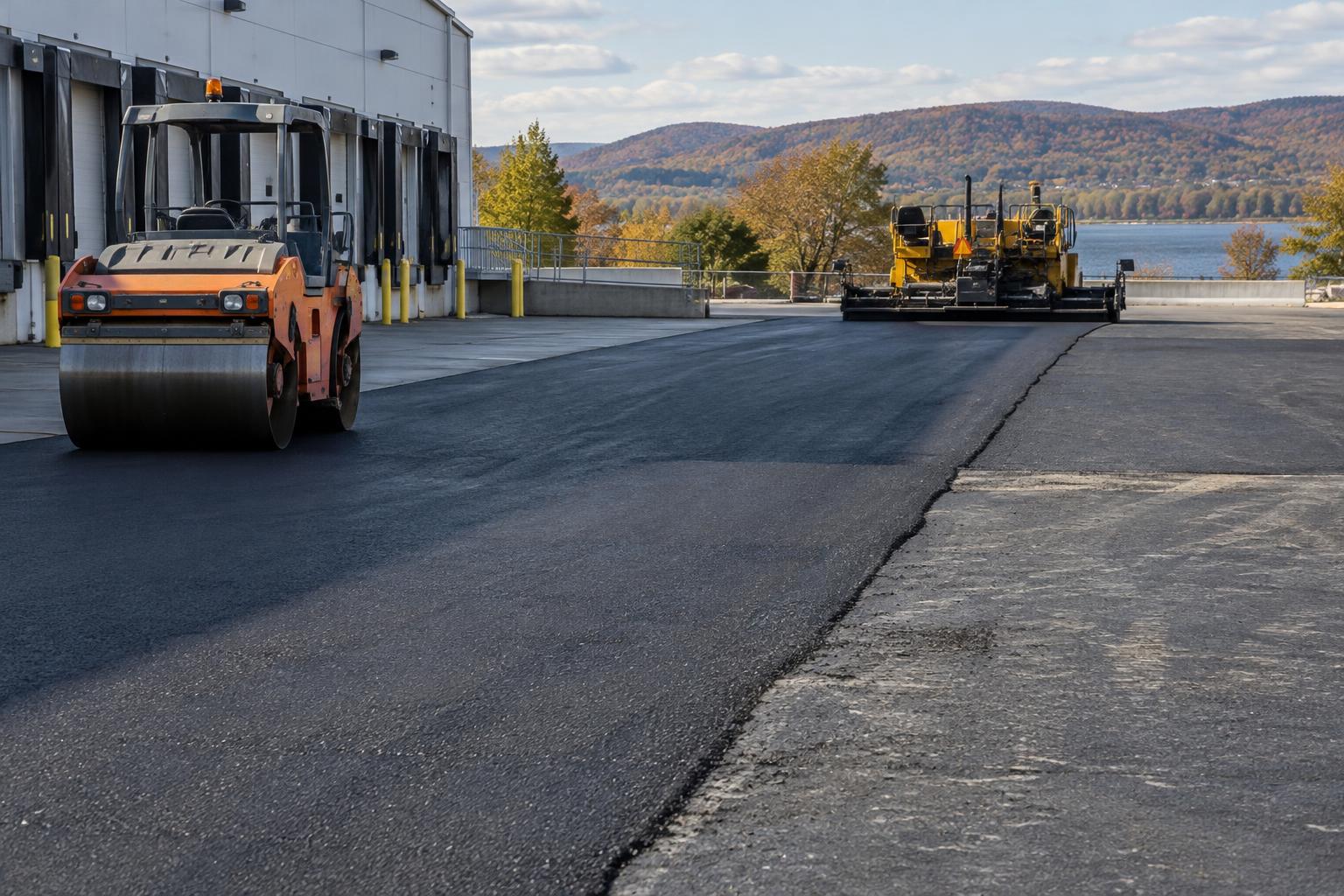
A trucking yard rarely has a day where nothing is moving. Trailers come and go, dock doors stay busy, and a single blocked lane can back up an entire shipping schedule. Paving a yard like this does not require shutting it down. When the work is broken into manageable sections and sequenced around truck circulation, dock access, and daily operating hours, a yard can keep moving while the pavement gets rebuilt underneath it.
Keep Trucks Moving During Paving
The biggest fear for an operations manager facing a paving project is losing a full day, or several, of dock access. Trailers idling off-site, missed pickup windows, and drivers rerouted through unfamiliar streets all add real cost. Paving contractors experienced with industrial sites plan for exactly this concern.
Phased construction, where a project is split into sections completed one at a time, is a recognized way to reduce the impact of work zones on daily operations. Instead of closing an entire yard, crews move through defined areas while the rest of the property keeps functioning. Phased scheduling built around a yard's own traffic patterns can keep a Poughkeepsie-area trucking or logistics site running through a paving project rather than forcing a full closure.
The approach works because a yard's pavement needs rarely fail everywhere at once. Some areas handle heavier axle loads near loading docks, while others see lighter traffic from staff parking or trailer storage. Treating the yard as a single all-or-nothing job ignores that reality and forces unnecessary downtime.
Why Phasing Keeps Docks Open
Phasing only works when it matches how the yard actually operates. A plan that looks clean on paper but ignores shift changes or peak shipping hours will still create bottlenecks. Getting the sequence right starts with understanding the property in detail before equipment ever shows up.
Dividing the Yard Into Manageable Sections
Breaking a yard into sections means identifying zones that can be paved independently without cutting off access to the rest of the site. A distribution center's paving sequence, for example, can be organized so that some dock doors and circulation routes stay open while other sections are under construction. This requires mapping out where trucks actually drive, turn, and park, not just where the pavement looks worn.
Section size matters too. Smaller sections finish faster and return to service sooner, which keeps disruption short-lived. Larger sections may be necessary where drainage work or base repairs span a wider area, but even then, access points on the edges of that zone can often remain usable.
Sequencing Around Dock Access and Circulation
Once sections are defined, the order they're completed in matters as much as the sections themselves. Coordinating with a facility's logistics staff and scheduling work around off-peak hours are both practical ways to keep a site functional during construction. A yard with a predictable shipping rhythm, heavy mornings and light evenings, for instance, can often shift paving activity to the slower window.
- Sections farthest from active dock doors are typically paved first, giving crews room to work without crossing live truck paths.
- Circulation routes needed for trailer movement are sequenced last within each phase, so trucks always have a way in and out.
- Temporary access lanes or alternate routes can be marked out before work starts, so drivers know where to go without guessing.
Milling, Dust, and Dock Operations
Milling, the process of grinding off the old asphalt surface before new material goes down, is often the messiest part of a paving project. It produces dust and debris that can drift toward nearby work areas, which becomes a real problem when loading docks are only a few hundred feet away.
Why Milling Timing Matters Near Loading Areas
Milling near an active dock creates more than noise. Dust can settle on equipment, interfere with visibility, and create slip hazards on walkways used by dock workers. Because of this, the work area and sequence need to account for nearby loading activity rather than treating milling as an isolated task.
Scheduling milling during a lull in shipping, or on a section of the yard with no adjacent dock activity that day, reduces this friction significantly. A mill-and-fill process, where milling is followed by placing new asphalt, also benefits from tight sequencing: the longer a milled section sits exposed, the more dust and loose debris accumulate before paving can begin.
From Fresh Asphalt to Reopened Pavement
Once asphalt is placed, the clock starts on compaction. This stage determines how durable the new pavement will be and how soon trucks can safely drive across it again.
Compaction Windows and Weather
Fresh asphalt cools quickly once it leaves the paver, especially in a thin layer, because more of the material is exposed to air and to the cooler base beneath it. Rollers need to follow closely behind the paving equipment to compact the mat before it cools too much to densify properly. Compaction generally needs to finish before the internal mix temperature drops below roughly 175 to 180°F; rolling after that point adds little density and can actually damage the aggregate.
Hudson Valley weather adds another variable. Cooler air, stronger wind, and a cold base layer can all shorten the compaction window, which is part of why paving schedules in this region often watch forecasts closely during fall and early winter projects. A yard manager planning a paving phase should expect the contractor to factor seasonal conditions into timing, not just truck traffic.
Same-Day Versus Multi-Day Reopening
How quickly a section reopens depends on surface temperature, not just how long ago the asphalt was placed. One referenced standard notes that newly finished asphalt may need to stay closed to traffic until its surface temperature drops below 160°F. In some municipal paving processes, roads are closed only until the asphalt cools, typically one to two hours, with sections often reopening the same day or within 24 hours after placement and compaction.
A trucking yard section is unlikely to differ dramatically from that pattern, though heavier axle loads and more frequent turning movements in a yard setting mean contractors may recommend a short cushion before full traffic resumes. Light passenger vehicle access can sometimes return sooner than full tractor-trailer traffic in the same section.
Planning the Schedule With Your Yard
None of this phasing works without input from the people who run the yard day to day. A paving schedule built in isolation from shipping patterns creates conflict on day one.
Coordinating With Shipping and Off-Peak Hours
Aligning paving activity with a yard's shipping calendar is one of the most effective ways to avoid disruption. If certain days or hours consistently see lighter trailer traffic, those windows become natural targets for the noisiest or most disruptive phases, like milling or initial excavation. Coordination with logistics staff before the project starts, rather than during it, helps both sides adjust without last-minute scrambling.
Seasonal shipping surges, holiday volume, or contract deadlines should all be part of early planning conversations. A section that would normally take two days to mill and pave might need to be split further, or shifted to a slower month, if it falls during a yard's busiest stretch.
What a Written Phasing Plan Should Cover
A written plan gives everyone, the paving crew, dock staff, and drivers, the same information at the same time. At minimum, it should spell out:
- The order sections will be completed in, with estimated start and finish dates for each
- Which access points and circulation routes remain open during each phase
- Expected reopening conditions, including whether a section allows light traffic sooner than full truck traffic
- Contingency language for weather delays, since compaction windows are sensitive to temperature and wind
- A point of contact on both sides for day-of adjustments
Having this kind of document in hand before work begins turns a potentially stressful project into something a yard's team can plan around with confidence.
Phased Paving Protects Yard Uptime
A trucking yard can get needed pavement work done while staying open for business. Dividing the site into sections, sequencing around dock access and circulation, timing milling away from active loading, and planning compaction around weather all work together to keep trucks moving while the surface underneath gets rebuilt. The result is pavement that holds up under heavy axle loads without forcing a yard to pause operations it can't afford to lose.
For yards weighing a paving project against a packed shipping calendar, Avello Asphalt & Construction Corp works through phased paving options early, which can make the difference between a disruptive shutdown and a project that barely slows the trucks down.
Company: Avello Asphalt & Construction Corp City: Poughkeepsie Address: 141 Daley Road Website: https://www.avelloasphalt.com
Mentioned in this blog post: Poughkeepsie service area
Have a property like this?
Tell us what you're seeing. We'll walk the site, explain the options plainly, and give you a clear scope.
Related Avello guidance
More blog posts
- Alligator Cracking in Office Park Lots: Millbrook, NY Asphalt Paver Checks Base
- Why Asphalt Bids Vary So Much? Red Hook, NY Paver Explains Senior Living Sites
- Asphalt Paving Estimate: What to Expect -Auto Dealership Wappingers Falls, NY
- Low Bid or Lowest Cost? Rhinebeck Paving Contractor Weighs Hidden Asphalt Risks