Alligator Cracking in Office Park Lots: Millbrook, NY Asphalt Paver Checks Base
Avello's take
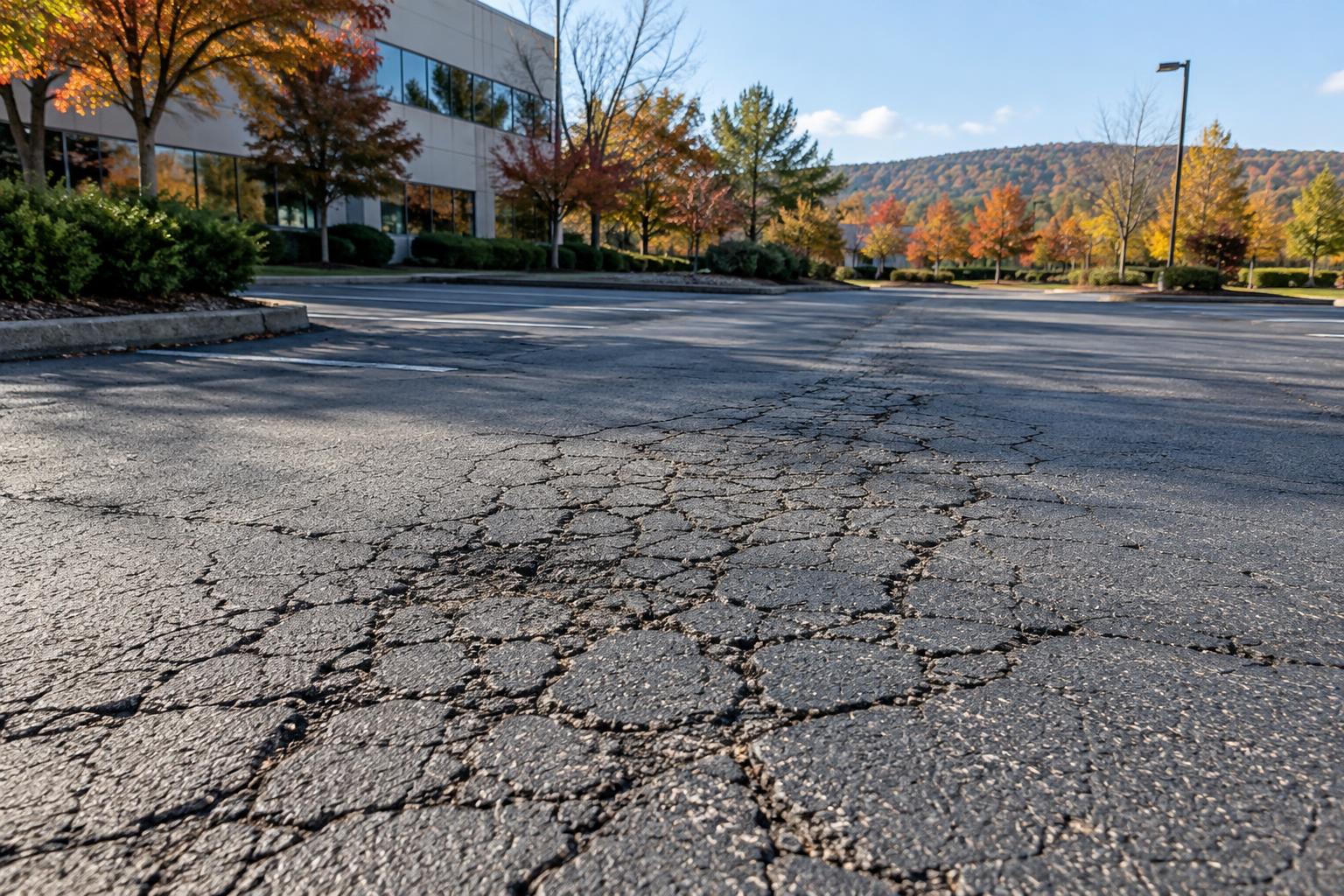
This item looks at the web of connected cracks that can appear in office park parking lots in Millbrook. Known as alligator cracking, that pattern often points to weakened support beneath the asphalt, rather than a surface issue alone. The article explains how repeated traffic loads, water, and seasonal freeze-thaw cycles affect pavement. It also covers why checking the base, the ground beneath it, and drainage around the lot helps guide repair decisions.
For Hudson Valley property owners and managers, the useful takeaway is that the visible cracks are only part of the picture. We see this as a reason to understand the conditions below the surface before choosing a repair. A sensible next step is an assessment of the cracked area and how water moves through the lot. That information helps distinguish areas that may need localized excavation and rebuilding from more widespread damage that calls for broader structural work.
Key Takeaways
- Alligator cracking is a pattern of interconnected cracks that usually points to lost strength in the pavement's base or subgrade, indicating a structural issue rather than merely a surface problem
- Water that seeps through cracked pavement can soften the base and subgrade, which weakens support and speeds up pavement failure
- A proper assessment checks the cracked area, the base and subgrade below it, and drainage patterns around the lot before choosing a repair
- Localized excavation and rebuilding may fix small areas, but widespread cracking often calls for broader structural work like milling and filling
- Property managers can have a free, no-obligation conversation to help figure out which repair path fits their lot
Office park parking lots in Millbrook take a steady beating from daily commuter traffic, delivery vehicles, and seasonal freeze-thaw cycles. When a web of interconnected cracks starts showing up, the pavement is often sending a signal about what is happening underneath the surface. Understanding that signal, and responding to it the right way, can save property managers from costly surprises down the road. This piece looks closely at how alligator cracking develops in office park lots and what it reveals about the base supporting the asphalt.
What Alligator Cracking Really Means
Alligator cracking gets its name because the pattern of cracks looks like the scales on an alligator's back. Instead of a single crack running in one direction, the pavement develops a connected network of smaller cracks that form blocks or chunks across the surface. This pattern is a sign of fatigue cracking, which happens when the pavement has been flexing under repeated loads for a long time.
Fatigue cracking develops from a mix of factors, including how heavy the traffic is, how thick the pavement layers are, what the asphalt mix is made of, how strong the foundation underneath is, and the climate the pavement sits in. For office parks, this often means years of cars and delivery trucks rolling over the same paths, slowly wearing down an area that may have never had quite enough strength to begin with. Recognizing alligator cracking early matters because it rarely stays the same size or severity for long.
Why the Base and Subgrade Fail
Pavement is only as strong as what sits beneath it. When the base or subgrade starts to lose strength, the asphalt above it has to work harder to carry traffic loads, and cracking is often the first visible sign that something below is struggling.
Traffic Loading and Thin Pavement
Parking lots are not built the same way as highways, and they are not meant to carry the same kind of loads over and over without consequence. When pavement sections are thinner than what the traffic actually demands, repeated loading causes the pavement to flex more than it should. Over time, this flexing creates stress that the asphalt cannot absorb on its own, and cracks begin forming as the material fatigues. Areas near building entrances, loading zones, or drive lanes that see frequent truck traffic are especially prone to this kind of wear.
Water's Role in Losing Support
Water is one of the most persistent threats to pavement strength. Once cracks form, even small ones, they create a path for water to enter the pavement structure and reach the base and subgrade below. Poorly drained or unstabilized base material can soften when it stays wet, and that softened material loses its ability to support the loads above it. A subgrade that stays dry holds up far better under traffic than one that is regularly saturated, which is why drainage plays such a large role in how long a parking lot lasts.
Signs the Damage Is Spreading
Alligator cracking does not usually stay contained once it starts. Watching how the damage changes over time helps property managers understand whether a lot still has options for a lighter repair or whether it is heading toward something more involved.
From Cracks to Potholes
As alligator cracking progresses, small pieces of asphalt between the cracks can start to break away from the surrounding pavement. Once that happens, potholes form, and the open gaps let even more moisture into the subbase. Water weakens the base further, which allows more pavement to break apart, which then lets in still more water, and the cycle repeats. Catching the damage before it reaches this stage usually means a simpler, less expensive repair.
When Surface Treatments No Longer Help
In the early stages, when alligator cracking is light and the pavement is not sagging or depressed, a surface treatment such as a chip seal might be enough to slow things down. Once the cracking becomes moderate to severe, surface treatments stop being effective because they cannot address the structural weakness happening below the asphalt. At that point, the pavement typically needs a partial- or full-depth patch, often called a digout, where the failed material is actually removed rather than just covered over.
Assessing the Cracked Area
A sound repair decision starts with a close look at what is actually happening in and under the pavement, not just what is visible on the surface.
Checking the Base and Subgrade
A pavement investigation can include coring or digging a small test pit to examine the layers below the surface. This kind of check reveals whether the base material is stable or has become wet and soft, and it can show whether moisture is contributing to the fatigue cracking above. Where alligator cracking is depressed more than half an inch, that depression is often a sign the damage extends through the full depth of the pavement structure, not just the top layer. This kind of information helps determine whether a repair can stay localized or needs to go further.
Checking Drainage Around the Lot
Drainage conditions around the lot deserve just as much attention as the pavement itself. Low spots where water pools, gutters or catch basins that are not keeping up, and grading that pushes water toward the pavement instead of away from it can all explain why a particular section of the lot is failing faster than the rest. Addressing the water source matters just as much as fixing the pavement itself, since a repair placed over an unresolved drainage problem tends not to last.
Choosing the Right Repair
Once the assessment is complete, the next step is matching the repair method to the extent and severity of the damage.
Localized Excavation and Rebuilding
For cracking that is limited to a specific area, such as a section where subgrade support has clearly been lost but the surrounding pavement remains sound, the typical approach is to remove the cracked pavement, dig out the weak subgrade, and replace it with stable material. Drainage improvements are often added at the same time if moisture was found to be a contributing factor. The area is then patched with new pavement, restoring both strength and a smooth surface.
When Broader Structural Work Is Needed
When alligator cracking covers large areas of the lot and points to a more general structural failure rather than a single weak spot, milling and filling the pavement becomes the more practical approach. In some cases, an overlay is also needed if the underlying pavement structure still falls short of what the traffic demands. This kind of project takes more planning than a small patch, but it addresses the root cause across the whole affected area instead of leaving nearby sections to fail on their own schedule.
Keeping the Office Park Operational
Office parks depend on steady access for tenants, employees, and visitors, so repair work has to be planned with that in mind. Phased construction and strategic scheduling can allow sections of a lot to be repaired while other areas remain open, which keeps disruption to a minimum. Coordinating the timeline around business hours and parking demand matters just as much as the repair method itself.
Acting Early Protects the Pavement Investment
Alligator cracking rarely gets better on its own, and waiting too long to address it usually means a bigger repair bill later. A property manager who notices this cracking pattern in a Millbrook office park lot has a real opportunity to catch the problem while a localized fix is still possible, rather than waiting until the damage spreads into potholes and larger structural failures. Getting a clear answer about the base, the subgrade, and the drainage conditions makes it much easier to choose a repair that actually solves the problem instead of masking it temporarily.
For property managers weighing the next step, Avello Asphalt & Construction Corp provides a free, no-obligation conversation to help clarify whether a lot needs a simple patch or a more complete structural rebuild.
Company: Avello Asphalt & Construction Corp City: Poughkeepsie Address: 141 Daley Road Website: https://www.avelloasphalt.com
Mentioned in this blog post: Poughkeepsie service area, Millbrook service area
Have a property like this?
Tell us what you're seeing. We'll walk the site, explain the options plainly, and give you a clear scope.
Related Avello guidance
More blog posts
- Why Asphalt Bids Vary So Much? Red Hook, NY Paver Explains Senior Living Sites
- Asphalt Paving Estimate: What to Expect -Auto Dealership Wappingers Falls, NY
- Low Bid or Lowest Cost? Rhinebeck Paving Contractor Weighs Hidden Asphalt Risks
- Campus Drop-Off Loop Paving Before November Ends: Poughkeepsie Paver's Window