Asphalt vs Concrete for Dealership Lots: Hudson Valley Paver Weighs Durability
Avello's take
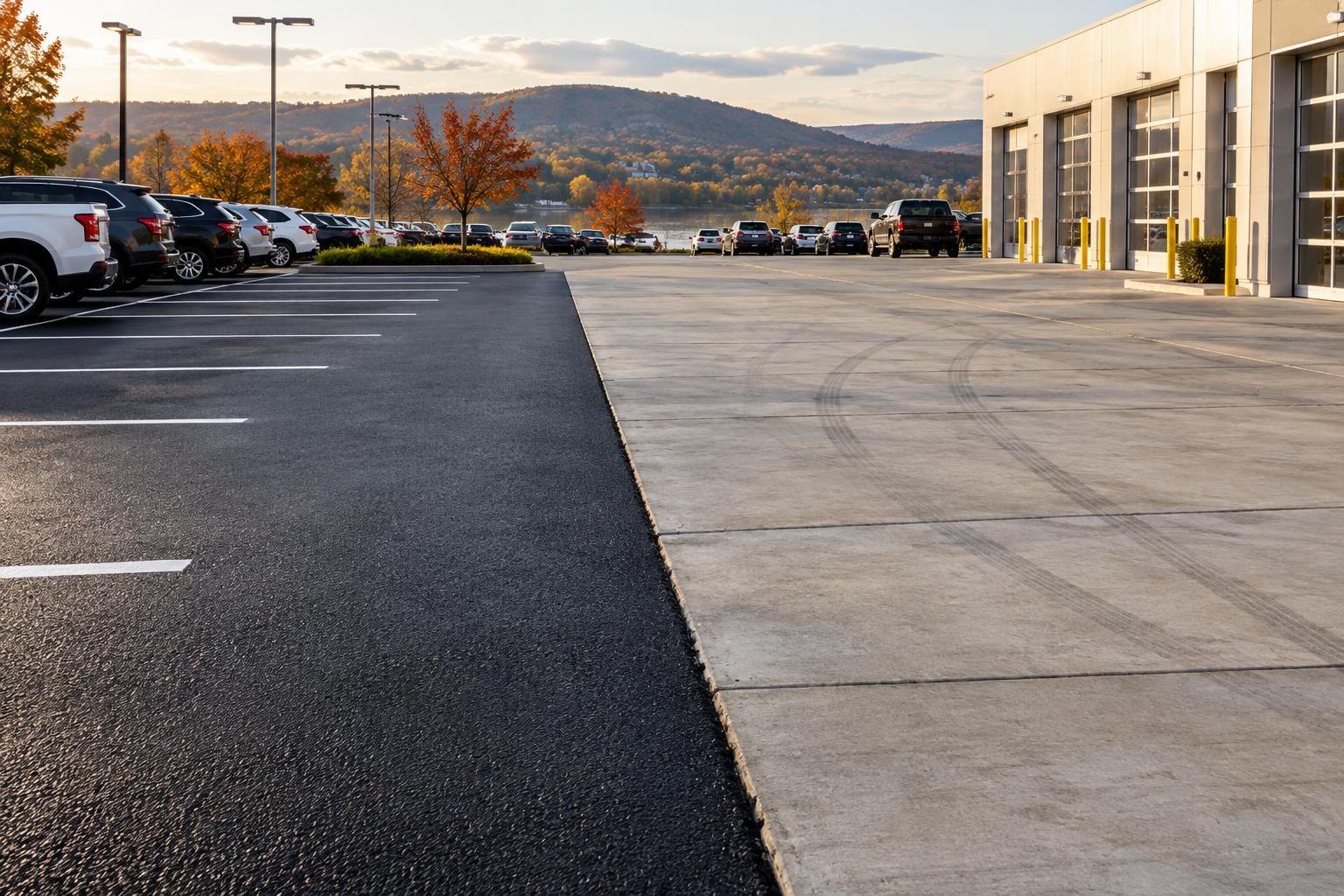
This item looks at how asphalt and concrete handle the different demands of a dealership lot. Customer parking, service lanes, and delivery areas do not all carry the same traffic. Asphalt can rut where heavy vehicles sit or turn repeatedly. Concrete’s rigid surface tends to hold up better in those areas. The article also explains why the base, drainage, and winter exposure matter alongside the surface material. A mixed layout can place asphalt in customer parking and concrete where heavier loads concentrate.
For Hudson Valley property owners and facilities managers, that means looking at how each part of a lot is used before choosing a pavement. We see the value in that practical, area-by-area approach. Local freeze-thaw cycles, moisture, and road salt also belong in the discussion. A sensible next step is a review of vehicle routes, places where trucks stop and turn, drainage, and base conditions. Those details help shape a material choice that fits the work each area needs to do.
Key Takeaways
- Choosing between asphalt and concrete for a dealership lot depends on traffic loads, winter exposure, and the condition of the pavement's base, not just upfront price
- Asphalt can rut under sustained heavy loads, while concrete's rigid surface tends to hold up better where trucks or service vehicles sit and turn repeatedly
- A hybrid layout using asphalt for customer parking and concrete at loading docks or service pads is one way dealerships balance cost and durability
- Freeze-thaw cycles and road salt affect asphalt and concrete differently, which matters for a Hudson Valley property planning winter maintenance
- Thickness and base requirements change depending on whether an area handles customer cars or heavier delivery and service trucks
A dealership lot takes a beating most parking areas never see. Customers circle through looking for the right spot, service vehicles idle near bay doors, and delivery trucks drop off inventory on a regular schedule. Picking the right pavement for each of these zones means weighing more than sticker price.
Which Pavement Holds Up Best?
The honest answer depends on which part of the lot is in question. Asphalt and concrete both perform well when matched to the right job, but each responds to traffic and weather differently. A customer parking row that sees light passenger vehicles has very different demands than a service lane where trucks idle for minutes at a time.
For dealership owners and facilities managers in Dutchess County, the real decision comes down to traffic loads, winter exposure, and what is happening beneath the surface. Dealership lots benefit from this kind of zone-by-zone thinking, since a single material rarely serves every part of the property equally well.
Getting this right from the start can prevent costly repairs down the road. A lot built without considering where heavy vehicles concentrate often shows premature wear in those exact spots, regardless of which material was chosen.
How Each Material Handles Dealership Traffic
Traffic patterns on a dealership lot are rarely uniform. Some areas see steady but light passenger car traffic, while others take repeated hits from delivery trucks, car carriers, or service vehicles that sit in place while being loaded or worked on. Understanding how asphalt and concrete each respond to these different pressures shapes a smart pavement plan.
Why Asphalt Can Rut Under Heavy Vehicles
Asphalt is a flexible pavement, which is part of what makes it so popular for general parking and driving lanes. That flexibility lets it expand and contract with temperature changes without cracking apart easily. Under sustained heavy loads, though, that same flexibility becomes a weakness. Repeated pressure from heavy trucks can cause rutting and depressions, especially in turning zones where vehicles pivot and apply twisting force to the surface. A dealership's service drop-off area or a lane used daily by car carriers tends to show this wear first.
Why Concrete Resists Sustained Loads
Concrete takes the opposite approach to handling stress. Its rigid surface resists deformation even when heavy vehicles sit in the same spot day after day. This rigidity makes concrete a strong candidate for areas with frequent heavy-truck traffic, such as loading docks or industrial yards built for large vehicles. Concrete costs more upfront and takes longer to install, so it makes the most sense where its durability advantage is actually needed rather than across an entire lot.
Thickness and Base Needs by Area
Pavement thickness is not a one-size-fits-all number. It depends heavily on the subgrade underneath and how many times that surface will carry a vehicle's weight over its lifetime. A thickness that works fine for a customer parking row can fail quickly under a loading dock's demands.
Customer Parking vs. Delivery and Truck Lanes
For areas handling cars and light trucks, a four-inch pavement section is generally considered adequate. Larger delivery trucks change that calculation, often pushing the recommended thickness up to five or six inches. Truck lanes used specifically for loading and deliveries need even more structure beneath the surface course, typically calling for a minimum of three inches of base asphalt along with an aggregate subbase of more than six to eight inches. Skipping this step to save money upfront is one of the most common reasons heavy-traffic areas fail early.
Grading and Drainage Slope Requirements
Proper grading matters just as much as thickness. Parking surfaces need to be sloped so water actually drains away instead of pooling. A minimum slope of one percent is the baseline, but two percent performs better in practice, and six percent is generally treated as the upper limit for parking areas. Standing water left on a dealership lot does more than create an eyesore; it speeds up freeze-thaw damage and can undermine the base layer over time, which eventually affects whatever surface sits on top of it.
Surviving Hudson Valley Winters
Hudson Valley winters bring a predictable combination of freezing temperatures, road salt, and moisture that tests every pavement surface on a dealership lot. Planning around these seasonal stresses matters just as much as planning around daily traffic.
Freeze-Thaw, Salt, and Snow Melt Differences
Freeze-thaw cycles, winter salt, moisture, and heavy traffic are the main stresses local pavement has to withstand season after season. Concrete can crack under these conditions if installation and joint design are not handled carefully, since water that gets into joints and freezes can expand and widen those gaps over time. Asphalt's dark surface tends to absorb more sunlight, which can help snow melt a little faster on sunny winter days, while concrete stays cooler and may need more salt applied to keep it clear. Neither difference is dramatic enough to decide the whole question on its own, but it is worth factoring into a facilities manager's winter maintenance budget.
Upfront Cost vs. Long-Term Maintenance
Installation price is only part of the real cost of a dealership lot. The maintenance schedule that follows, and how disruptive that maintenance is to daily operations, matters just as much over the life of the pavement.
Crack Sealing and Sealcoating vs. Joint Repairs
Asphalt maintenance generally revolves around crack sealing and sealcoating, done on a fairly regular schedule to protect the surface from water and sun damage. Concrete maintenance centers more on joint sealing, done less frequently but sometimes involving more complex work when it is needed. The right fit often comes down to a property's preference for more frequent, simpler upkeep versus less frequent work that takes more planning when it happens. Asphalt is also generally easier and less costly to patch when damage does occur, while concrete repairs tend to run more expensive.
Overlay Versus Full-Depth Replacement
When an asphalt surface starts showing its age but the base underneath is still solid, an overlay is often the right call. It restores the driving surface without the cost and disruption of tearing everything out. Full-depth replacement becomes necessary when the base or subgrade itself has failed, which is a bigger and more expensive undertaking regardless of which material sits on top. Concrete's longer service life sounds appealing, but when repairs are eventually needed, they can mean a more expensive and longer closure, which is worth weighing against a dealership's need to keep areas open for customers and inventory.
A Hybrid Layout for Dealership Lots
Rather than treating the choice as all-or-nothing, many dealerships get the best results from splitting the lot by function. Each area gets the material best suited to what actually happens there.
Asphalt for Parking and Circulation
General customer parking stalls and driving aisles are usually well served by asphalt. These areas see lighter, more evenly distributed traffic from passenger vehicles, which plays to asphalt's strengths: lower upfront cost, quicker installation, and easier repairs when minor damage shows up. High-density asphalt with a well-compacted base can also handle lighter-use access roads without issue.
Concrete for Loading Docks and Service Pads
Spots that take concentrated, repeated heavy loads are where concrete earns its higher price tag. Loading docks, dumpster pads, and service areas where trucks or heavy equipment sit in place benefit from concrete's resistance to rutting and deformation. Even here, joint sealing stays part of the maintenance routine to keep water from working its way into the base and causing cracks.
Matching Pavement to Traffic, Not Just Price
The smartest approach for any dealership lot starts with an honest look at traffic patterns rather than a simple comparison of installation quotes. A lot that routes heavy delivery trucks through the same lane as customer parking sets itself up for uneven wear no matter which material gets chosen. Mapping out where vehicles turn, idle, and load before construction begins makes it much easier to decide where asphalt belongs and where concrete is worth the extra investment.
Budget planning should also account for the maintenance schedule a dealership is realistically prepared to keep up with, not just the number on the first invoice. A property that can commit to routine sealcoating might get excellent value from an all-asphalt lot with concrete reserved for the heaviest-use pads. A property more focused on minimizing disruption over the decades ahead might lean toward concrete in more areas, accepting the higher upfront cost for fewer major repairs later. Avello Asphalt & Construction Corp works with Hudson Valley dealership owners weighing these tradeoffs to turn a complicated decision into a clear, workable plan.
Company: Avello Asphalt & Construction Corp City: Poughkeepsie Address: 141 Daley Road Website: https://www.avelloasphalt.com
Mentioned in this blog post: Poughkeepsie service area
Have a property like this?
Tell us what you're seeing. We'll walk the site, explain the options plainly, and give you a clear scope.
Related Avello guidance
More blog posts
- Speed Bumps at Housing Authorities: Placement & Plow Clearance - Poughkeepsie
- Does Restriping Fix ADA Bank Parking? - East Fishkill Paving Contractor Explains
- 10-Year Asphalt Pavement Plan for Office Parks - Poughkeepsie Paving Contractor
- Can a Medical Office Stay Open During Paving? Fishkill Contractor Explains