Asphalt Potholes at NY Gas Stations: Union Vale Contractor on Repair Options
Avello's take
This item looks at potholes at gas station entrances and drive lanes, with repair guidance for Union Vale fuel sites. It explains why the condition beneath the asphalt matters more than the visible size of a hole. We see inspection as the starting point for choosing between a temporary cold patch and a full-depth repair that addresses lost support. The article also covers when nearby potholes belong within a shared repair area and why customer paths, fuel deliveries, and pedestrian access need a place in the plan.
For Hudson Valley property owners and managers, the useful takeaway is that repair decisions should follow what the pavement and base actually show. Surface appearance alone does not tell the whole story. We view a documented inspection, followed by a written repair scope, as a sensible next step. That scope should define repair boundaries, address drainage, explain access during the work, and state the conditions for reopening an entrance or pump lane.
Key Takeaways
- Entrance and drive-lane potholes at a fuel site are both pavement defects and traffic-management challenges that need quick, clear decisions
- Checking whether damage reaches the compacted base beneath the asphalt matters more than measuring how wide a pothole looks from a car window
- Cold patch can bridge the gap when weather or scheduling rules out a permanent fix, but a full-depth cut-and-patch repair is what actually rebuilds lost support
- Several small potholes along the same turning path often call for one larger, clearly defined repair instead of a string of separate patches
- A written repair scope should spell out boundaries, drainage, access phases, and the exact conditions that must be met before reopening a pump lane or entrance
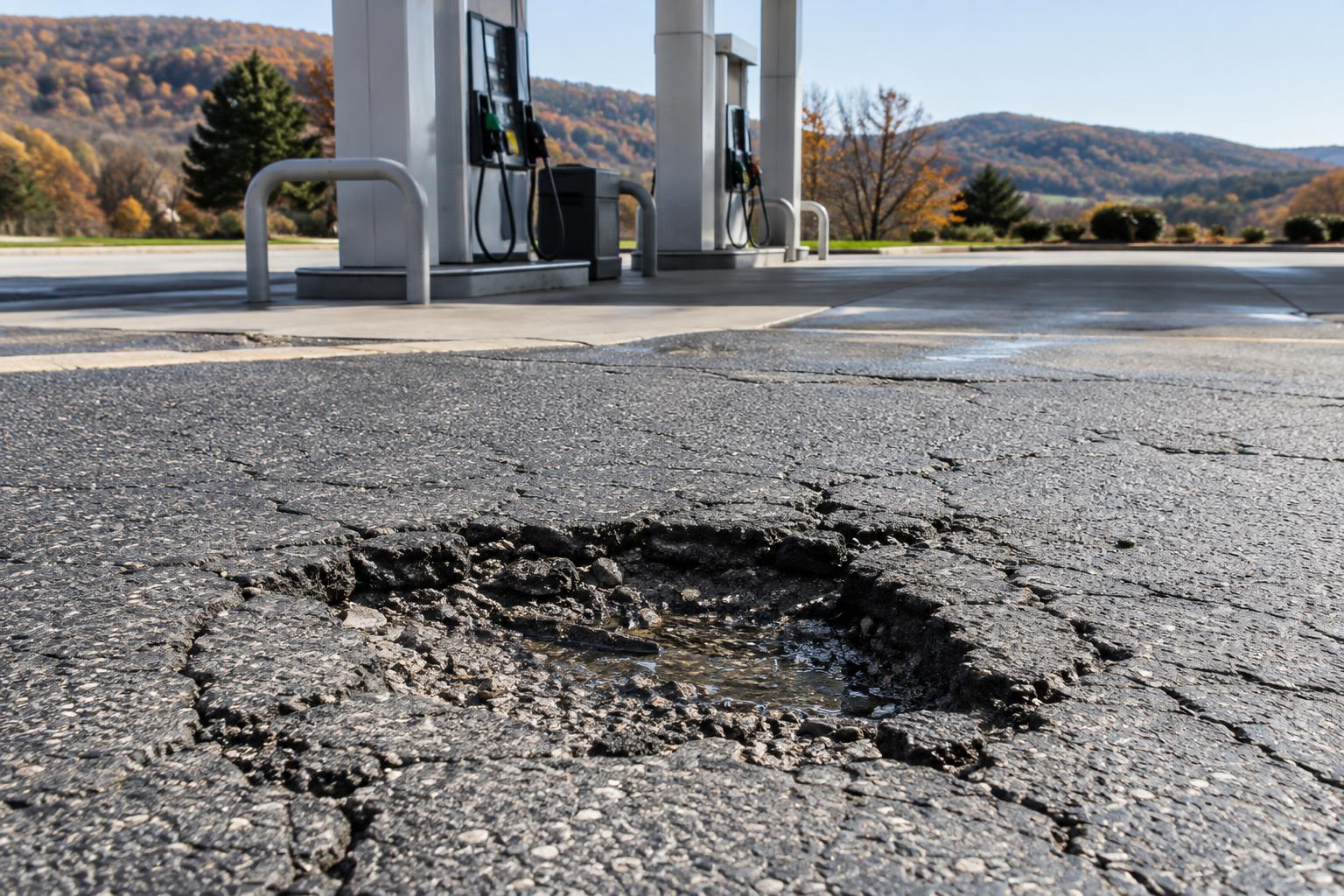
A pothole at a gas station entrance does more than jolt a driver's suspension. It sits exactly where customers turn in off the road, where fuel trucks maneuver to unload, and where a wrong move could mean a liability headache for the property manager. Treating that pothole correctly starts with understanding what is happening below the surface, not simply how big the hole looks from the cashier's window.
Why Entrance Potholes Need Quick Decisions
Entrance and drive-lane potholes are both a pavement defect and a traffic-management problem at the same time. A hole that looks minor can still force drivers into an awkward swerve near a fuel pump or a pedestrian crossing, and that risk grows every day the repair sits unaddressed. A detailed look at handling these situations for Union Vale gas stations lays out how to separate the damaged area from traffic first, then work through the repair decision step by step.
Speed matters, but getting the diagnosis right the first time matters just as much. A rushed decision to toss cold patch into a hole without checking what's underneath often means repeating the job within weeks. The sounder approach treats the first inspection as the most important step, not an afterthought before grabbing a bag of patch mix.
Inspect Before You Pick a Repair
Choosing a repair method based only on how wide the opening looks is one of the most common mistakes at any commercial property, and fuel sites are no exception. A small hole sitting over wet, loose material underneath can need far more extensive work than a broad patch of shallow surface wear. The only way to tell the difference is a careful inspection of the pavement, the surrounding material, and any signs of water intrusion.
Signs the Damage Reaches the Base
An isolated opening with firm, stable edges often allows for a simple, localized repair once loose debris is cleared out. Settlement tells a different story. Sunken wheel paths, soft spots ringing the hole, or a patch that keeps shifting under traffic all point to problems in the aggregate base, the layer of compacted stone that supports the asphalt above it. Water is usually behind these deeper failures, since standing water can infiltrate cracks, saturate the base, and weaken the subgrade until the pavement above can no longer hold its shape.
Photographing each pothole against a fixed reference point, like a pump island or a driveway sign, creates a useful record over time. Checking whether water collects in the hole, whether vehicles catch its edge, and whether the same spot has been patched before all help build a clearer picture before committing to a repair plan.
When Adjoining Potholes Call for One Larger Repair
Several failures clustered along the same turning path or entrance strip are a signal worth paying attention to. Rather than patching each one separately, it often makes more sense to define a single larger repair area that covers the whole stretch. Joining those spots into one footprint reduces the number of joints exposed to turning tires and water intrusion, both common starting points for repeat failures. This does not mean the entire lot needs resurfacing; the repair boundary should follow what the inspection actually shows, not an assumption that bigger is always better.
Temporary Patch or Permanent Fix?
Once the inspection is done, the next decision is whether the situation calls for a stopgap measure or a repair meant to last. Both have a place, and the right choice depends on weather, scheduling, and how deep the damage actually goes.
Cold Patch as a Stopgap Measure
Cold patch material can be placed without running a hot-mix paving operation, which makes it a practical option when asphalt plants are closed for the season or when conditions aren't right for permanent work. A throw-and-roll patch using cold mix addresses an immediate safety hazard and buys time until a proper repair can be scheduled. Cold patch still needs real compaction and regular monitoring, since turning tires, moisture, and plow blades can all work it loose faster than a permanent repair would wear.
Full-Depth Cut-and-Patch Repair Steps
A permanent repair generally follows a consistent sequence: cutting back beyond the visibly damaged pavement with square, rectangular edges, removing the failed asphalt, and inspecting what's left of the base. Loose or saturated support material gets removed and replaced before new asphalt goes down in compacted layers. The square-edged cut isn't a cosmetic choice; it leaves sound material around the repair and makes proper compaction far easier to achieve. The finished patch should sit flush with the surrounding pavement, since a raised edge invites plow damage and a sunken one collects water, both of which can undo the repair within a season.
Keeping Pumps, Pedestrians, and Deliveries Moving
A repair plan that ignores how the site actually operates day to day only covers half the job. Entrance and drive-lane work needs to account for every kind of movement happening on the property, including the construction itself.
Phasing Work Around Customer Paths
Thinking through a customer's actual path, from entering the property to approaching a pump to parking at the store and exiting, helps identify where a repair closure might create a conflicting turn or block a necessary route. Properties with two usable entrances may be able to keep one open while the other gets repaired, provided the remaining driveway can handle the turning movements involved. A single narrow entrance is a different story and often requires a planned, temporary closure rather than squeezing traffic past an open excavation. Pedestrian routes deserve the same attention; a walking path from parking to the store entrance should stay clearly separated from machinery and open pavement at every phase of the work.
Coordinating Fuel Deliveries and Equipment Access
Fuel tankers need considerably more room to maneuver and unload than a typical passenger vehicle, and that space requirement should shape the entire repair schedule. Excavation work should never be scheduled across the path a delivery tanker needs to reach the fill connection, and a driver shouldn't be expected to improvise a new route through an active work zone. Coordinating with the fuel supplier ahead of time, and confirming that site safety equipment remains accessible throughout the project, keeps deliveries running without forcing a dangerous workaround.
Drainage, Grading, and Right-of-Way Checks
Water is behind more repeat pothole failures than almost anything else, so drainage deserves its own close look before any patch goes down. Removing water and debris from the hole before repair work begins is a basic first step, but the bigger question is whether a drainage problem is feeding the damage in the first place. A repair that doesn't match surrounding grades can accidentally create a new low spot, setting up the next failure in a slightly different location.
On sloped properties, tracing water from the uphill edge of the site through the fuel area to its intended outlet helps confirm that a new repair won't send runoff toward the store entrance, across an accessible route, or out into the public road. It's also worth confirming whether the damaged entrance sits entirely on private pavement or overlaps a public-road apron or right-of-way, since that distinction can change who needs to approve the work and how traffic control gets handled. A private-lot repair shouldn't quietly expand into road work without that question settled first.
Putting Repair Terms and Reopening Rules in Writing
A written scope turns a verbal understanding into something everyone can check against later. It should specify the marked repair boundaries, how far cuts will extend into sound pavement, removal depth, and the process for approving any additional base work if conditions turn out worse than expected once excavation starts. Beyond that, the scope should cover replacement base material, the asphalt mix and compacted thickness being used, finished grades and drainage direction, and how the repair ties into existing fuel-system covers, islands, and pavement edges.
Access arrangements belong in writing too: which pumps close during which phase, how customers get directed around the work, how deliveries are coordinated, and exactly what conditions must be met before each area reopens. A scope that simply says "fill potholes" leaves too much open to interpretation when the actual work involves excavation or permanent asphalt replacement. Naming one person authorized to approve any changes, especially when a regional facilities manager controls the budget while a local store manager handles daily access, keeps decisions from stalling mid-project. A clear written scope and a free, no-obligation conversation help commercial and retail property owners understand exactly what a proposed repair includes before work begins.
Matching the Repair to the Damage Pays Off
The method that sounds most advanced isn't automatically the right one for a given pothole. The better question is always which approach addresses the surface, the support material, and the water conditions actually present at that specific spot on the property. A small cold-patch fix might be exactly right for a shallow winter pothole, while a full-depth cut-and-patch repair might be the only thing that actually solves a soggy, settling entrance.
Getting this right protects more than the pavement itself. It protects the steady flow of customers turning in for gas, the tanker driver trying to reach the fill connection, and the pedestrian walking from a parking spot to the store entrance. For a practical next step, consider starting with a professional pothole assessment to determine whether a quick patch or a full-depth repair fits the damage at hand.
Company: Avello Asphalt & Construction Corp City: Poughkeepsie Address: 141 Daley Road Website: https://www.avelloasphalt.com
Mentioned in this blog post: Poughkeepsie service area, Union Vale service area
Have a property like this?
Tell us what you're seeing. We'll walk the site, explain the options plainly, and give you a clear scope.
Related Avello guidance
More blog posts
- Speed Bumps at Housing Authorities: Placement & Plow Clearance - Poughkeepsie
- Does Restriping Fix ADA Bank Parking? - East Fishkill Paving Contractor Explains
- 10-Year Asphalt Pavement Plan for Office Parks - Poughkeepsie Paving Contractor
- Can a Medical Office Stay Open During Paving? Fishkill Contractor Explains