Why Parking Lots Crack in Winter | Hudson Valley Paving Contractor Explains
Avello's take
Winter can change a parking lot in ways that are not obvious at the surface. This item explains how water enters small cracks, freezes, and expands, gradually widening those openings. It also covers how cold temperatures make asphalt less flexible and how freezing moisture beneath pavement can leave uneven surfaces. We look at these processes in plain terms, including the role of deicing materials and the wear they can cause to pavement markings.
For Hudson Valley property owners, managers, boards, and public works teams, understanding these changes helps put winter pavement conditions in context. Our region’s repeated freezing and thawing makes maintenance timing and budget planning especially relevant. We see a sensible next step as using that understanding to plan maintenance around observed conditions, from small cracks to uneven pavement and faded markings. That keeps the discussion grounded in what the property needs.
Key Takeaways
- Freeze-thaw cycles expand water by 9% in volume, creating thousands of pounds of pressure that transforms minor cracks into major structural failures
- Cold temperatures stiffen the oils in asphalt, reducing flexibility and causing thermal contraction stress fractures
- Hudson Valley's numerous freeze-thaw cycles create cascading damage, with most potholes starting as small surface cracks
- Spring prevention and maintenance costs significantly less than emergency winter repairs for commercial properties
Winter weather transforms parking lots from smooth, durable surfaces into cracked, pothole-riddled hazards that cost commercial property owners thousands in repairs. Understanding the science behind winter pavement damage helps property managers make informed decisions about maintenance timing and budget planning.
The Freeze-Thaw Cycle: Your Parking Lot's Winter Enemy
The freeze-thaw cycle represents the most destructive force affecting parking lots during winter months. When temperatures fluctuate above and below 32°F, moisture trapped in pavement undergoes rapid expansion and contraction. This constant movement creates immense stress on asphalt structures, leading to progressive deterioration that accelerates throughout the cold season.
In the Hudson Valley region, where winter temperatures regularly oscillate around the freezing point, parking lots endure dozens of these damaging cycles throughout a single season. Avello Asphalt & Construction Corp has observed how these frequent temperature changes create cascading damage patterns that compound over time, making early intervention vital for commercial properties.
How Cold Temperatures Turn Flexible Asphalt Into Brittle Pavement
Asphalt pavement relies on flexibility to withstand traffic loads and environmental stresses. However, winter conditions systematically compromise this characteristic through multiple mechanisms that work together to weaken pavement integrity.
1. Bitumen Oil Stiffening Reduces Asphalt Flexibility
The oils (bitumen) that bind asphalt components together naturally stiffen as temperatures drop, reducing molecular mobility and making the material more brittle. This increased stiffness transforms normally flexible pavement into rigid material that cannot accommodate normal expansion and contraction. Cold weather can also accelerate the oxidative aging process, further contributing to long-term brittleness. When asphalt loses its ability to flex, it begins to snap under stress rather than bend, creating the initial cracks that will later become major problems.
2. Thermal Contraction Generates Stress Fractures
As temperatures plummet, asphalt contracts significantly. This thermal contraction creates tension within the pavement structure that exceeds the material's reduced tensile strength. The result is stress fractures that appear as hairline cracks initially but provide entry points for water infiltration. These cracks often appear in predictable patterns, following lines of weakness in the pavement structure.
3. Oxidative Aging Creates Long-Term Brittleness
Oxidative aging, a chemical reaction where oxygen molecules react with asphalt binder molecules, permanently alters the molecular structure of the pavement, making it increasingly brittle over multiple winter seasons. While heat generally accelerates oxidation, the overall harshness of winter conditions can contribute to this long-term brittleness. This process is irreversible and cumulative, meaning each winter season leaves pavement more vulnerable to the next.
Water Infiltration: The 9% Volume Expansion That Destroys Pavement
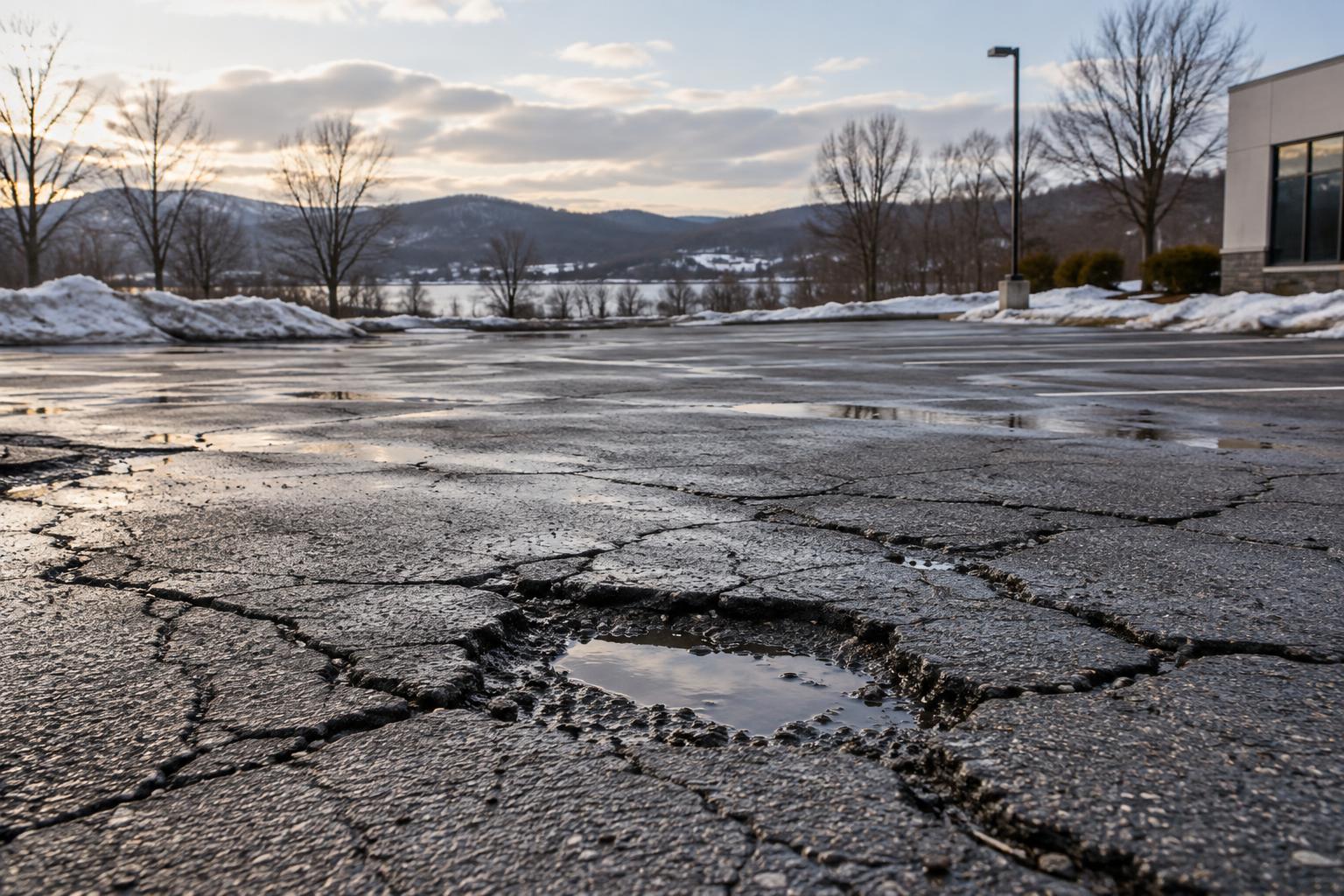
Water infiltration through cracks creates the most dramatic and visible damage to parking lots. When water freezes, it expands by approximately 9% in volume, generating thousands of pounds of pressure per square inch. This expansion force is powerful enough to widen hairline cracks into significant fissures in a single freeze cycle.
Small Cracks Become Major Structural Failures
The freeze-thaw process transforms minor surface defects into structural weaknesses that compromise entire sections of pavement. Water enters small cracks during warmer periods, then expands with tremendous force when temperatures drop. Each cycle widens the crack slightly, allowing more water to enter during the next thaw. This progressive widening continues until surface cracks become deep structural failures that require major repairs.
Frost Heaves Push Pavement Upward Then Leave Dangerous Voids
Frost heaves occur when moisture in the subgrade soil freezes and expands, pushing pavement sections upward to create ridges and uneven surfaces. When spring arrives and the ice melts, these elevated sections collapse back down, leaving voids beneath the pavement. These voids create weak spots that cannot support traffic loads, leading to sudden pavement failures and dangerous potholes.
Rock Salt and De-Icing Chemicals: Necessary Evils That Damage Asphalt
While rock salt and de-icing chemicals keep parking lots safe for vehicles and pedestrians, they also accelerate pavement deterioration through chemical and physical processes. Sodium chloride and other de-icers can erode asphalt surfaces and weaken their structural integrity, primarily by increasing the frequency and intensity of freeze-thaw cycles, which in turn causes binding agents to weaken and cracks to form over time.
Accelerated Freeze-Thaw Cycles Increase Moisture Exposure
De-icing chemicals create more frequent freeze-thaw cycles by lowering the freezing point of water. This means pavement experiences more damaging cycles throughout the winter, as temperatures that would normally keep water frozen now allow repeated melting and refreezing. The increased number of cycles exponentially increases damage potential.
Pavement Marking Deterioration Creates Safety Issues
Salt and chemical de-icers damage pavement markings, causing them to fade and become difficult to see. This deterioration creates safety hazards for commercial properties, as unclear parking space boundaries and traffic flow indicators can lead to accidents and liability concerns. Property managers often discover compliance issues with ADA striping requirements after harsh winter weather.
Snow Removal Equipment: How Plows Turn Minor Issues Into Major Repairs
Snow removal equipment, while necessary for maintaining safe parking lots, can exacerbate existing pavement damage. Plow blades catch on raised edges of damaged asphalt, turning minor surface defects into major failures in a single pass. The scraping action of plows can also remove protective surface layers, exposing underlying pavement to accelerated weathering.
Commercial snowplows, while necessary, can be rough on asphalt surfaces. Their repeated blade contact and scraping action can exacerbate existing pavement damage, turning minor issues into major repairs. When this equipment encounters already-weakened areas around cracks or frost heaves, the additional stress can cause immediate structural failure. Property managers often discover extensive damage in the spring that appeared to develop overnight but actually resulted from accumulated winter stresses.
The Hudson Valley's Numerous Freeze-Thaw Cycles Create Cascading Damage
The Hudson Valley region's climate creates particularly challenging conditions for parking lot maintenance. The area's frequent temperature fluctuations around the freezing point mean pavement experiences numerous damaging freeze-thaw cycles throughout each winter season.
Top-Down Structural Integrity Loss
Repeated freeze-thaw cycles reduce the bond between asphalt binder and aggregate particles through a process called stripping. This progressive weakening starts at the surface and works downward, compromising structural integrity from the top down. Over a single New York winter, this process can transform small surface cracks into large structural failures that require complete section replacement.
Why Most Potholes Start as Small Surface Cracks
Potholes represent the final stage of a deterioration process that begins with minor surface cracks. Water infiltration weakens the base layer beneath the asphalt surface, while continuous freeze-thaw cycles expand these cracks until the surface layer can no longer support traffic loads. The asphalt then breaks apart and gets displaced by vehicles, creating the familiar pothole formation.
Spring Prevention Beats Costly Winter Emergency Repairs
Proactive spring maintenance costs significantly less than emergency winter repairs while providing superior long-term results. Property managers who invest in spring maintenance programs can see significant reductions in emergency repair costs, with preventive maintenance typically costing three times less than reactive repairs. Hot-applied crack sealing performed in optimal weather conditions creates durable repairs that prevent water infiltration and mitigate major structural issues.
Spring weather conditions allow contractors to use superior repair materials and techniques that are impossible during winter months. Hot mix asphalt repairs, quality crack sealing, and proper surface preparation require minimum temperatures that winter weather rarely provides. These superior repair methods last longer and provide better value than temporary cold-weather fixes.
For expert winter damage assessment and spring parking lot restoration throughout the Hudson Valley region, contact Avello Asphalt & Construction Corp at https://www.AvelloAsphalt.com.
Company: Avello Asphalt & Construction Corp City: Poughkeepsie Address: 141 Daley Road Website: https://www.avelloasphalt.com
Mentioned in this blog post: Poughkeepsie service area
Have a property like this?
Tell us what you're seeing. We'll walk the site, explain the options plainly, and give you a clear scope.