HOA Paving: How Wappingers Falls Contractor Phases Work Around Residents
Key Takeaways
- Phased, section-by-section paving keeps residents from losing parking or access all at once during an HOA repaving project
- Resident notices work best when they include dates, work hours, a phase map, parking restrictions, and a direct contact person
- A preconstruction meeting or phone conference gives board members and residents a chance to ask questions before equipment arrives
- HOA and condo parking lot repair projects commonly range between $15,000 and $250,000, depending on square footage, base condition, and drainage needs
- A written scope, repair map, and before-and-after photos give boards documentation they can use for budget planning
Planning a paving project for an HOA community means juggling more than asphalt and equipment. Boards have to think about where residents will park, how emergency vehicles will get through, and how to keep complaints to a minimum while the work gets done right. A well-organized paving plan can address all of these concerns at once, as long as the work is broken into manageable sections and residents know what to expect before the first truck shows up.
Phased Paving Keeps Residents Moving
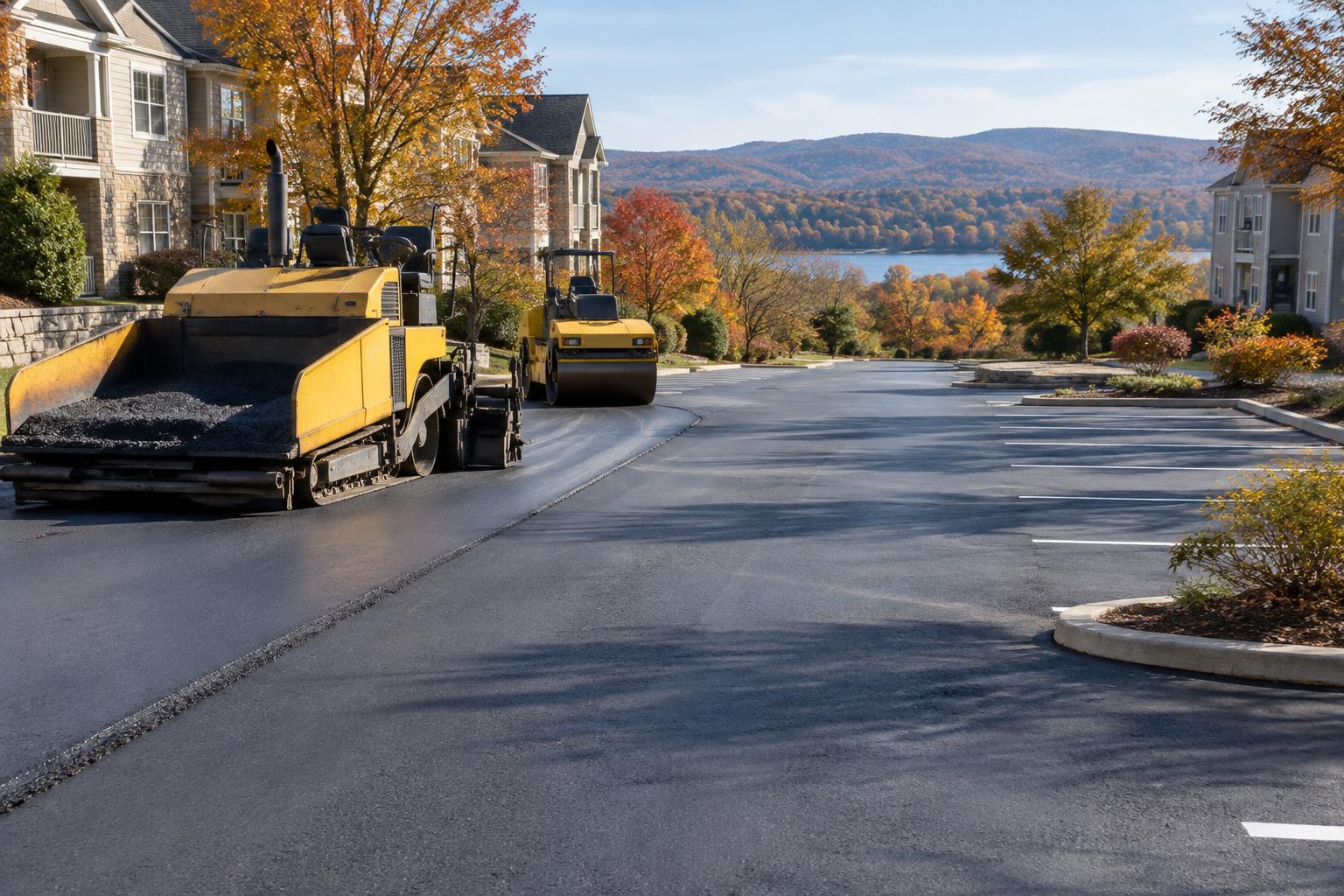
A parking lot or private road repaving project touches everyone in a community at the same time, which is exactly why phasing matters so much. Rather than closing an entire lot or every road at once, a phased approach tackles one section while the rest of the property stays open for daily life. Residents can still get to their units, guests can still find parking, and trash pickup or deliveries do not grind to a halt.
Avello Asphalt & Construction plans occupied-property projects on this section-by-section basis so residents are never left without parking or access, a standard that reflects what most well-run community paving projects aim for. That single principle shapes nearly every other decision in the planning process, from how the site gets mapped to how residents are notified.
Getting phasing right takes more than just drawing lines on a parking lot diagram. It requires understanding how the property actually functions day to day, including where people park, how emergency vehicles move through the site, and which spots simply cannot go offline at the same time. The next few sections break down how that planning typically comes together.
Why Section-by-Section Phasing Matters
Splitting a paving project into zones is a strategic scheduling approach that goes well beyond simple logistics. It marks the difference between a project that residents tolerate and one that generates angry calls to the board every day. When a contractor maps out the work in advance, everyone benefits from predictability.
Mapping the Site Into Workable Zones
Before any paving starts, the site gets divided into zones based on how the property is used. A community map identifies parking bays, mail areas, visitor stalls, gates, and emergency routes so each zone can be scheduled without creating a bottleneck somewhere else. This mapping step also flags residents who may need special access, such as those near a building entrance used for deliveries or medical visits.
A dated schedule tied to that zone map gives boards something concrete to hand out. Residents can see exactly which section closes on which day and when it reopens, rather than guessing based on vague timelines. This kind of clarity reduces confusion and cuts down on the number of questions a board has to field once work begins.
Keeping Accessible Spaces and Emergency Routes Live
No matter how the phasing works out, accessible parking spaces and entrances need to stay open at all times. Emergency routes also have to remain passable throughout the project, since a blocked fire lane or an inaccessible unit entrance is not a trade-off any community can afford to make. Keeping these critical paths live requires planning the construction sequence around them rather than treating them as an afterthought.
Temporary Parking When Displacement Is Unavoidable
Some phases will unavoidably push residents out of their usual parking spots, especially in tighter lots where there is little room to work around active traffic. When that happens, arranging temporary parking assignments ahead of time keeps the disruption from turning into a daily scramble. Clear signage and a communicated plan for where displaced vehicles should go make this transition much smoother for everyone involved.
What Residents Should Be Told, and When
Even the best-phased project will frustrate residents if nobody tells them what is happening. Communication matters as much as the construction plan itself, and it needs to start well before equipment arrives on site.
Notice Content: Dates, Maps, Parking Rules, Contacts
A useful resident notice answers the questions people actually have. That means spelling out construction dates, start and stop times, a map of which areas are affected during each phase, specific parking restrictions, a short description of the work being done, and a contact name for questions. Giving residents this information with enough lead time lets them plan around the closures instead of being caught off guard.
- Construction dates and daily work hours for each phase
- A map showing which zone is closed and when
- Parking restrictions and where vehicles should be moved
- A brief description of the work being performed
- A contact name and number for questions or access needs
When the schedule shifts, whether due to weather or a change in sequence, updated notices should go out right away. Residents are far more forgiving of a delay they were told about than one they encounter by finding their car blocked in.
A Preconstruction Meeting for Questions
A preconstruction meeting or phone conference gives board members, property managers, and residents a chance to ask questions directly before work starts. This kind of meeting surfaces concerns that a written notice alone might miss, such as a resident with a medical appointment during a planned closure or a delivery company that needs special routing. Addressing these issues ahead of time prevents small misunderstandings from becoming bigger headaches once crews are on site.
Rules Once Paving Crews Arrive
Once the project is underway, residents should follow all traffic-control directions and stay off newly paved areas until a contractor representative removes the cones, barriers, or signs. Fresh asphalt needs time to cure, and walking or driving on it too soon can leave permanent marks or weaken the surface. A short reminder about this rule in the resident notice helps prevent avoidable damage to brand-new pavement.
From Site Walk to Written Scope
Before any phasing plan or resident notice can be written, someone has to walk the property and figure out exactly what needs to be done. This step sets the foundation for everything that follows, from the budget to the construction sequence.
Mapping Failures and Setting Priorities
A site walk typically starts with mapping every visible failure alongside the property manager, including cracking, potholes, drainage issues, worn ADA striping, and areas where the sub-base itself may have failed. Each issue then gets prioritized based on safety risk, liability exposure, and how quickly it is likely to get worse. This step helps boards understand why certain sections need attention now while others can reasonably wait for a future phase.
What a Written Scope Documents
Once priorities are set, a written scope turns the site walk into something boards can actually use. This documentation typically includes a repair map with locations and quantities, the materials planned for each area, before-and-after photos, and a prioritized follow-up plan showing what should be scheduled for a future season along with a rough cost estimate. Having this kind of paper trail matters for more than just budgeting. It also gives a board something concrete to present at a meeting or keep on file for insurance and liability purposes.
Typical Timelines and Weather Delays
Most repair scopes run between one and five working days, though the actual timeline depends heavily on the scope of work and the condition of the site. Weather is the biggest wildcard in any paving schedule, since asphalt needs the right temperature and dry conditions to cure properly. When rain or cold weather pushes a project back, the schedule shifts rather than the work getting rushed or compressed to make up lost time. That approach protects the quality of the finished surface, even if it means residents have to wait a few extra days for a section to reopen.
Budgeting for an HOA Parking Lot Project
Cost is often the first question a board asks, and it is a fair one given how much a paving project can affect a community's reserve fund. HOA and condo parking lot repair projects commonly fall between $15,000 and $250,000, with the final number driven by square footage, the condition of the base layer, whether drainage work is needed, and how much phasing the site requires.
Boards can use this range as a planning benchmark when building a reserve study or preparing for a budget vote, but every site is different enough that a written scope and site walk remain the only reliable way to pin down an actual number. Comparing bids becomes much easier once a board understands what is driving the cost on its own property, rather than comparing a single bottom-line figure between contractors.
Clear Communication Protects the Paving Investment
A paving project represents a significant investment for any HOA, and protecting that investment starts well before the first section of asphalt goes down. Phasing the work, mapping the site, keeping accessible routes open, and sending out clear, timely notices all work together to keep residents informed and the project on track. Boards that treat communication as part of the construction plan, rather than an afterthought, tend to see fewer complaints and a smoother project overall.
For boards preparing to plan their own project, starting with a detailed HOA parking lot repair plan can make the difference between a stressful few weeks and a project residents barely notice.
Company: Avello Asphalt & Construction Corp City: Poughkeepsie Address: 141 Daley Road Website: https://www.avelloasphalt.com
Mentioned in this blog post: Wappingers Falls service area, Poughkeepsie service area
Have a property like this?
Tell us what you're seeing. We'll walk the site, explain the options plainly, and give you a clear scope.
More blog posts
- Water Ponding in Shopping Center Lots: Fishkill Paving Contractor Cites Causes
- Paving Around Resident Schedules: Wappingers Falls HOA Project Planning
- Parking Lot Replacement Timing - Hudson Valley Paving Contractor's Spring Plan
- Repair or Replace? Poughkeepsie Paving Contractor Diagnoses Failing Asphalt Lots