Paving Around Resident Schedules: Wappingers Falls HOA Project Planning
Avello's take
This item looks at planning HOA paving in Wappingers Falls around the people who use the roads and parking areas every day. It covers dividing work into sections, arranging temporary parking, and keeping residents informed as crews move through the community. It also explains why school bus routes, trash pickup, deliveries, and emergency access belong in the plan. We see those daily needs as part of paving preparation, not something to sort out after work begins.
For Hudson Valley property managers and HOA boards, those details help connect the paving scope to how a community actually operates. A sensible next step is to review access, parking, and service schedules before choosing a contractor. A written scope can explain the work and its reasoning so boards can compare bids fairly. We believe clear phasing and resident updates deserve attention alongside the pavement itself. That preparation gives residents a clearer picture of what to expect during construction.
Key Takeaways
- HOA paving projects run smoother when boards divide roads and lots into sections so part of the community stays accessible while another part is under construction
- A written scope that spells out the work, the reasoning behind it, and the pricing helps boards compare contractor bids fairly
- Phasing can spread a multi-year paving plan across seasons, protecting school bus routes, trash pickup days, and emergency vehicle access along the way
- A community-wide notice weeks before work begins, followed by door-to-door updates as crews get close, keeps residents informed instead of caught off guard
- What should a board ask before signing a paving contract? The questions worth bringing to that conversation are covered below
Planning a paving project for a homeowners association in Wappingers Falls means balancing two things at once: getting durable pavement installed correctly, and keeping daily life running for every household during construction. Boards that treat these as having comparable priority tend to see fewer complaints, fewer surprises, and a project that finishes on schedule. The sections below walk through how to sequence the work, keep residents moving, and communicate clearly from the first announcement to the final walk-through.
What Residents Need From Day One
Before any equipment arrives, residents need a basic promise answered: how will they get in and out of their own neighborhood? Construction plans for residential roadways generally call for maintaining access to homes throughout the work, and when a property only has one way in or out, the plan needs to provide a temporary alternate route or schedule that stretch of work for a time when the property can be closed, per paving specifications published by the City of Charlotte. For an HOA with a single main entrance, that single requirement can shape the entire project timeline.
Residents also want to know, in plain terms, what is happening and why it matters to them personally. A paving plan built around how a property actually gets used, not just its measurements, tends to produce fewer headaches once crews are on-site. Avello Asphalt & Construction approaches commercial and private-road paving with that same mindset, treating the people who rely on a road or parking lot every day as part of the planning equation rather than an afterthought once the asphalt specs are finalized.
Getting this foundation right early saves frustration later. Residents who understand the sequence of work, where to park, and who to call with questions are far less likely to flood the board's inbox mid-project. Setting that expectation on day one, even before a contractor is chosen, gives the whole process a steadier start.
Why Phasing Protects Daily Routines
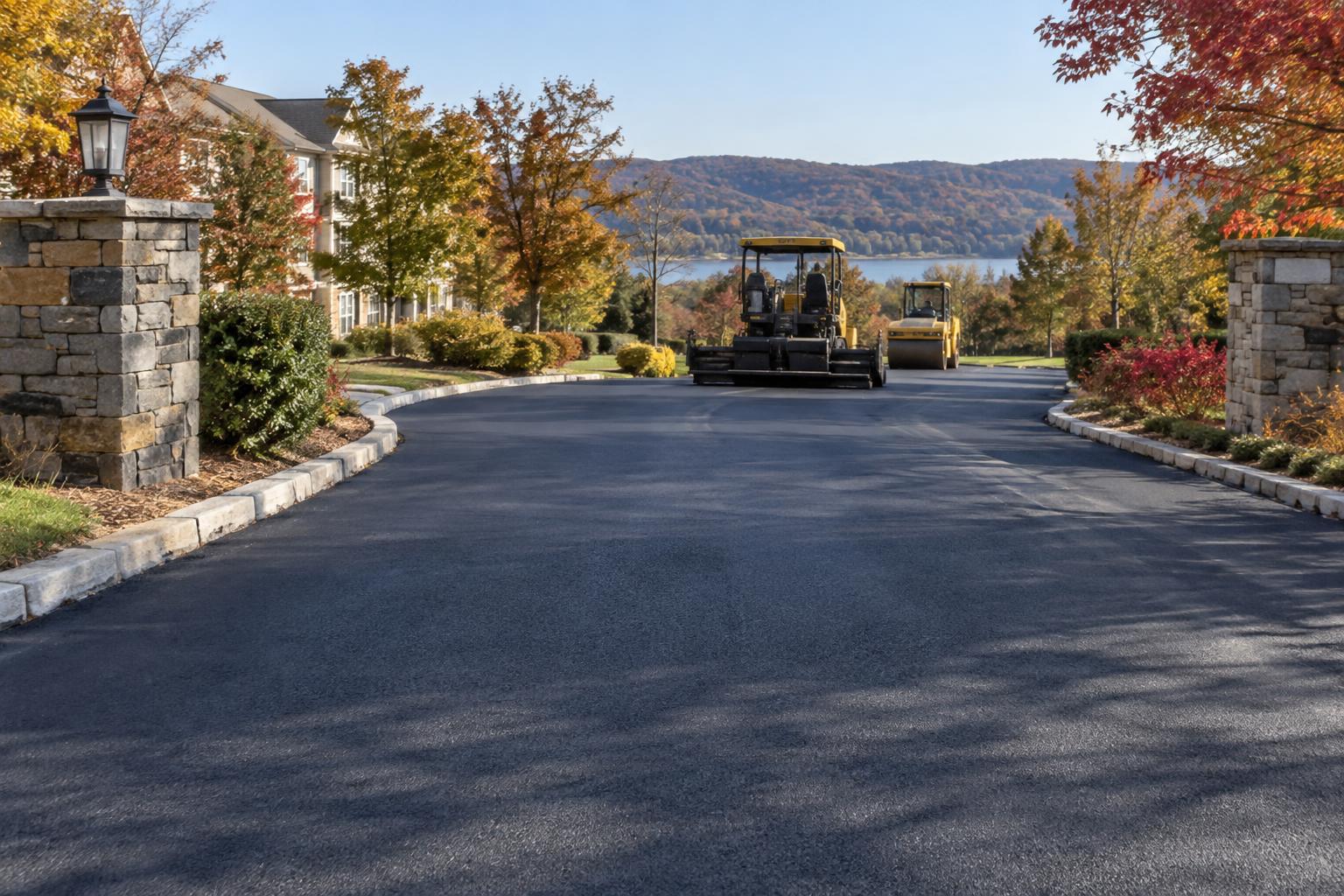
Breaking a paving project into phases is one of the most effective tools a board has for keeping a community livable during construction. Instead of closing every road and lot at once, phasing lets crews finish one section while residents continue using the rest of the property normally.
Dividing Roads and Lots Into Sections
Dividing roads or parking areas into sections allows part of a community to stay open while another part is being repaved. This approach also lets a board separate road work from parking-lot work when the two areas see different usage patterns, scheduling lot resurfacing during a quieter stretch while road sections rotate through construction one at a time. Smaller sections also mean shorter closures for any single household, which makes the disruption easier to plan around.
Sequencing Entrances, Cul-de-Sacs, and Rear Lots
Entrance drives and other high-visibility areas are often scheduled in one phase, while lower-volume streets or rear parking areas are handled later. Sequencing work this way protects the areas residents depend on most for daily entry and exit first, then moves to quieter corners of the property. Cul-de-sacs can often be tackled one at a time, since each one typically serves a limited number of households and can be isolated without affecting the rest of the community's traffic flow.
Spreading Work Across Multiple Years
For larger communities, spreading paving across more than one season or year is a practical way to manage both budget and disruption. Early phases should be sequenced so they are not damaged or undone by equipment and traffic from later phases, protecting the association's investment as the project continues. A multi-year plan also gives a board time to budget without a single large assessment hitting residents all at once.
Keeping Cars, Deliveries, and Trash Moving
Even a well-phased project still raises a practical question every resident asks: where does everything go while the pavement is torn up? Addressing parking, deliveries, and trash pickup directly, before work starts, prevents a lot of avoidable friction.
Temporary and Overflow Parking Options
A solid paving plan identifies exactly how residents will park, where visitors should go, and how deliveries and trash service will be rerouted for each phase. When on-site parking is limited during a closure, arranging temporary or overflow parking nearby keeps households from scrambling to find a spot. Reserving one section of a lot while another section is closed off for repaving is a common way to balance ongoing parking needs against construction progress.
Protecting School Buses and Emergency Access
Private roads in residential communities often carry more than just resident vehicles. A phasing plan for these roads should account for school bus schedules, garbage pickup days, holiday travel patterns, and emergency vehicle access throughout construction. Private-road paving is typically planned for exactly this mix of traffic, since the same stretch of asphalt may need to support a loaded delivery truck one day and a fire engine the next. Confirming an emergency-vehicle path for every phase, including the finished project, is a detail worth putting in writing with the contractor.
Telling Residents What's Happening, and When
Even the best-phased project will frustrate residents if nobody tells them what to expect. Clear, timely communication turns a disruptive process into a manageable one.
A Community-Wide Notice Before Work Starts
A community-wide notice sent roughly three weeks before work begins gives residents enough time to plan around the project, following an outreach approach described by the Town of Paradise. That notice works best when it states the anticipated work areas, expected work hours, traffic impacts, and a direct contact for questions, mirroring the kind of outreach plan municipalities use for road rehabilitation projects. For an HOA, this notice might go out by mail, email, and posted flyers at the clubhouse or mailboxes to make sure it reaches every household.
Door-to-Door Updates as Crews Approach
As crews get closer to an individual street or cul-de-sac, a more direct reminder matters. Door-to-door notices delivered about three days before work reaches a specific roadway are especially useful when access or daily routines will be significantly affected, consistent with the Town of Paradise's outreach approach. This two-step rhythm, a broad notice early and a specific reminder right before crews arrive, keeps residents from being caught off guard even if the overall project schedule shifts slightly along the way.
Questions to Bring to Your Contractor
Once a board understands the shape of the project, the next step is choosing a contractor who can deliver it. A short list of pointed questions can save months of frustration later.
Getting a Written Scope, Schedule, and Estimate
Before soliciting bids, a board can ask for a written paving scope, a proposed schedule, an estimate range, and a list of required permits. Owners should also be told what is being replaced and why, how payment will work, the expected timeline, and what actions residents will need to take at each stage, based on project-planning guidance from OurHOA. A written scope that spells out the proposed work, the reasoning behind it, and what the pricing includes gives a board something concrete to compare across contractors rather than relying on verbal promises.
Confirming Base Condition Before Bids Go Out
Not every paving problem needs the same fix. Before bids go out, it helps to have the existing asphalt assessed to determine whether a mill-and-overlay will hold up or whether the base itself needs full replacement, a step OurHOA's planning guidance recommends for major repaving projects. Skipping this evaluation can lead to a contractor quoting a surface-level fix on a lot that actually needs deeper repair, which tends to surface as a costly surprise a year or two down the road.
Coordinated Planning Keeps Communities Running
A successful HOA paving project in Wappingers Falls comes down to sequencing the work around how residents actually live, rather than the other way around. Dividing the project into phases, protecting parking and emergency access, and communicating clearly at each stage turns a potentially stressful construction season into a predictable one. Boards that ask the right questions upfront, from written scopes to base-condition assessments, tend to avoid the budget surprises and scheduling conflicts that derail less-prepared projects.
For a board ready to start mapping out phases and timelines, a conversation with an experienced private road paving contractor is a practical next step before bids go out.
Company: Avello Asphalt & Construction Corp City: Poughkeepsie Address: 141 Daley Road Website: https://www.avelloasphalt.com
Mentioned in this blog post: Wappingers Falls service area, Poughkeepsie service area
Have a property like this?
Tell us what you're seeing. We'll walk the site, explain the options plainly, and give you a clear scope.
More blog posts
- Water Ponding in Shopping Center Lots: Fishkill Paving Contractor Cites Causes
- HOA Paving: How Wappingers Falls Contractor Phases Work Around Residents
- Parking Lot Replacement Timing - Hudson Valley Paving Contractor's Spring Plan
- Repair or Replace? Poughkeepsie Paving Contractor Diagnoses Failing Asphalt Lots