Water Ponding in Shopping Center Lots: Fishkill Paving Contractor Cites Causes
Avello's take
This item looks at why water collects in shopping center parking lots and why covering a low spot with asphalt may not solve the problem. It explains how pavement slope, clogged or damaged catch basins, and settlement beneath the surface can each leave water with nowhere to go. We also explain why the cause matters: a blocked drain needs a different repair than pavement sitting on a weakened base.
For Hudson Valley property owners and managers, that distinction matters when balancing maintenance budgets and tenant needs. Standing water can affect entrances and loading areas, while moisture beneath the asphalt can weaken its support. We evaluate drainage, base condition, and traffic loads before scheduling commercial paving work. A sensible next step is an assessment of where water collects, whether it can reach the drainage structures, and what condition the supporting layers are in. That understanding helps guide a repair that addresses the cause, rather than just covering the puddle.
Key Takeaways
- Standing water in a parking lot usually points to a grading problem, a drainage structure issue, or settlement somewhere in the pavement base or subgrade
- Paving over a low spot without fixing the cause typically brings the ponding back once traffic and weather compress the patch
- A clogged, cracked, or misaligned catch basin can be just as responsible for puddles as a flat stretch of asphalt
- Design guidance points to a minimum slope around 0.4 percent for paved surfaces, with flatter areas much more likely to collect water
- The right fix depends on an accurate diagnosis first, covered in detail below
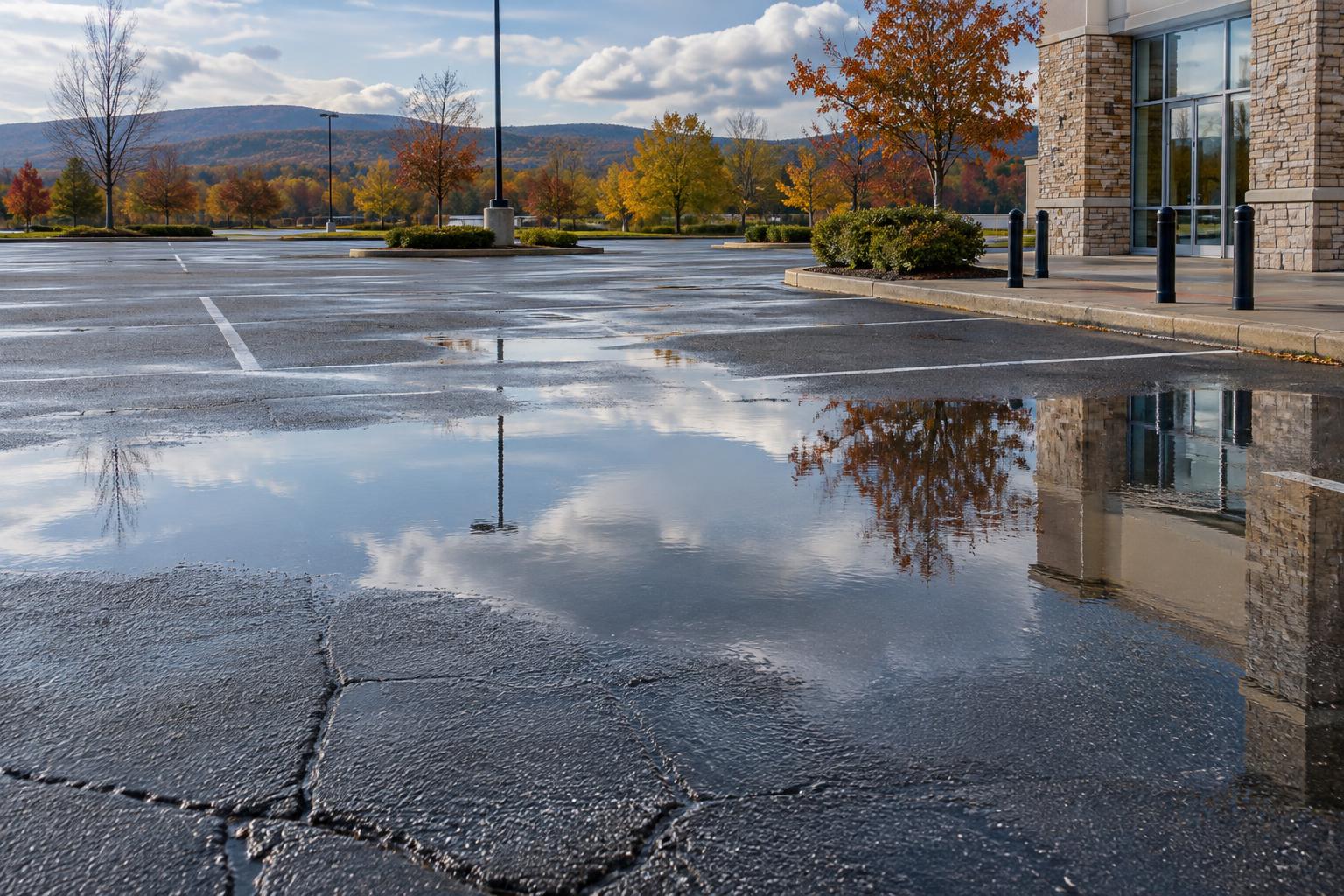
Puddles in a shopping center parking lot look like a small nuisance until they are not. Tenants complain about soaked shoes at the entrance, delivery trucks splash through standing water near loading docks, and the asphalt underneath that puddle quietly weakens every time it freezes and thaws. For property managers juggling capital budgets and tenant satisfaction, ponding water is rarely just a cosmetic issue.
Standing Water Signals a Deeper Problem
Water does not pool on a parking lot by accident. It collects because something in the system meant to move it away has failed, whether that is the slope of the pavement itself, a drainage structure that is no longer doing its job, or a section of base material that has settled under years of traffic. Avello Asphalt & Construction Corp evaluates drainage, base condition, and traffic loads before scheduling any commercial paving work, since treating the puddle without understanding why it is there tends to waste money.
Ponding almost always traces back to one of a handful of causes, and each one leaves clues. A property manager who knows what to look for can describe the problem accurately to a contractor and get a faster, more accurate diagnosis. That starts with understanding what is actually happening beneath the surface.
What's Really Causing the Puddles
Most ponding issues fall into three categories: a grading problem on the surface, a failure in the drainage hardware, or a weakened base layer underneath. Each one calls for a different kind of fix, so telling them apart matters before any repair work begins.
Flat or Settled Pavement Blocks Runoff
Asphalt needs a continuous slope to move water toward a curb, swale, or inlet. Design guidance recommends a minimum slope of about 0.4 percent for paved surfaces, and sections that fall below that threshold are far more prone to collecting water. The Colorado Asphalt Pavement Association recommends a general guideline closer to 2 percent, or about a quarter inch per foot, for parking areas, while also noting that matching existing curbs, gutters, and ramps can limit how much slope is practical on a given site. The same association points out that cross slopes under 2 percent are difficult to construct without small depressions forming, which is exactly the kind of flat spot where water sits after every storm.
Settlement makes this worse over time. A parking lot that was graded correctly when it was built can develop low spots years later as the pavement ages, traffic compacts certain areas unevenly, or the base beneath it shifts. A subtle dip becomes a visible puddle, and the puddle becomes a magnet for more damage.
Clogged, Cracked, or Misaligned Catch Basins
Catch basins are supposed to pull water off the surface before it has a chance to pool, but they fail in several ways. Debris and sediment can block the outlet, leaving water nowhere to go even though the inlet looks fine from above. A cracked, sinking, or misaligned basin frame can also stop water from entering the system properly, so the puddle forms right at the edge of a structure built specifically to prevent it.
The fix depends on which failure is happening:
- A basin blocked by debris generally needs cleaning to restore flow
- A cracked or sinking structure may need the grate frame reset, or damaged sections rebuilt or replaced
- A basin that is simply undersized for the volume of runoff it receives may need a larger inlet, or an additional inlet nearby
- Pavement grading next to the basin sometimes needs correcting if water cannot reach the inlet even when it is working correctly
A shopping center with heavy roof runoff or a large paved footprint can outgrow its original drainage design over the years, which is worth keeping in mind if ponding keeps showing up near the same basin every season.
Saturated Base and Subgrade Failure
The most serious cause of ponding happens below the surface. When water sits on pavement instead of draining away, some of it works down into the base and subgrade layers that support the asphalt. The Colorado Asphalt Pavement Association notes that saturation reduces soil strength and stability, which leaves the pavement more vulnerable to breaking apart under traffic. Once that happens, the surface above it settles further, deepening the low spot and pulling in even more water the next time it rains.
The Federal Highway Administration has pointed out that water entering a pavement system is not always from the surface. It can also come from a high groundwater table or move laterally from pavement edges and shoulder areas, so a ponding problem can have more than one source feeding it at once. Managing that moisture generally means limiting how much water gets in, choosing materials less sensitive to moisture, and giving any water that does get in a way to escape, either draining it down into the subgrade or moving it laterally through a drainage layer connected to collector pipes.
Why Paving Over Low Spots Fails
It is tempting to patch a low spot with a thin layer of new asphalt and call it done. A patch addresses the symptom sitting on top, not whatever caused the dip in the first place. If the base beneath that spot has settled or weakened, the new asphalt will settle right along with it, often within a single season of heavy traffic.
When settlement is the root cause, the affected section typically needs to be excavated, the subgrade recompacted, and the area rebuilt from the ground up rather than simply resurfaced. Skipping that step means the money spent on the patch is essentially temporary cosmetic work. A basic overlay follows the grade of whatever is underneath it, so if that grade includes a low spot, the overlay will hold water in the same place as before. Persistent ponding after a resurfacing job is often a sign that grading or drainage needed attention before the new asphalt ever went down.
Matching the Fix to the Cause
Once the cause is clear, the repair approach usually becomes clear too. Shopping center property managers benefit from understanding the general options available, since the right scope of work affects both the lifespan of the repair and the capital budget required to get there.
Regrading to Restore Flow
When insufficient slope is the culprit, regrading the lot, or just the affected section, can reestablish a continuous path toward a curb, swale, or inlet. This approach works well when the base underneath is still structurally sound and the problem is really about the shape of the surface rather than what is holding it up.
Repairing or Upgrading Catch Basins
Drainage hardware issues call for targeted repairs rather than a full pavement overhaul. Cleaning a blocked basin, resetting a frame, rebuilding a damaged structure, or adding an additional inlet to handle more runoff volume can solve the problem without disturbing the surrounding asphalt at all. This tends to be one of the more cost-effective fixes when the pavement itself is otherwise in good shape.
Full-Depth Rebuild for Base Failures
When the base or subgrade has failed, cutting corners rarely pays off. The damaged section needs to be removed, the subgrade recompacted, and new base material and asphalt installed in layers engineered for the traffic the lot actually carries. This is a bigger investment than surface repairs, but it addresses the structural problem directly instead of leaving it to resurface again later.
When Mill-and-Overlay Resurfacing Makes Sense
Milling, which removes a controlled depth of the existing asphalt surface, can help reestablish proper cross slopes and longitudinal grades so runoff heads toward drains, curbs, or inlets instead of pooling in a low spot. Resurfacing removes the top 1.5 to 2 inches of failing asphalt, addresses base failures found underneath, and installs a fresh hot-mix overlay with grades set so water leaves the property instead of sitting on the pavement. Compaction gets monitored while the mat is still workable, and joints and edges are sealed to help keep the new surface watertight from day one. Milling helps manage grades and elevations, but an unstable base still needs its own fix, which is exactly why checking the base and drainage first matters before any resurfacing plan gets finalized.
Stopping Water Before It Spreads
Small cracks seem minor compared to standing water, but they are often the entry point that lets moisture reach the base in the first place. Hot-applied rubberized crack sealant keeps water out of the base before potholes and alligator cracking take hold, and a thorough approach removes failed material rather than simply covering it over. Addressing cracks early, before a freeze-thaw cycle has a chance to widen them, can prevent a small maintenance item from becoming a much larger base repair down the road.
Regular inspection after heavy rain is one of the simplest habits a property manager can adopt. Walking the lot, or asking a maintenance team to do it, right after a storm shows exactly where water collects and how long it takes to drain. That information builds a clear picture over time of which areas are worsening and which are stable, which makes budgeting for repairs far more precise than reacting to complaints as they come in.
Diagnosis Comes Before Any Repair Plan
Every ponding problem has a specific cause, and that cause determines what kind of repair actually solves it for the long term. A shopping center lot with flat grading needs a different fix than one with a failing catch basin, and both need something different than a lot with a saturated, weakened base. Guessing at the cause, or simply paving over whatever is visible on the surface, tends to produce repairs that do not last.
A clear written scope that explains what is being proposed and why, along with pricing that matches the actual cause of the problem, gives property managers something solid to work from when planning capital repairs. For a shopping center in Fishkill dealing with recurring puddles near an entrance or loading area, getting an accurate diagnosis first is the step that determines whether the next repair lasts for years or needs to be redone again next season. For an easy starting point, consider requesting a free quote before committing to a repair scope.
Company: Avello Asphalt & Construction Corp City: Poughkeepsie Address: 141 Daley Road Website: https://www.avelloasphalt.com
Mentioned in this blog post: Poughkeepsie service area, Fishkill service area
Have a property like this?
Tell us what you're seeing. We'll walk the site, explain the options plainly, and give you a clear scope.
More blog posts
- Paving Around Resident Schedules: Wappingers Falls HOA Project Planning
- HOA Paving: How Wappingers Falls Contractor Phases Work Around Residents
- Parking Lot Replacement Timing - Hudson Valley Paving Contractor's Spring Plan
- Repair or Replace? Poughkeepsie Paving Contractor Diagnoses Failing Asphalt Lots