
Aggregate Skeleton Stone-on-Stone Contact | Poughkeepsie Heavy-Load Paving
Avello's take
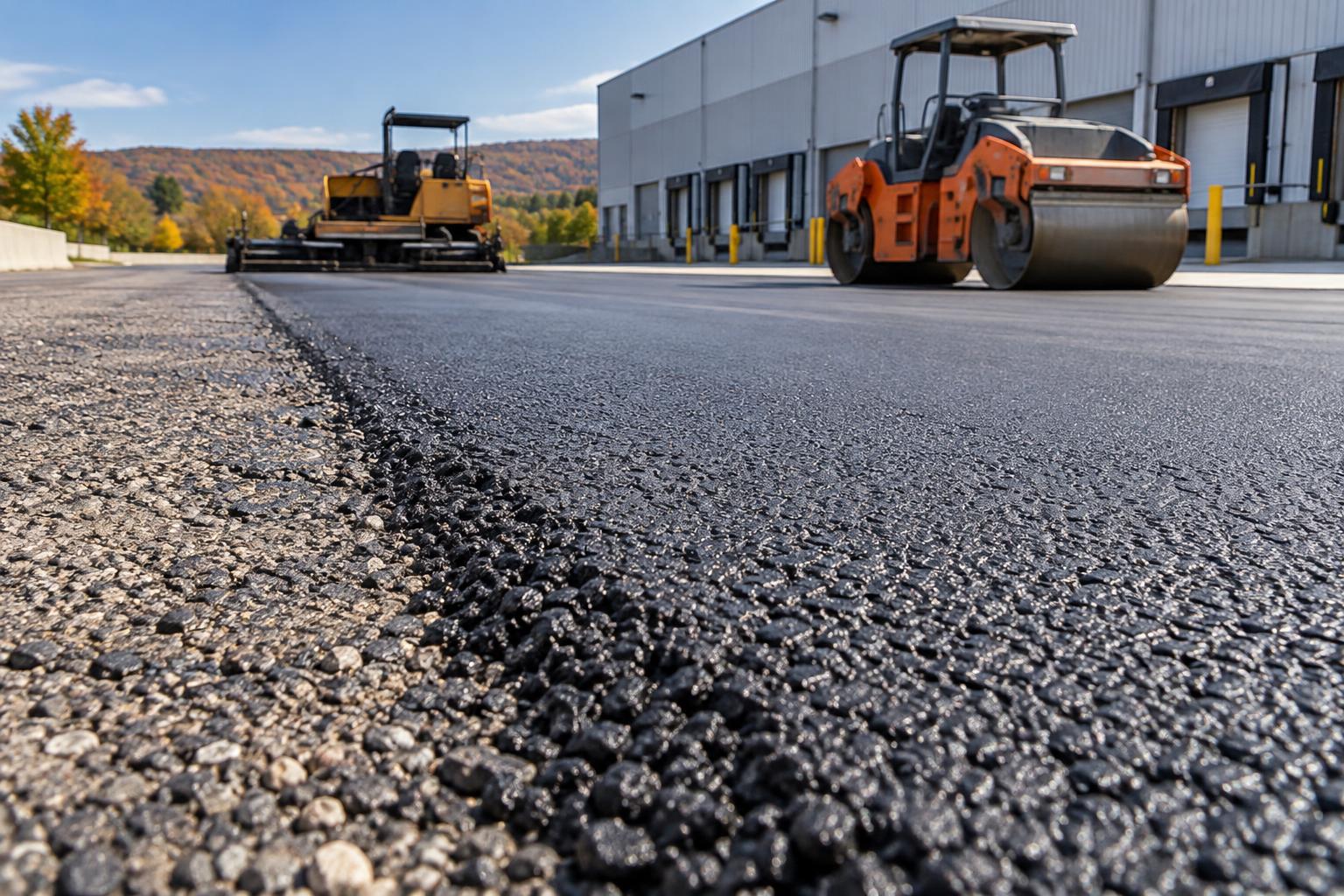
This item explains how the stones inside an asphalt mix help carry heavy loads. When larger stones touch and lock together, they form an internal framework that spreads weight rather than leaving the asphalt binder to do the work alone. It also covers how stone sizes, modified binders, base support and compaction work together in heavy-duty pavement. We see this as a useful explanation of what sits beneath the surface in loading zones and warehouse yards.
For Hudson Valley property owners and managers, the practical point is that pavement design needs to account for how a site is used. Trucks, forklifts and stationary loads place different demands on the pavement structure. Surface thickness alone does not address weak base support or an unsuitable mix. We believe a sensible next step is a review of expected loads, existing base conditions and mix requirements before choosing a paving approach. That keeps the discussion focused on the support the pavement needs.
Key Takeaways
- Stone-on-stone contact in asphalt mixtures creates a strong internal skeleton that directly transfers loads between coarse aggregate particles, preventing pavement failure under heavy vehicle traffic.
- Heavy-duty pavements require specific aggregate gradation, polymer-modified binders, and proper base layer design to withstand severe loading conditions common in industrial facilities.
- Stone Matrix Asphalt (SMA) outperforms traditional dense-graded mixes in high-stress applications through its gap-graded design and superior rutting resistance.
- Proper construction quality control, including precise compaction requirements, ensures long-term pavement performance that meets NYSDOT specifications.
Heavy vehicle traffic in Poughkeepsie creates unique challenges for pavement infrastructure. From intermodal facilities to warehouse loading zones, commercial properties face constant pressure from trucks, forklifts, and static loads that can destroy inadequately designed pavements. Understanding the science behind aggregate skeleton design becomes vital for property managers and facility owners who need pavements that perform under extreme conditions.
Why Stone-on-Stone Contact Prevents Heavy-Load Pavement Failure
Stone-on-stone contact refers to the direct load transfer between coarse aggregate particles within an asphalt mixture, forming a strong internal skeleton that resists deformation under heavy loads. When properly achieved, this aggregate framework carries the majority of applied loads through mechanical interlock rather than relying solely on the asphalt binder to provide structural support.
The fundamental principle works through aggregate particle interaction. Large stones make direct contact with adjacent stones, creating a stable matrix that distributes wheel loads efficiently throughout the pavement structure. This mechanical load transfer significantly reduces stress concentrations that would otherwise cause rutting, shoving, or permanent deformation in the asphalt layers.
Research demonstrates that achieving good stone-on-stone contact fundamentally contributes to mixture shear strength and rutting resistance. Avello Asphalt & Construction Corp specializes in heavy-load paving solutions that prioritize this critical design element for Poughkeepsie-area facilities experiencing severe loading conditions. Without proper aggregate skeleton development, even thick pavements fail prematurely under concentrated loads from industrial equipment and heavy vehicles.
Critical Design Elements for Heavy-Traffic Applications
Heavy-duty pavement design requires three key components working together: optimal aggregate gradation, modified binder systems, and robust structural support. Each element plays a specific role in creating pavements capable of withstanding the punishment delivered by commercial and industrial traffic patterns.
1. Optimal Aggregate Gradation for Maximum Load Transfer
Proper aggregate gradation forms the backbone of heavy-duty asphalt performance. Large nominal maximum aggregate size (NMAS) combined with carefully controlled particle distribution improves aggregate interlock and stone-on-stone contact. The gradation must provide sufficient coarse aggregate to create the load-bearing skeleton while maintaining enough fine material for mixture workability and durability.
Dense-graded mixtures typically use NMAS between ¾ inch and 1.5 inches for heavy-duty applications. However, optimal aggregate gradation, including gap-graded designs, is vital for maximizing stone-on-stone contact and load transfer, even with varying maximum aggregate sizes. Gap-graded designs can achieve superior stone-on-stone contact even with smaller maximum aggregate sizes when properly proportioned to maximize coarse aggregate volume.
2. Polymer-Modified Asphalt for High-Stress Conditions
Polymer-modified asphalt (PMA) binders significantly improve mixture performance under extreme traffic and environmental conditions. These modified binders improve elasticity, fatigue resistance, and temperature stability compared to conventional asphalt binders. The polymer modification helps the binder maintain its binding properties under high-stress conditions while allowing the aggregate skeleton to carry primary structural loads.
Performance-graded binders like PG 64-28 or higher provide the stiffness needed for heavy-load applications while maintaining flexibility for thermal cycling. Styrene-butadiene-styrene (SBS) polymers are commonly used modifications that improve both high and low-temperature performance characteristics needed for year-round durability.
3. Proper Base Layer Design and Subgrade Support
A well-designed aggregate base and subbase system distributes stresses effectively, protecting the subgrade from over-stressing and preventing premature pavement failure. Base layer thickness and quality directly influence how loads transfer from the asphalt surface through the pavement structure. Weak or inadequate base support undermines even the best surface mix design.
Crushed stone base materials with high-quality angular aggregate provide the stiffness and stability needed under heavy loads. Minimum base thickness for heavy-duty applications typically ranges from 6 to 12 inches, depending on subgrade strength and expected loading, with commercial installations often requiring 8 to 12 inches. Proper moisture control and compaction ensure the base achieves its design structural capacity.
Where Poughkeepsie Facilities Need Heavy-Duty Paving
The Poughkeepsie area's significant commercial and industrial activity creates specific locations where heavy-load paving becomes necessary. Understanding these applications helps property managers identify where standard pavement designs fall short and specialized heavy-duty solutions provide value.
Industrial and Warehouse Loading Zones
Warehouse loading docks and industrial yards experience concentrated loads from forklifts, delivery trucks, and material handling equipment. These areas see slow-moving vehicles with high axle loads, frequent stops and starts, and turning movements that create high shear stresses. Static loads from parked trailers and staged equipment add additional stress concentrations that standard pavements cannot handle.
Distribution centers exemplify the challenge, with constant truck traffic carrying maximum legal loads. Case studies from Northeast facilities demonstrate that robust asphalt designs incorporating stone-on-stone contact principles significantly reduce rutting and extend pavement life under constant truck traffic. The key lies in designing for both dynamic loads from moving vehicles and static loads from parked equipment.
Intermodal and Port Terminal Areas
Intermodal facilities handle extremely heavy loads with specialized equipment that creates unique pavement stresses. Container handling equipment, reach stackers, and heavy-haul vehicles impose loads that far exceed typical highway traffic. These facilities require pavements designed for high-punching shear effects and massive concentrated loads.
Modern intermodal freight transport facilities reduce cargo handling times by accommodating the heaviest equipment possible. Facilities like railway intermodal yards and port terminals require pavements capable of handling extremely high static and dynamic loads while maintaining structural integrity under repeated loading cycles.
Stone Matrix Asphalt vs. Traditional Heavy-Duty Mixes
Stone Matrix Asphalt represents an evolution in heavy-duty pavement technology, offering advantages over conventional dense-graded mixtures in specific high-stress applications. Understanding when to specify SMA versus traditional approaches helps optimize pavement performance and project costs.
Gap-Graded Design Benefits
SMA utilizes a gap-graded aggregate structure that relies heavily on stone-on-stone aggregate contact to provide exceptional rutting resistance and durability. Unlike dense-graded mixes, SMA reduces intermediate-sized aggregate particles, creating more direct contact between large stones while using mineral filler and modified binder to fill the remaining voids.
This design approach maximizes coarse aggregate contact while providing superior resistance to deformation under heavy loads. The gap-graded structure creates a more robust aggregate skeleton that maintains its integrity even under severe loading conditions common in industrial applications.
When SMA Outperforms Standard Dense-Graded Mixes
SMA demonstrates superior performance in high-traffic areas where rutting resistance is critical. The mixture's design makes it particularly effective for truck lanes, bus routes, and industrial yards where channelized heavy traffic creates concentrated wear patterns. Airport runways and taxiways also benefit from SMA's exceptional durability under aircraft loading.
However, SMA requires specialized construction techniques and quality control measures that may not be necessary for all applications. The decision between SMA and conventional heavy-duty mixes depends on traffic loading, environmental conditions, and long-term performance requirements balanced against initial construction costs.
Construction Quality Control for Long-Term Performance
Even the best pavement design fails without proper construction execution. Heavy-duty pavements require stringent quality control measures during construction to ensure the aggregate skeleton develops properly and achieves its intended performance characteristics.
Compaction Requirements for Aggregate Skeleton Development
Proper compaction during construction is paramount to achieving desired density and ensuring full development of the aggregate skeleton's stone-on-stone contact. Inadequate compaction prevents proper aggregate interlock, reducing the mixture's ability to carry heavy loads through mechanical contact between stones.
Compaction must be carefully controlled to avoid aggregate fracture while achieving target density. Large-stone mixtures require specific roller patterns and techniques to prevent segregation during placement and compaction. Temperature control becomes critical as oversized aggregate can cause localized cooling that affects compaction effectiveness.
Density testing and nuclear gauge measurements verify that compaction achieves specification requirements. While initial compaction targets for dense-graded asphalt pavements are often around 92% to 93% of theoretical maximum density, the ultimate design density, often achieved with further traffic compaction, typically ranges from 96% to 98% of theoretical maximum density, depending on mixture type and application. Quality control protocols should include real-time monitoring and corrective actions when density targets are not met.
NYSDOT Specifications and Local Compliance
The New York State Department of Transportation provides detailed specifications and guidelines for heavy-duty asphalt pavements, emphasizing material quality and construction practices needed for long-term performance. These specifications address aggregate quality, binder selection, mixture design parameters, and construction tolerances specific to high-stress applications.
Local compliance requirements ensure that heavy-duty pavements meet regional performance standards while accommodating New York's challenging climate conditions. Specifications typically include requirements for aggregate angularity, gradation limits, binder performance grades, and construction quality control measures that address freeze-thaw durability and moisture resistance.
Regular maintenance protocols complement construction specifications by preserving aggregate skeleton integrity through crack sealing, timely resurfacing, and preventive measures that extend pavement service life. Proper maintenance maintains the stone-on-stone contact that provides structural strength while protecting the pavement investment.
Choose Avello Asphalt for Proven Heavy-Load Paving Solutions
Successfully designing and constructing heavy-duty pavements requires expertise in materials science, structural engineering, and specialized construction techniques. The integration of proper aggregate skeleton design, quality materials, and proven construction methods creates pavements that withstand the most demanding loading conditions while providing long-term performance value.
Poughkeepsie-area facilities facing heavy-load challenges need contractors who understand the critical importance of stone-on-stone contact and aggregate skeleton development. From initial design through final compaction, every aspect of construction influences long-term pavement performance under severe loading conditions.
For expert guidance on heavy-load paving solutions that prioritize aggregate skeleton design and proven construction quality, contact Avello Asphalt & Construction Corp to discuss your project's specific requirements and performance goals.
Company: Avello Asphalt & Construction Corp City: Poughkeepsie Address: 141 Daley Road Website: https://www.avelloasphalt.com
Mentioned in this blog post: Poughkeepsie service area
Have a property like this?
Tell us what you're seeing. We'll walk the site, explain the options plainly, and give you a clear scope.