When Parking Lot Damage Triggers HOA Assessments? Poughkeepsie Paver Explains
Avello's take
This item looks at how parking lot damage can lead to special assessments for HOA communities. It explains how water enters small cracks and how freeze-thaw cycles can widen them and affect the pavement foundation. It also connects deferred maintenance with repair needs, responsibility for safe common areas, and reserve funds that may not cover replacement. We see a practical planning message here: pavement care and reserve planning belong in the same conversation.
For Hudson Valley property owners, managers, and boards, that connection matters when balancing maintenance needs with community budgets. The article notes that reserve studies assume regular maintenance when estimating pavement life. A sensible next step is a review of pavement conditions, maintenance plans, and reserve assumptions together. We see that as a useful starting point for understanding repair needs and how they fit into the community’s longer-term plans.
Key Takeaways
- Preventative asphalt maintenance costs three times less than reactive repairs, making it vital for avoiding special assessments
- Water infiltration through small cracks accelerates deterioration, turning minor repairs into major resurfacing projects
- HOAs face significant liability risks from parking lot hazards, with settlements potentially reaching $500,000
- Underfunded reserve accounts frequently trigger emergency assessments when parking lots require complete replacement
- Professional maintenance strategies can extend pavement lifespan by 20-30% while protecting communities from costly surprises
Special Assessments Hit When Parking Lots Fail
Board members receive that dreaded phone call at 7 AM on a Tuesday morning. A resident has tripped in the parking lot, twisted their ankle, and now wants to know what the HOA plans to do about the growing potholes and uneven pavement. Within weeks, the insurance company is involved, legal notices arrive, and the engineering report delivers crushing news: the parking lot needs complete replacement at a cost exceeding $150,000.
This scenario plays out across hundreds of HOA communities every year, particularly in regions like Poughkeepsie where freeze-thaw cycles accelerate asphalt deterioration. When reserve funds fall short of covering major capital improvements, boards face an uncomfortable choice: defer the repairs further or levy a special assessment that can create significant financial burden for residents.
According to Avello Asphalt & Construction Corp, a Poughkeepsie-based paving specialist, many parking lot failures that trigger emergency assessments could be prevented through strategic preventative maintenance programs costing a fraction of full replacement.
The Hidden Costs of Deferred Parking Lot Maintenance
1. Water Damage Accelerates Deterioration
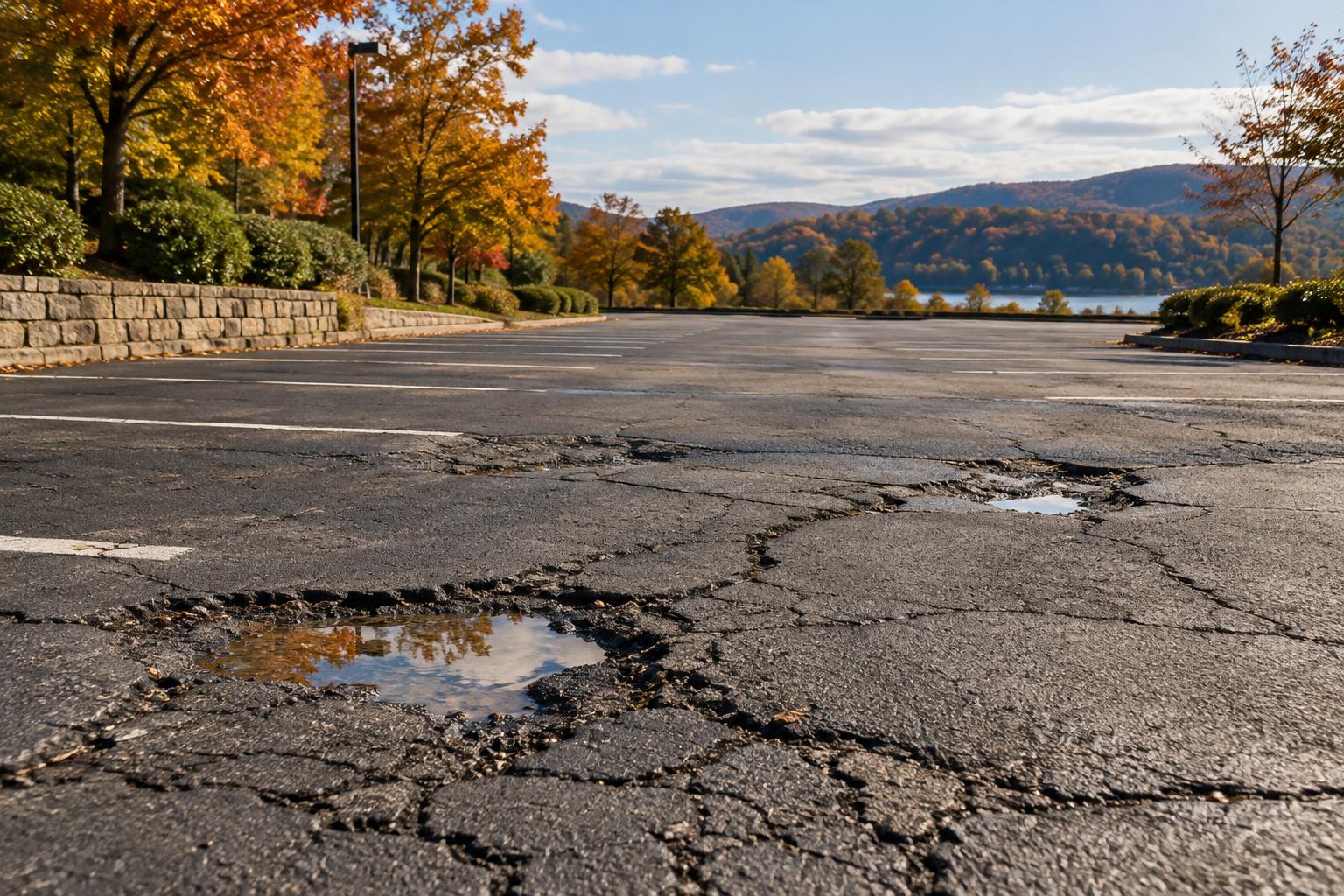
Small cracks in asphalt surfaces act like highways for water infiltration. Once moisture penetrates the sub-base, the freeze-thaw cycle common in the Northeast creates expanding ice that widens cracks and destabilizes the pavement foundation. What begins as hairline cracks requiring $300 worth of crack sealing can evolve into sections requiring full-depth replacement costing $15,000 or more.
The deterioration process accelerates exponentially once water reaches the sub-base. Soil erosion beneath the asphalt creates voids that lead to sudden pavement collapse, creating immediate liability hazards and emergency repair situations that contractors charge premium rates to address.
2. Liability Lawsuits From Pavement Hazards
HOAs carry legal responsibility for maintaining safe conditions in common areas, including parking lots. Trip-and-fall incidents on uneven pavement, potholes, or poorly marked parking barriers can result in lawsuits costing between $20,000 and $100,000 in legal fees and settlements. A recent case demonstrated this risk when a woman received a $500,000 settlement after tripping over a concrete parking barrier that blended with the surrounding asphalt.
Insurance companies closely monitor claim patterns, and communities with multiple pavement-related incidents face higher premiums, increased deductibles, and potential coverage exclusions that compound the financial impact of deferred maintenance.
3. Inflation Makes Delayed Repairs More Expensive
Construction costs have experienced significant inflation, with recent years seeing increases as high as 8% annually. A parking lot replacement project quoted at $120,000 today could cost $140,000 or more if delayed by two years. This inflation effect makes procrastination particularly costly for HOAs operating on tight budgets.
Why Reserve Funds Fall Short for Major Repairs
Underfunded Accounts Trigger Emergency Assessments
Many HOAs struggle with chronically underfunded reserve accounts, often due to boards' reluctance to raise monthly assessments or pressure from homeowners to keep fees low. When reserve studies project parking lot replacement costs at $100,000 but actual bids come in at $180,000 due to inflation and unexpected sub-base damage, the funding shortfall creates an immediate crisis.
Professional reserve studies assume regular maintenance to achieve projected component lifespans. When communities skip preventative care, parking lots deteriorate faster than anticipated, requiring premature replacement that reserve planning never accounted for.
Complete Resurfacing Is a Major Expense That Can Exceed Budgets if Reserve Funds Are Inadequate
Full parking lot reconstruction represents one of the largest single expenses most HOAs face, often ranking alongside roof replacement and exterior building renovation. A typical community parking area serving 100 units can cost $150,000 to $300,000 to completely reconstruct, depending on size, drainage requirements, and local soil conditions.
These massive expenses frequently exceed available reserve funds, particularly when unexpected issues like poor drainage or contaminated sub-base materials require additional work. The resulting special assessments can create financial hardship for residents and damage community relationships.
Preventative Maintenance Costs 3X Less Than Reactive Repairs
1. Regular Sealcoating Frequency Varies From Annually to Every 3-5 Years Based on Traffic and Climate
Sealcoating provides a protective barrier against UV damage, water penetration, and chemical spills from vehicles. In Poughkeepsie's climate, most parking lots benefit from sealcoating every 2-3 years, with high-traffic areas requiring more frequent attention. This preventative measure typically costs $0.15 to $0.25 per square foot compared to $6.00 to $15.00 per square foot for complete reconstruction.
Regular sealcoating can extend asphalt lifespan by 20-30%, transforming a 15-year pavement into a 25-year asset. This extension provides substantial value when calculated against reserve fund contributions and reduces the frequency of major capital expenditures.
2. Prompt Crack Sealing Prevents Water Penetration
Crack sealing represents the most cost-effective maintenance strategy available to HOAs. Professional crack sealing costs approximately $1.50 to $3.00 per linear foot, while allowing water infiltration can necessitate full-depth patching at $8.00 to $12.00 per square foot once sub-base damage occurs.
The key to effective crack sealing lies in timing. Cracks sealed within the first season of appearance prevent water infiltration and maintain pavement structural integrity. Delayed crack sealing allows deterioration to progress beyond surface-level repairs.
3. Professional Inspections Catch Problems Early
Annual professional parking lot inspections provide valuable assessment of developing problems before they require expensive repairs. These inspections evaluate drainage patterns, crack development, pavement thickness, and sub-base stability to prioritize maintenance investments.
Professional inspections also provide documentation useful for insurance claims and legal defense, demonstrating the HOA's commitment to maintaining safe conditions and following industry best practices.
Legal Responsibilities and Liability Risks for HOAs
Negligence Claims for Hazardous Conditions
HOA boards have a legal duty to maintain common areas in reasonably safe condition. Courts have held associations liable for accidents caused by known hazards like potholes, uneven pavement, faded line striping, and poorly marked obstacles. The legal standard focuses on whether the HOA knew or should have known about dangerous conditions and failed to address them promptly.
Documentation becomes vital in liability defense. HOAs that maintain regular inspection records, respond promptly to resident reports, and follow professional maintenance recommendations demonstrate reasonable care that can reduce legal exposure.
$500K Parking Lot Injury Settlement Illustrates HOA Liability Potential
A landmark case involved a concrete parking barrier that had been painted to match the surrounding asphalt, creating a camouflaged obstacle. When a woman tripped over this hidden hazard and sustained injuries, the resulting lawsuit ended with a $500,000 settlement. This case highlights how seemingly minor maintenance decisions can create major liability exposure.
The case also demonstrated the importance of proper marking and visibility for parking lot features. Courts expect HOAs to anticipate foreseeable hazards and take reasonable steps to prevent accidents through appropriate signage, marking, and lighting.
Protect Your Community From Costly Assessments With Expert Poughkeepsie Paving
Smart HOA boards recognize that parking lot maintenance represents an investment in community financial stability rather than just an operational expense. Professional preventative maintenance programs can prevent emergency special assessments, reduce liability risks, and preserve property values through well-maintained common areas that attract potential buyers.
The mathematics of preventative maintenance strongly favor proactive approaches over reactive repairs. Communities that invest in regular sealcoating, prompt crack sealing, and professional inspections typically spend 60-70% less on parking lot maintenance over a 20-year period compared to communities that defer maintenance until major problems develop.
Successful maintenance programs also improve community relationships by avoiding the financial stress and conflict that emergency special assessments create among residents. When homeowners see their monthly fees supporting visible improvements and professional maintenance, they develop greater confidence in board financial management.
For HOA boards and property managers in the Poughkeepsie area seeking to protect their communities from costly parking lot assessments, Avello Asphalt & Construction Corp provides paving services designed to extend pavement life and minimize long-term maintenance costs.
Company: Avello Asphalt & Construction Corp City: Poughkeepsie Address: 141 Daley Road Website: https://www.avelloasphalt.com
Mentioned in this blog post: Poughkeepsie service area
Have a property like this?
Tell us what you're seeing. We'll walk the site, explain the options plainly, and give you a clear scope.