Parking Lot Flooding After Storms? Hudson Valley Paving Contractor Explains
Avello's take
This item looks at why parking lots collect water after storms and how grading and drainage affect where that water goes. It covers poor drainage design, clogged catch basins, uneven surfaces, and runoff from surrounding areas. We also explain how standing water can affect the asphalt and its base, along with access to buildings and loading areas. The discussion includes correcting low spots and using catch basins to collect surface water and direct it into storm systems.
For Hudson Valley property owners and managers, drainage is part of caring for both the pavement and the people using it. Water collecting in a lot can interfere with everyday access and contribute to cracks and potholes. We see understanding the cause as the sensible starting point. A review of surface grades, low spots, catch basins, and incoming runoff can help clarify what needs attention. That gives drainage decisions a basis in how water moves across the property, rather than just where it happens to collect.
Key Takeaways:
- Poor drainage design, clogged catch basins, and uneven grading are the primary culprits behind parking lot flooding during heavy rainfall
- Standing water accelerates asphalt deterioration, creates safety hazards, and can lead to costly structural damage and liability issues
- Professional asphalt grading with proper slope requirements (1-2% minimum) provides the foundation for effective water management
- Advanced drainage systems including catch basins, trench drains, and permeable asphalt offer complete flood prevention solutions
- Hudson Valley commercial properties must comply with New York DEC stormwater management regulations and municipal MS4 requirements
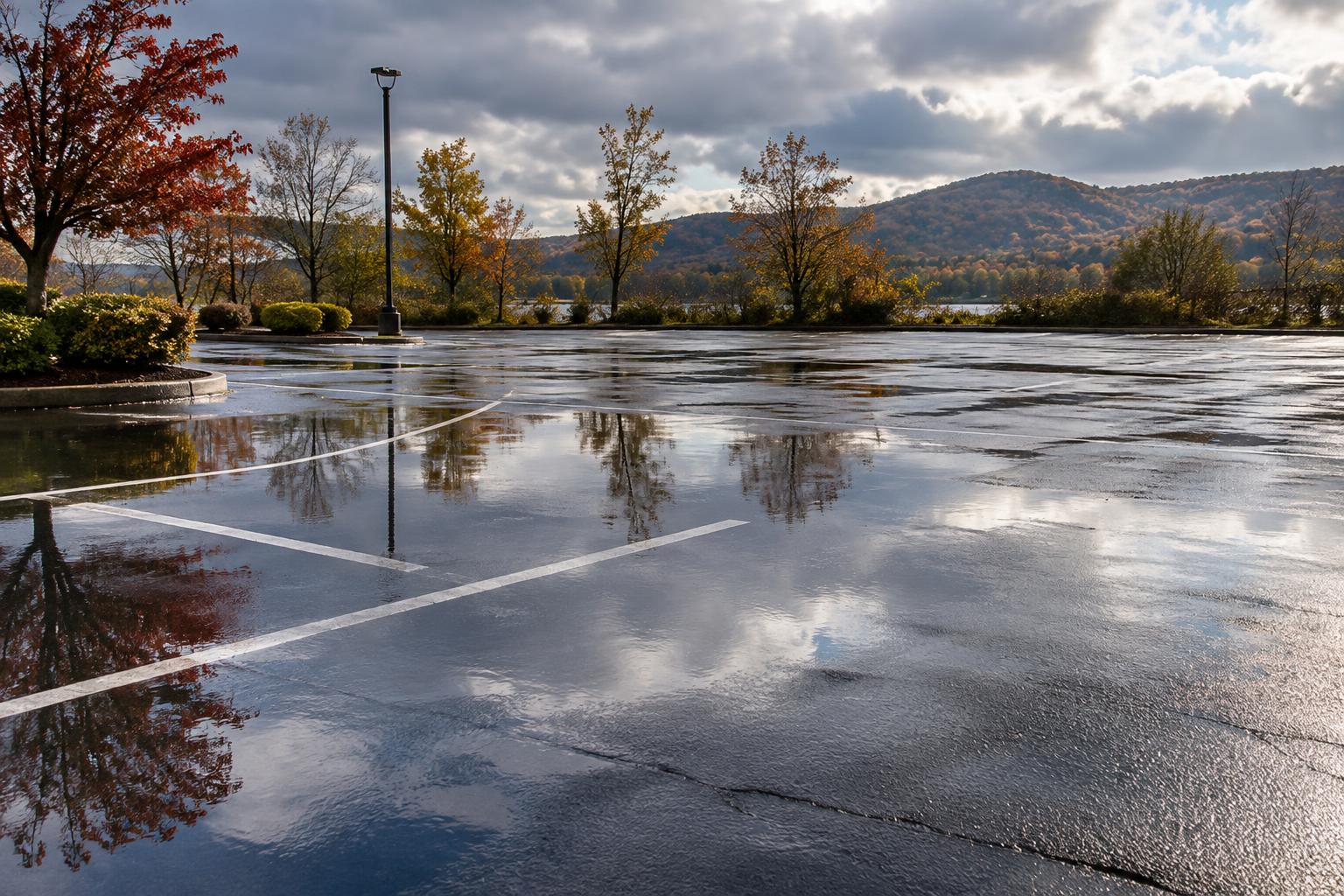
When storm clouds gather over the Hudson Valley, property managers hold their breath. Will this be the storm that turns their parking lot into an unwelcome lake? Flooding after heavy rainfall has become an all-too-common headache for commercial properties throughout Dutchess County and beyond.
Why Your Parking Lot Floods During Heavy Rain
Parking lot flooding doesn't happen by chance—it's the result of specific design flaws and maintenance oversights. The most common culprit is poor drainage design, where water has nowhere to go when Mother Nature opens the floodgates. Clogged catch basins act like dams, backing up water across the entire surface. Meanwhile, uneven grading creates low spots that collect water like natural bowls.
Blocked or undersized storm drains compound the problem, especially during intense downpours that overwhelm the system's capacity. When surrounding areas dump excessive runoff onto your property, even well-designed drainage can struggle to keep up. Avello Asphalt & Construction Corp has witnessed these scenarios countless times across Hudson Valley commercial properties, where what starts as a minor drainage issue snowballs into a major flooding crisis.
Understanding these root causes is the first step toward implementing effective solutions. Each flooding incident tells a story about where the drainage system failed, providing valuable clues for permanent fixes.
The Real Cost of Standing Water to Your Property
Structural Damage and Accelerated Asphalt Deterioration
Standing water isn't just an inconvenience—it's a silent destroyer working around the clock to damage your investment. Water penetrates asphalt surfaces, saturating the base layer and weakening the entire pavement structure. This saturation leads to accelerated deterioration, forming cracks and potholes that multiply with each freeze-thaw cycle.
The damage extends beyond surface issues. When water undermines the foundation, it creates soft spots that can't support vehicle weight. What begins as minor surface cracking quickly evolves into expensive reconstruction projects, often costing significantly more than preventive drainage solutions.
Safety Hazards and Liability Risks for Commercial Properties
Flooded parking lots transform into liability minefields. Slip-and-fall accidents become a significant risk when pedestrians navigate standing water, especially during winter months when water freezes into invisible ice patches. Vehicle damage from hidden potholes beneath water surfaces creates additional liability exposure.
Insurance claims related to parking lot accidents can skyrocket premiums, while legal fees from injury lawsuits often exceed the cost of proper drainage installation. Property managers face the uncomfortable reality that neglecting drainage issues puts both visitors and budgets at risk.
Building Access Issues and Operational Disruptions
Water runoff flowing toward buildings due to inadequate slope and curbing creates access nightmares. Customers avoid businesses when they can't safely reach entrances, directly impacting revenue. Loading docks become unusable, disrupting supply chains and delivery schedules.
Basement flooding represents the worst-case scenario, potentially destroying inventory, equipment, and business operations. The ripple effects of poor drainage extend far beyond the parking lot itself, threatening the entire commercial operation.
Asphalt Grading Solutions to Prevent Parking Lot Flooding
Proper Slope Requirements for Effective Water Flow
Effective drainage starts with proper asphalt grading, where surfaces maintain a minimum slope of 1-2% to ensure positive water flow. This seemingly small gradient makes the difference between water flowing away efficiently and pooling in dangerous low spots. Professional grading considers the entire drainage pattern, directing water toward collection points rather than allowing it to wander aimlessly.
The key lies in creating a coordinated system where every square foot of pavement contributes to the overall drainage strategy. Slopes must be carefully calculated to prevent erosion while maintaining adequate flow velocity during peak rainfall events.
Correcting Uneven Surfaces and Low Spots
Existing parking lots often develop uneven surfaces over time, creating natural collection points for standing water. Correcting these problem areas requires precision grading that addresses both surface irregularities and underlying base issues. The process involves strategic removal of compromised materials and installation of properly compacted base layers.
Modern laser-grading technology ensures accuracy that prevents future settling problems. This investment in proper foundation work pays dividends by eliminating the cycle of recurring drainage issues that plague many commercial properties.
Advanced Drainage Systems for Commercial Properties
1. Catch Basins for High-Volume Water Collection
Catch basins serve as the workhorses of parking lot drainage, collecting large volumes of surface water and directing it into underground storm systems. Strategic placement at low points and intersection areas maximizes collection efficiency during heavy rainfall events. Modern catch basin design incorporates sediment traps that prevent debris from clogging downstream pipes.
Regular maintenance of catch basins is vital for continued effectiveness. Accumulated debris and sediment can quickly transform these drainage heroes into flooding villains, emphasizing the importance of professional inspection and cleaning schedules.
2. Trench Drains for Loading Areas and Drive Lanes
Trench drains excel in high-traffic areas where traditional catch basins can't handle the water volume or vehicle requirements. These linear drainage systems collect water across their entire length, making them particularly effective in loading areas, drive lanes, and building entrances where water tends to concentrate.
The continuous collection capability of trench drains prevents the formation of standing water in critical traffic areas. Their robust construction handles heavy vehicle loads while maintaining superior drainage performance throughout the system's lifespan.
3. French Drains for Subsurface Water Management
French drains address drainage challenges that surface solutions can't reach. These gravel-filled trenches with perforated pipes manage high groundwater tables and subsurface water movement that contributes to surface flooding. The system works by providing an underground pathway for water to flow away from problem areas.
Integration of French drains into parking lot designs can be remarkably aesthetic, often appearing as landscaped strips that improve property appearance while solving drainage problems. This dual functionality makes French drains particularly attractive for commercial properties where visual appeal matters.
4. Permeable Asphalt for Natural Water Infiltration
Permeable asphalt represents the cutting edge of sustainable drainage solutions. This engineered pavement system allows water to flow through its surface into an underlying aggregate reservoir, dramatically reducing runoff while improving water quality through natural filtration.
The system works by eliminating surface water entirely, preventing flooding at its source rather than managing it after it occurs. Permeable asphalt installations require specialized expertise to ensure proper installation and long-term performance, making contractor selection critical for success.
Hudson Valley Stormwater Management Compliance
New York DEC Regulations for Commercial Properties
New York's Department of Environmental Conservation implements federal stormwater management regulations that directly impact commercial property drainage requirements. These EPA Phase II regulations establish specific standards for stormwater runoff control during and after construction projects.
Compliance involves detailed documentation of drainage plans, regular monitoring of water quality, and implementation of best management practices. Property owners must demonstrate that their drainage systems meet environmental protection standards while effectively managing stormwater volume.
Municipal MS4 Requirements and Permit Considerations
Communities operating Municipal Separate Storm Sewer Systems (MS4s) must control stormwater runoff according to federal mandates. Commercial properties within these jurisdictions face additional permit requirements and design standards that influence drainage system planning.
Understanding local MS4 requirements early in the design process prevents costly modifications later. Hudson Valley municipalities provide guidance for commercial properties to meet and often exceed minimum drainage standards, and some may offer incentives.
Proven Success Stories from Hudson Valley Properties
Real-world drainage solutions demonstrate the effectiveness of professional flood prevention strategies. Shopping centers and commercial facilities across the region have successfully eliminated recurring flooding by installing networks of trench drains and catch basins, transforming problem properties into showcases of effective water management.
Permeable pavement systems have proven successful in various commercial applications, from shopping centers to industrial facilities. These installations consistently demonstrate superior flood prevention while meeting environmental compliance requirements. The success stories share common elements: professional design, quality installation, and ongoing maintenance programs that ensure long-term performance.
Stop Flooding Before Your Next Storm Hits
The time to address parking lot flooding is before the next major storm system arrives in the Hudson Valley. Waiting for perfect weather conditions or budget cycles often means enduring another season of flooding damage and operational disruptions. Professional assessment identifies problem areas and prioritizes solutions based on risk and budget considerations.
Effective flood prevention requires coordinated planning that considers drainage, grading, and compliance requirements as integrated components of a complete solution. The investment in professional drainage systems pays for itself through reduced maintenance costs, eliminated liability risks, and preserved property values.
Emergency repairs during flooding events cost significantly more than preventive installations during favorable conditions. Property managers who act proactively protect their investments while ensuring safe, accessible facilities for tenants and customers throughout the year.
Contact Avello Asphalt & Construction Corp today to schedule a detailed drainage assessment and learn how professional asphalt and drainage solutions can protect your Hudson Valley commercial property from future flood damage.
Company: Avello Asphalt & Construction Corp City: Poughkeepsie Address: 141 Daley Road Website: https://www.avelloasphalt.com
Mentioned in this blog post: Poughkeepsie service area
Have a property like this?
Tell us what you're seeing. We'll walk the site, explain the options plainly, and give you a clear scope.