Freeze-Thaw Damage to Asphalt | Poughkeepsie Paving Company Complete Guide
Avello's take
This item explains how winter freeze-thaw cycles affect asphalt in Poughkeepsie and across the Hudson Valley. Water enters small cracks, freezes, and expands, gradually widening those openings. Repeated freezing and thawing can carry damage below the surface and into the base beneath it. The article follows that progression from minor cracking to potholes and more extensive damage. It also discusses how drainage, construction quality, and repair timing influence pavement condition.
For Hudson Valley property owners and managers, these details help put visible pavement wear in context. A crack, a low spot that holds water, and a pothole can point to different repair needs. We see value in understanding those differences before deciding between maintenance, repair, and replacement. A sensible next step is an assessment of cracking, drainage, and the condition of the underlying base. That information can help guide a repair plan suited to the pavement’s condition, rather than treating every surface problem the same way.
Key Takeaways
- Freeze-thaw cycles cause water in asphalt cracks to expand by 9%, creating destructive forces that accelerate pavement deterioration in New York's climate
- Commercial properties can extend asphalt lifespan from 10-15 years to 20-30 years through preventive maintenance including sealcoating every 2-3 years
- Four typical stages of freeze-thaw damage progress from surface oxidation to complete section failure, with repair costs increasing dramatically at each stage
- Proper drainage and original construction quality determine why some Poughkeepsie parking lots fail within 5 years while others last decades
- Strategic timing of repairs versus replacement decisions can save commercial property owners 5-10 times the cost of emergency reconstruction
Every winter, commercial property owners across the Hudson Valley watch their asphalt investments deteriorate before their eyes. The freeze-thaw cycle creates an invisible but relentless force that damages parking lots, driveways, and loading areas faster than most property managers expect. Understanding this process and implementing strategic countermeasures makes the difference between a 10-year pavement lifespan and a 25-year investment that maintains its value and functionality.
Water Infiltration Creates Destructive Expansion Force
The freeze-thaw damage process begins with something seemingly harmless: water entering small voids and hairline cracks in asphalt pavement. Asphalt contains natural interconnected pathways through which moisture can travel, even in seemingly solid surfaces. When temperatures drop below 32°F, this infiltrated water transforms into ice and expands by approximately nine percent.
This expansion creates internal pressure that forces cracks wider and pushes pavement sections apart from within. The asphalt matrix resists this force initially, but repeated cycles gradually overcome the material's structural integrity. Each freeze-thaw event works the damage deeper into the pavement structure, creating an accelerating deterioration pattern that compounds with every winter season.
What makes this particularly destructive in Poughkeepsie's climate is the frequency of freeze-thaw cycles. Unlike consistently cold regions where water freezes once and stays frozen, or warm areas where freezing rarely occurs, the Hudson Valley experiences numerous freeze-thaw cycles each winter. Avello Asphalt & Construction Corp observes how this pattern creates more pavement damage than extreme but consistent cold temperatures.
Four Critical Stages of Freeze-Thaw Deterioration
Understanding the typical progression of freeze-thaw damage helps property managers recognize intervention points before minor issues become major capital expenses. Each stage presents distinct characteristics and optimal response strategies.
1. Surface Oxidation and Minor Cracking (Years 1-5)
New asphalt contains flexible oils that allow the material to expand and contract with temperature changes. UV exposure and weathering gradually oxidize these oils, making the surface progressively more brittle. Hairline surface cracks begin appearing as the asphalt loses its natural flexibility.
At this stage, damage remains superficial and highly treatable. Sealcoating fills microscopic surface voids, restores some flexibility to the asphalt binder, and creates a protective barrier against further oxidation. This intervention dramatically slows deterioration progression and represents the most cost-effective maintenance investment property owners can make.
2. Crack Development and Water Infiltration (Years 3-8)
Without protective maintenance, surface cracks widen and connect into networks that allow water penetration. Freeze-thaw cycling begins working on these expanding pathways, forcing them deeper into the pavement structure. Areas with poor drainage or where water ponds show accelerated deterioration compared to well-drained sections.
Professional crack filling becomes necessary at this stage. Routing and sealing individual cracks with rubberized materials prevents further water infiltration and halts the progression of freeze-thaw damage along existing crack lines. While more expensive than preventive sealcoating, this intervention remains cost-effective compared to structural repairs.
3. Base Failure and Pothole Formation (Years 5-12)
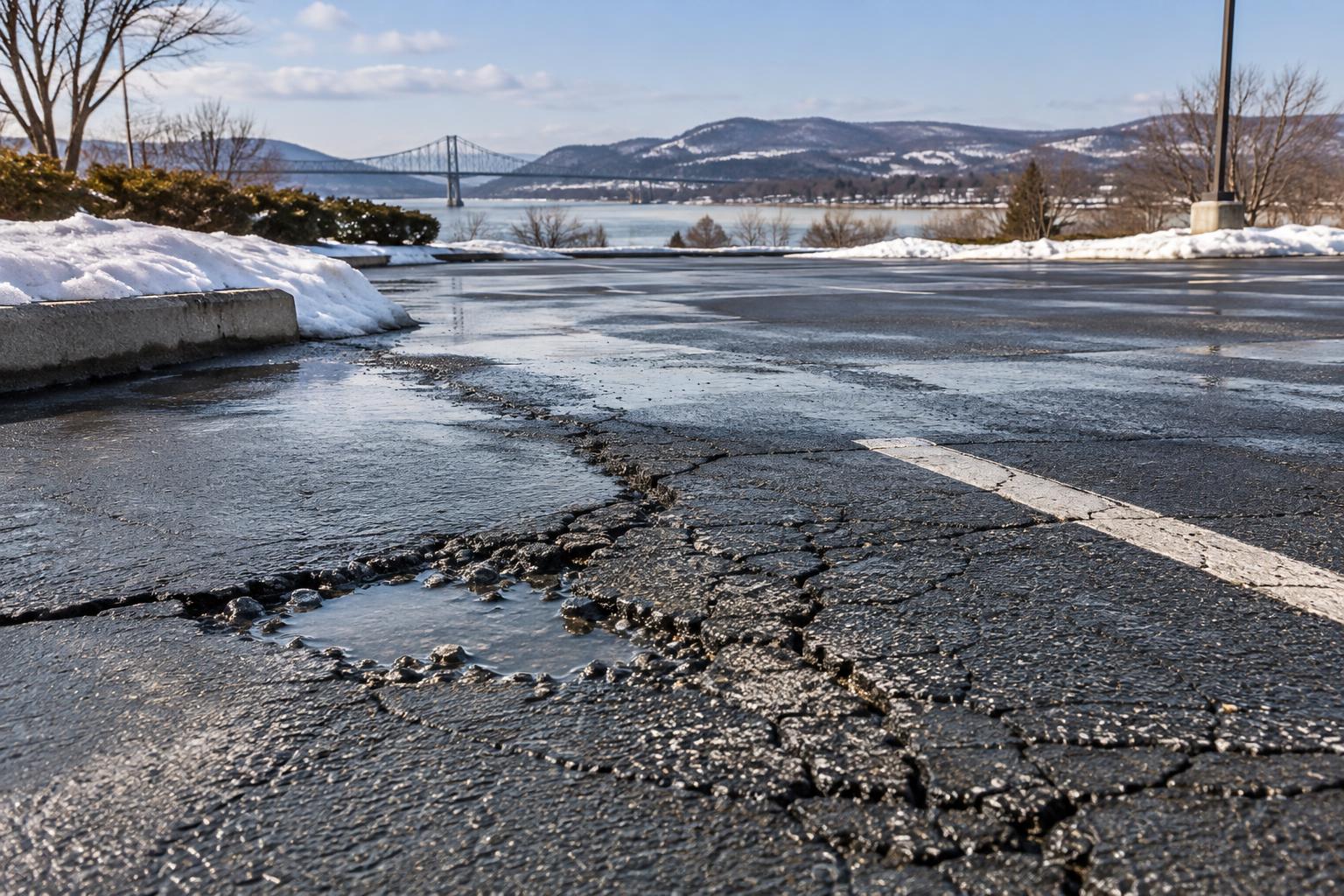
Water infiltration reaches the aggregate base layer beneath the asphalt surface. Freeze-thaw cycling in the base causes frost heave, where pavement sections lift and subside unevenly as ground moisture freezes and thaws. The surface loses structural support in affected areas, making it vulnerable to traffic loads.
Potholes form when weakened surface material breaks through under vehicle weight. These failures indicate underlying base compromise rather than simple surface wear. Proper pothole repair requires removing failed material, addressing base stability issues, and patching with structural asphalt layers to prevent rapid re-failure.
4. Section Failure Requiring Full Replacement (Years 10-15)
Widespread base failure creates interconnected damage patterns across large pavement areas. Multiple potholes, extensive cracking networks, and structural settlement indicate that the pavement system has lost its load-bearing capacity. Individual repairs become ineffective as new failures appear adjacent to patched areas.
Full reconstruction or mill-and-overlay becomes the only viable solution. The cost difference between reaching this stage and maintaining pavement through earlier interventions typically ranges from 500% to 1000% higher, making deferred maintenance one of the most expensive decisions property owners can make.
Why Some Poughkeepsie Parking Lots Fail Faster Than Others
Two commercial properties built in the same year can show dramatically different pavement conditions after a decade. Several controllable and uncontrollable factors determine deterioration rates in the Hudson Valley climate.
Drainage Quality Determines Water Exposure
Water that drains away quickly cannot infiltrate pavement voids or participate in freeze-thaw damage cycles. Properties with proper surface grading, functional drainage systems, and areas designed to shed water show significantly slower deterioration rates than locations where water ponds or drainage systems become blocked.
Drainage maintenance requires the same attention as pavement maintenance. Clearing catch basins, maintaining proper grades, and ensuring water flows away from pavement edges reduces freeze-thaw exposure by limiting the moisture available for infiltration during temperature cycling.
Original Construction Standards
The thickness of asphalt layers, quality of base preparation, and aggregate gradation in the original asphalt mix all influence freeze-thaw resistance. Parking lots constructed with adequate thickness for anticipated traffic loads and properly compacted base materials resist frost damage more effectively than installations built to minimum specifications.
Asphalt mix design also affects performance. Mixes with appropriate aggregate gradations and binder types designed for cold weather applications show enhanced resistance to freeze-thaw cracking compared to standard mixes not optimized for thermal cycling stress.
Proven Preventive Maintenance That Reduces Damage Progression
Industry data consistently demonstrates that proactive maintenance can double or triple asphalt pavement lifespan compared to reactive repair approaches. Two primary interventions provide the highest return on investment for commercial properties.
Sealcoating Every 2-3 Years for Commercial Properties Reduces Water Entry
Sealcoating creates a protective barrier that blocks UV oxidation, fills surface voids, and restores water-shedding properties to aging asphalt. For commercial properties with higher traffic loads and greater weather exposure, sealcoating every 2-3 years provides optimal protection against freeze-thaw initiation, with annual applications recommended for high-traffic or severe weather conditions.
The protective coating prevents water infiltration at the source, eliminating the moisture necessary for freeze-thaw damage cycles. Properties that maintain consistent sealcoating schedules typically achieve 20-30 year pavement lifespans compared to 10-15 years for unmaintained surfaces.
Prompt Crack Filling Before Base Compromise
Crack sealing interrupts the freeze-thaw damage progression by eliminating water entry points before damage reaches structural layers. Hot-applied rubberized crack sealants that can flex with temperature changes provide multi-year protection when applied to cracks before they exceed one centimeter in width.
Timing matters significantly with crack filling. Cracks sealed within the first year of appearance typically require re-treatment every 3-5 years. Cracks allowed to widen and deepen may require annual attention and show higher failure rates as base damage has already begun.
When to Repair vs Replace: Making the Right Financial Decision
Property managers face critical timing decisions that determine whether maintenance investments will provide good returns or whether replacement has become the more economical option. Clear criteria help guide these choices.
Repair When Surface Damage Remains Isolated
Repair remains cost-effective when the majority of pavement area shows good structural integrity, deterioration concentrates in specific sections, and the overall pavement age stays under 15-20 years. Isolated pothole repair, section patching, and crack filling can extend service life significantly when base layers remain intact.
Professional assessment determines whether damage has reached structural layers or remains confined to surface materials. Repairs on sound base materials typically last several years and prevent damage expansion into adjacent areas.
Replace When Base Layer Shows Widespread Failure
Replacement becomes necessary when more than 30-40% of the surface shows significant distress, multiple sections have failed to base level, or repair attempts in the same areas repeatedly fail within short timeframes. Interconnected crack patterns throughout the pavement indicate systemic structural failure that surface repairs cannot address.
At this stage, continued repair attempts often cost more than replacement while providing only temporary solutions. Full reconstruction or mill-and-overlay creates a new pavement system designed to handle current and future loading requirements.
Avello Asphalt Protects Hudson Valley Commercial Properties From Freeze-Thaw Damage
Protecting commercial asphalt investments in Poughkeepsie's challenging climate requires understanding freeze-thaw damage mechanisms, implementing strategic maintenance programs, and making informed repair-versus-replace decisions. Properties that address deterioration in early stages through sealcoating and crack filling achieve significantly longer service lives and lower total costs than those that defer maintenance until structural failure occurs.
The accelerating nature of freeze-thaw damage makes early intervention exponentially more valuable than delayed response. Commercial property owners who establish preventive maintenance schedules and work with experienced contractors familiar with Hudson Valley conditions protect their pavement investments while avoiding emergency replacement costs.
For asphalt maintenance and construction services designed specifically for the Hudson Valley's freeze-thaw challenges, visit Avello Asphalt & Construction Corp at AvelloAsphalt.com.
Company: Avello Asphalt & Construction Corp City: Poughkeepsie Address: 141 Daley Road Website: https://www.avelloasphalt.com
Mentioned in this blog post: Poughkeepsie service area
Have a property like this?
Tell us what you're seeing. We'll walk the site, explain the options plainly, and give you a clear scope.