Drainage Problems & Pavement Failure: Hudson Valley Paving Contractor Explains
Avello's take
This item looks at how drainage affects asphalt across the Hudson Valley. It explains how water can seep through cracks, wash material out of the base, and leave pavement without the support it needs. It also covers how freezing and thawing can widen cracks and contribute to potholes. We look at signs such as standing water, recurring potholes, and staining, along with drainage options that include catch basins, French drains, and permeable asphalt.
For Hudson Valley property owners and managers, the practical point is that a surface patch may not address what is happening underneath. Water collecting in the same area can point to a drainage issue that deserves a closer look before repair plans are made. A sensible next step is an evaluation of drainage and base condition. We take that approach before recommending resurfacing or repair work, so the recommendation considers both the visible pavement and the support below it.
Key Takeaways
- Poor drainage is one of the top reasons asphalt surfaces crack, rut, and fail early across the Hudson Valley
- Water that seeps into the base layer can wash out the foundation supporting pavement, causing damage that surface patches alone cannot fix
- Freeze-thaw cycles common in the Hudson Valley turn small drainage problems into potholes and alligator cracking much faster
- Catch basins, French drains, and permeable asphalt are among the fixes property owners can use to keep water from pooling on pavement
- Avello Asphalt & Construction evaluates drainage and base condition before recommending resurfacing or repair work
Water might seem harmless pooling in the corner of a parking lot, but for asphalt, it can be the beginning of the end. Across the Hudson Valley, commercial property owners and facility managers often spend money patching cracks and filling potholes without realizing the real problem is happening underneath the surface. Understanding how drainage affects pavement can mean the difference between a lot that holds up for the long haul and one that needs constant repair.
Why Water Is Asphalt's Worst Enemy
Asphalt is built to handle heavy vehicles, harsh sun, and freezing winters, but water presents a different kind of challenge entirely. When rain, snow melt, or irrigation runoff has nowhere to go, it finds its way into the smallest cracks and joints, working down toward the layers that hold the whole pavement structure together. Even a well-built asphalt surface can start breaking down once water gets past the top layer, because the materials underneath were never designed to handle constant moisture.
Water infiltration is considered a leading cause of pavement damage nationwide, according to the Federal Highway Administration, contributing to cracking, rutting, and base failures that shorten how long a pavement surface lasts. For property owners who have invested in a parking lot, access road, or loading area, the damage causing the most trouble is often invisible until it is too late. Avello Asphalt & Construction, a commercial paving contractor working throughout the Hudson Valley, treats drainage-conscious site work as a core part of pavement services rather than an afterthought added after the asphalt goes down.
How Drainage Damage Actually Happens
Drainage failure rarely happens overnight. It tends to build slowly, hidden below the surface, until small cracks turn into large structural problems that are far more expensive to fix.
Water Infiltration and Base Failure
Underneath every asphalt surface sits a base layer made of compacted gravel and stone, designed to support the weight of vehicles and distribute pressure evenly. When water reaches that base, it can erode the material, wash out the fine particles holding it together, and destabilize the foundation the pavement depends on. This kind of damage often goes unnoticed because the surface may still look fine while the structure underneath is quietly failing. By the time cracking or sinking becomes visible, the base has often already lost much of its strength, and surface-level repairs alone rarely solve the underlying issue.
Freeze-Thaw Cycles Make It Worse
The Hudson Valley's seasonal swings between freezing winters and warm summers add another layer of stress to already-weakened pavement. Water that seeps into cracks or the base layer expands when it freezes, pushing outward with enough force to widen existing cracks and create new ones. As temperatures rise again, the ice melts and leaves gaps behind, only for the cycle to repeat with the next freeze. Over a single winter, this repeated expansion and contraction can turn a minor surface crack into a full pothole, especially on properties that see steady vehicle or foot traffic.
Warning Signs on Your Property
Catching drainage problems early can save property owners significant money down the road. A few visible clues tend to show up well before pavement fails completely.
Standing Water, Cracks, and Potholes
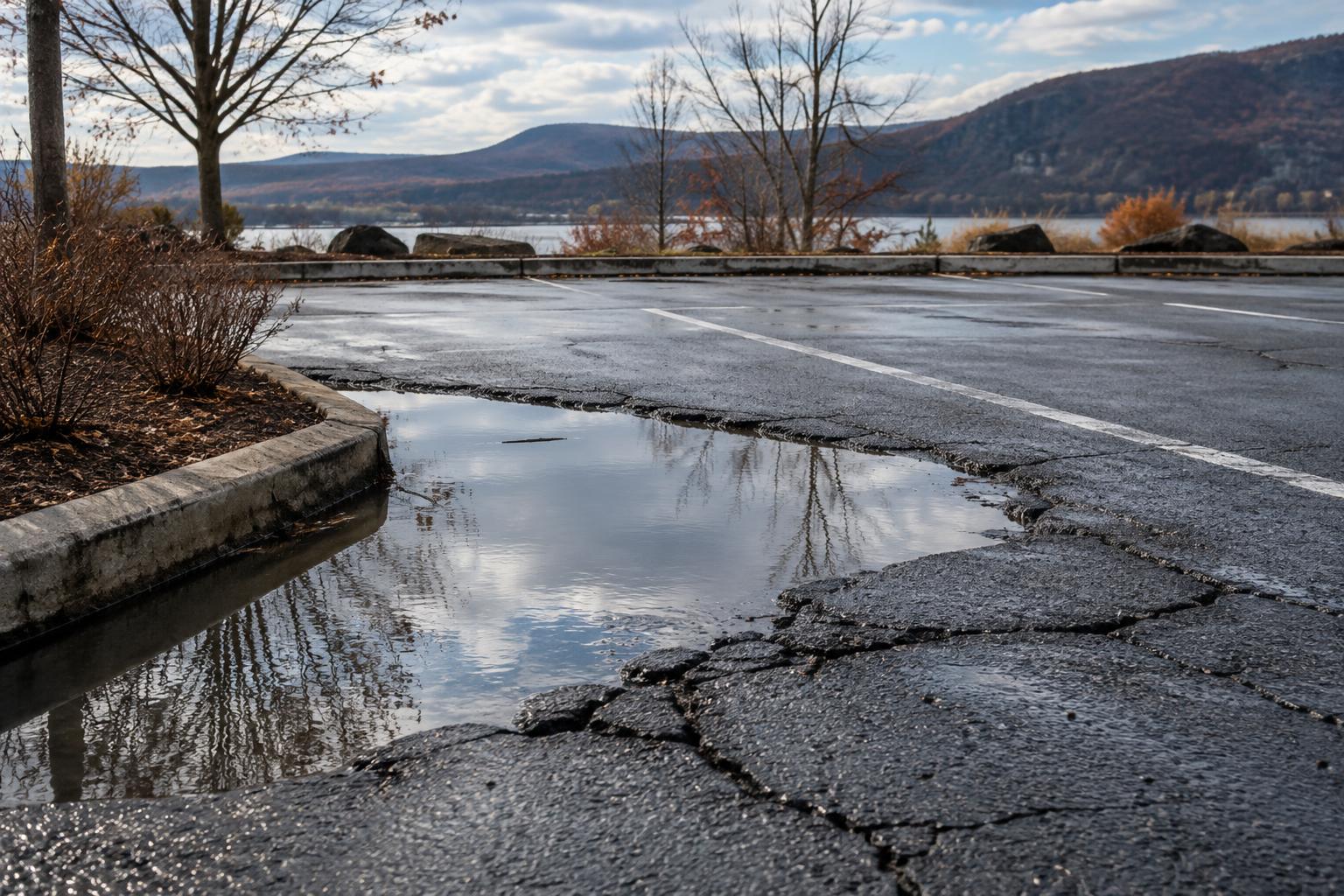
Pooling water after a storm is one of the clearest signs that drainage is not working the way it should. Left unaddressed, this pattern tends to lead to a predictable chain of damage:
- Standing water that lingers for hours or days after rain, rather than draining away
- Cracks that widen or multiply faster than expected for the pavement's age
- Potholes that form and reappear in the same spots, since water gets into the pavement structure and traffic loads cause the surface to collapse
- Alligator cracking, which looks like a web of interconnected lines across the surface, often signaling base failure underneath
Staining and Algae Growth
Dark stains, greenish discoloration, or slick, mossy patches on pavement are easy to dismiss as cosmetic issues, but they usually point to a moisture problem that has been going on for a while. Algae and staining tend to appear where water repeatedly collects and slowly dries, which means the same low spots causing surface discoloration are likely allowing water to seep into the base below. Property managers who notice these patches, especially in shaded areas or near building edges, should treat them as an early warning rather than something to ignore until the next sealcoating job.
What Poor Drainage Costs You
Ignoring drainage issues rarely makes them go away. Instead, it usually means paying more later to fix a problem that started small and grew worse with every storm and freeze cycle.
Repair and Correction Price Ranges
Costs vary depending on how far the damage has progressed and what kind of correction is needed. Drainage correction work, such as regrading or adding drainage infrastructure, generally starts around $500 for smaller fixes, with the price climbing higher as the scope of the correction grows. Pothole repair costs generally start around $150 per hole for basic patch work, with professional repair costing more depending on the extent of the damage. Hot-mix asphalt repairs average $2 to $5 per square foot, while saw-cut, full-depth repairs that address underlying base problems cost more per square foot due to the added labor and materials involved. The final price is shaped by factors like drainage conditions and the state of the base underneath. Properties that address drainage problems early, before they cause widespread cracking or base failure, generally spend far less than those that wait until full sections of pavement need replacement.
Fixing and Preventing Drainage Failure
Solving drainage problems requires more than patching the surface. It means addressing where water goes before it ever has a chance to sit on the pavement or soak into the base.
Proper Grading and Slope
Every paved surface needs a slight slope to move water toward drains, swales, or other collection points instead of letting it pool. A grade of roughly 1 to 2 percent is generally recommended for efficient runoff on most commercial surfaces, though some sites may call for a slightly steeper slope depending on layout and drainage design. Without the correct grade, even a brand-new asphalt surface can develop standing water problems within its first year.
Catch Basins, French Drains, and Permeable Asphalt
Several drainage tools can be used together or separately depending on the site's needs:
- Catch basins collect rainwater at low points and direct it into underground pipes, keeping it from pooling on the surface
- French drains, which use a gravel-filled trench with a perforated pipe, move water away from pavement edges and foundations
- Trench drains and channel drains work well for capturing runoff along driveways, loading docks, or building entrances
- Permeable asphalt allows water to pass through the surface itself and into the ground below, reducing runoff in areas where traditional drainage infrastructure is limited
Choosing the right combination depends on the property's layout, soil conditions, and how much water typically needs to be managed during heavy storms.
Site Evaluation Before Resurfacing
Skipping a proper site evaluation before resurfacing is one of the more common and costly mistakes property owners make. Grading over old drainage problems without addressing the root cause tends to bring the same issues right back within a season or two. Avello Asphalt & Construction evaluates sites for drainage, base condition, and traffic loads before recommending resurfacing or new paving work, since a fresh surface laid over a poorly draining base rarely holds up as long as it should. Crack filling, done properly, can serve as an important stopgap in the meantime, stopping water from reaching the base while a longer-term plan is put together.
Drainage Determines Pavement Lifespan
Pavement lifespan comes down to how well water is managed, more than almost any other factor. A well-built asphalt surface with proper grading, functioning drainage infrastructure, and routine maintenance can hold up well through many years of heavy commercial use. The same asphalt mix, installed over a site with poor drainage, can start failing within a fraction of that time, no matter how carefully it was paved.
For property owners and facility managers across the Hudson Valley, the takeaway is straightforward: drainage is a factor that determines pavement performance from the day it's installed, not a side detail to worry about after paving is finished. It is one of the main factors that determines whether a parking lot, access road, or loading area holds up for the long haul or turns into a repeated repair expense. Taking the time to plan grading and drainage properly during any paving or resurfacing project tends to pay for itself many times over. For a closer look at how proper planning protects pavement investments, drainage-conscious paving solutions offer a useful starting point for any property considering repairs or a new surface.
Company: Avello Asphalt & Construction Corp City: Poughkeepsie Address: 141 Daley Road Website: https://www.avelloasphalt.com
Mentioned in this blog post: Poughkeepsie service area
Have a property like this?
Tell us what you're seeing. We'll walk the site, explain the options plainly, and give you a clear scope.