Drainage Pattern Failures Create Liability | Hudson Valley Paving Contractor
Avello's take
This item looks at how poor drainage affects commercial parking lots, from standing water on the surface to damage beneath the asphalt. It explains how water can enter cracks, weaken the supporting base, and contribute to further cracking during freeze-thaw cycles. It also covers the connection between drainage, winter black ice, slip-and-fall risks, and accessible routes. We see a practical thread through these topics: where water goes matters to both pavement condition and the people using the property.
For Hudson Valley property owners, managers, boards, and public works teams, drainage belongs in the conversation about pavement maintenance and safe access. A puddle can hide an uneven surface, and water that remains through cold weather can become ice. A sensible next step is to assess recurring standing water, its effect on accessible routes, and whether grading or catch basins could address the drainage pattern. We view that assessment as a useful starting point for deciding what work is appropriate.
Key Takeaways
- Poor drainage in commercial parking lots creates significant legal exposure, with slip-and-fall claims often ranging from $15,000 to $50,000 for minor to moderate injuries, but severe incidents can lead to settlements well into six-figure or even multi-million dollar territory.
- Standing water accelerates asphalt deterioration by infiltrating the subbase, leading to structural failure and costly repairs.
- Winter black ice formation from drainage failures multiplies liability risks for both pedestrians and vehicles in Hudson Valley properties.
- Professional grading and catch basin systems provide proven solutions that can reduce slip-and-fall claims significantly.
- ADA compliance requires accessible routes free from drainage-related hazards, adding another layer of potential legal exposure for property owners.
Standing Water in Commercial Lots Creates Significant Legal Exposure
Commercial property owners face a harsh reality: standing water in parking lots isn't just an inconvenience—it's a lawsuit waiting to happen. Property owners have a legal duty to maintain their premises in a reasonably safe condition, and inadequate drainage often becomes the smoking gun in premises liability cases.
Slip and fall incidents rank as a leading cause of premises liability claims, with costs often ranging from $15,000 to $50,000 for minor to moderate injuries, but severe incidents can lead to settlements well into six-figure or even multi-million dollar territory. The legal standard is clear: if owners had actual or constructive knowledge of persistent standing water and failed to take reasonable steps to remedy it, liability exposure skyrockets.
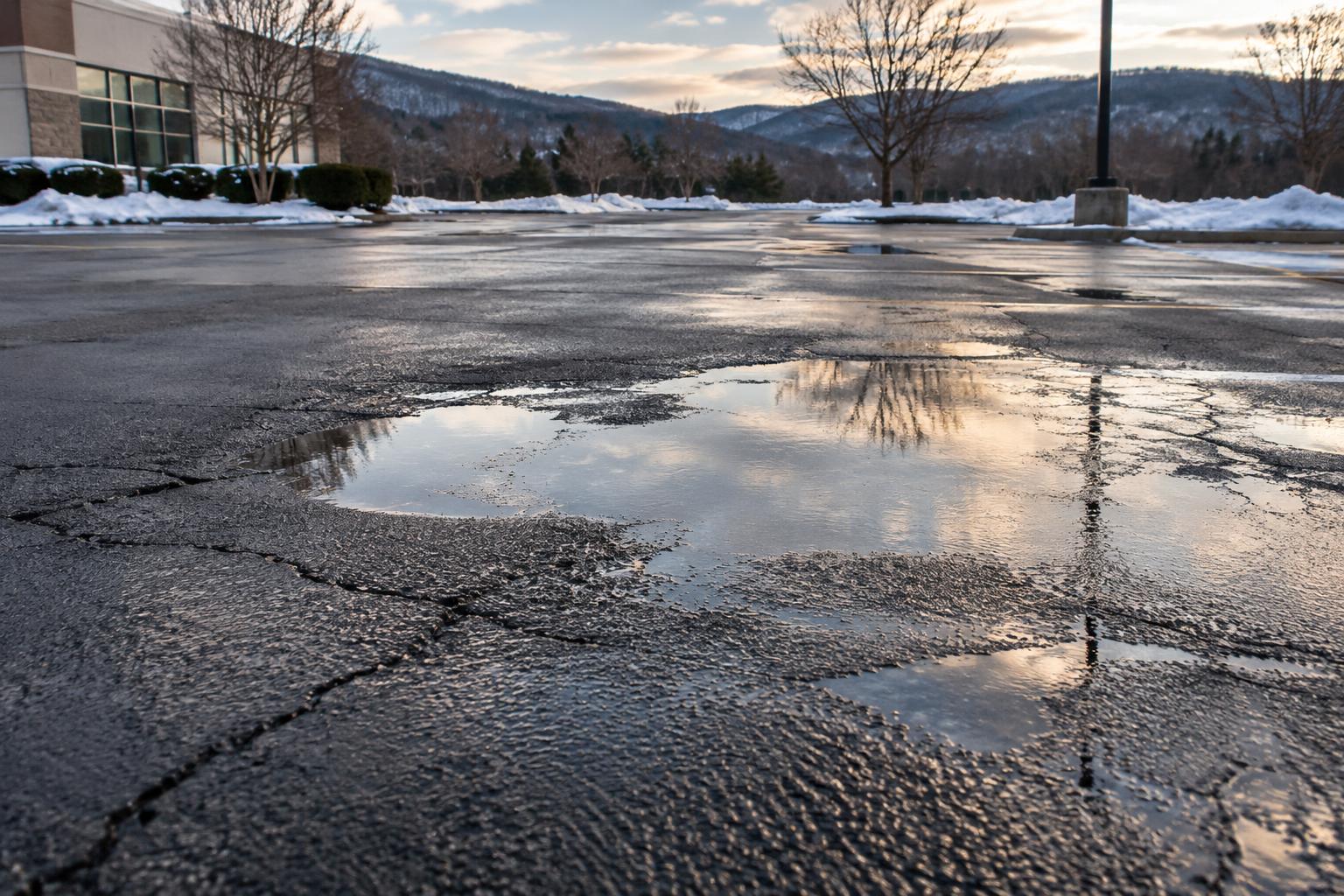
Standing water creates both visible and hidden dangers. Puddles obscure the true depth of underlying potholes, while seemingly shallow water can hide significant surface irregularities. Professional paving contractors like Avello Asphalt & Construction Corp understand that proper drainage design serves as the first line of defense against these costly legal exposures.
How Poor Drainage Destroys Asphalt from Within
The relationship between water and asphalt pavement is fundamentally destructive. When drainage systems fail, the consequences extend far beyond surface puddles—they attack the very foundation of the pavement structure.
1. Water Infiltration Compromises Subbase Integrity
Poor drainage allows water to penetrate through surface cracks and reach the subbase layer beneath the asphalt. This infiltration softens the supporting foundation, causing it to lose its load-bearing capacity. As the subbase weakens, the asphalt above begins to flex and crack under normal traffic loads, creating a cascade of structural problems that only worsen with time.
The engineering reality is stark: once water reaches the subbase, the pavement's service life drops dramatically. What should have been a 20-30 year surface may require major rehabilitation within 5-10 years, representing a massive financial loss for property owners who thought they were saving money by deferring drainage improvements.
2. Freeze-Thaw Cycles Accelerate Structural Failure
In the Hudson Valley's climate, standing water becomes an even more destructive force during winter months. Water trapped within pavement structures expands by approximately 9% when it freezes, creating internal pressures that can crack even well-constructed asphalt. These freeze-thaw cycles repeat dozens of times each winter, progressively widening existing cracks and creating new failure points.
The cumulative effect transforms minor surface imperfections into major structural defects. Each freeze-thaw cycle pushes more water deeper into the pavement, accelerating the deterioration process and ultimately requiring complete reconstruction rather than simple resurfacing.
Winter Black Ice Formation Multiplies Liability Risk
Poor drainage creates year-round safety hazards, but winter conditions in the Hudson Valley transform these problems into invisible death traps. Standing water in parking lots poses an increased risk of black ice formation, which presents unique challenges for both property owners and insurance companies.
Hidden Ice Creates Invisible Pedestrian Hazards
Black ice is particularly dangerous because it's nearly transparent, allowing the dark asphalt beneath to show through while maintaining a dangerously slick surface. Pedestrians typically cannot detect black ice until they're already slipping, making these incidents especially likely to result in serious injuries. The liability exposure increases dramatically because victims often argue they had no reasonable way to avoid the hazard.
Legal precedents consistently show that property owners face higher liability when ice conditions are not readily apparent to visitors. Courts often find that "obvious" hazards like visible snow reduce owner responsibility, but black ice eliminates that defense entirely.
Vehicle Accidents from Undetectable Slick Surfaces
Vehicles face similar risks from black ice in parking areas, with drivers unable to detect the hazardous conditions until they attempt to brake or turn. These incidents can involve vehicles and result in significant property damage claims against the property owner.
The vehicular liability extends beyond simple fender-benders. When cars slide into pedestrians or building structures due to icy parking lot conditions, the resulting claims can easily exceed $100,000. Insurance companies increasingly scrutinize drainage patterns when evaluating these claims, making proper water management a critical risk mitigation strategy.
ADA Compliance Issues from Drainage Failures
The Americans with Disabilities Act adds another layer of complexity to drainage-related liability. ADA requirements mandate that accessible routes remain free of hazards, including significant puddles or uneven surfaces caused by poor drainage. This regulation creates additional legal exposure for property owners who fail to maintain proper water management systems.
ADA violations often accompany traditional premises liability claims, creating multiple avenues for legal action. Property owners may face federal civil rights violations in addition to state personal injury claims, potentially increasing both financial exposure and regulatory scrutiny. The cumulative effect can transform a simple slip-and-fall incident into a complex multi-jurisdictional legal battle.
Compliance requires more than just meeting minimum accessibility standards during initial construction. Property owners must maintain ADA-compliant conditions throughout the pavement's service life, making ongoing drainage management a legal necessity rather than an optional maintenance activity.
Proven Solutions: Grading and Catch Basin Systems
Effective parking lot drainage requires a systematic approach that addresses both surface water management and long-term structural preservation. Professional contractors utilize multiple integrated systems to ensure water moves efficiently away from high-traffic areas.
1. Strategic Surface Grading for Water Flow
Proper grading creates the foundation for all other drainage solutions. Professional installation establishes appropriate slopes—typically 1-2% minimum—that direct water toward collection points without creating uncomfortable driving or walking surfaces. The grading must balance efficient water removal with accessibility requirements and traffic flow patterns.
Strategic grading also prevents water from pooling against building foundations, protecting both the structure and adjacent pavement areas. This integrated approach ensures that drainage solutions work harmoniously with the entire property layout rather than creating isolated improvements that may fail under real-world conditions.
2. Professional Catch Basin Installation
Catch basins serve as the collection points for surface water, but their effectiveness depends entirely on proper sizing, placement, and maintenance access. Professional installation considers both current drainage needs and future expansion possibilities, ensuring adequate capacity for extreme weather events.
Effective catch basin design aims to prevent clogging and maximize water collection efficiency, often incorporating features like debris screens and accessible maintenance points that don't disrupt normal property operations.
3. Trench Drain Integration for High-Traffic Areas
High-traffic pedestrian areas often require supplemental drainage solutions beyond traditional catch basins. Trench drains provide continuous water collection along walkways and building entrances, eliminating the standing water that creates slip hazards in these critical zones.
Integration of trench drains with the overall drainage system requires careful attention to capacity calculations and maintenance requirements. Professional installation ensures that these specialized systems complement rather than overwhelm the primary drainage infrastructure.
Case Studies Show Significant Reductions in Slip-Fall Claims
Case studies and industry experience demonstrate that drainage improvements can lead to significant reductions in slip-and-fall claims. Property owners who invest in proper drainage overhauls, including regrading and new catch basins, often see substantial decreases in liability incidents over time.
These improvements illustrate how upfront drainage investments pay long-term dividends. Beyond the immediate reduction in liability claims, properties also experience lower maintenance costs, improved tenant satisfaction, and enhanced property values. Insurance premiums decrease as the claims history improves, creating an additional financial benefit that continues throughout the pavement's extended service life.
Similar results appear consistently across different property types when proper drainage solutions replace failing systems. The key factor in successful outcomes is addressing the drainage system as an integrated whole rather than applying piecemeal fixes that may not resolve underlying water management problems.
Hudson Valley Commercial Properties Need Immediate Drainage Assessment
Local building codes and zoning regulations in the Hudson Valley region include specific requirements for stormwater management and drainage for commercial properties. These requirements continue evolving as municipalities grapple with increased precipitation intensity and frequency related to climate change.
Property owners who delay drainage assessments risk facing compliance issues that compound liability exposure. Regular professional evaluations identify potential problems before they become legal liabilities, allowing property managers to address issues during planned maintenance cycles rather than emergency repairs.
The combination of harsh winter weather, evolving regulatory requirements, and increasing legal scrutiny makes drainage assessment a critical component of commercial property management in the region. Properties with outdated or failing drainage systems face escalating risks that threaten both immediate safety and long-term financial stability.
Professional drainage solutions protect commercial property investments while reducing legal liability exposure—contact Avello Asphalt & Construction Corp for pavement and drainage services throughout the Hudson Valley region.
Company: Avello Asphalt & Construction Corp City: Poughkeepsie Address: 141 Daley Road Website: https://www.avelloasphalt.com
Mentioned in this blog post: Poughkeepsie service area
Have a property like this?
Tell us what you're seeing. We'll walk the site, explain the options plainly, and give you a clear scope.