Bollards & Wheel Stops for Hopewell Junction New York: Asphalt Guide Released
Avello's take
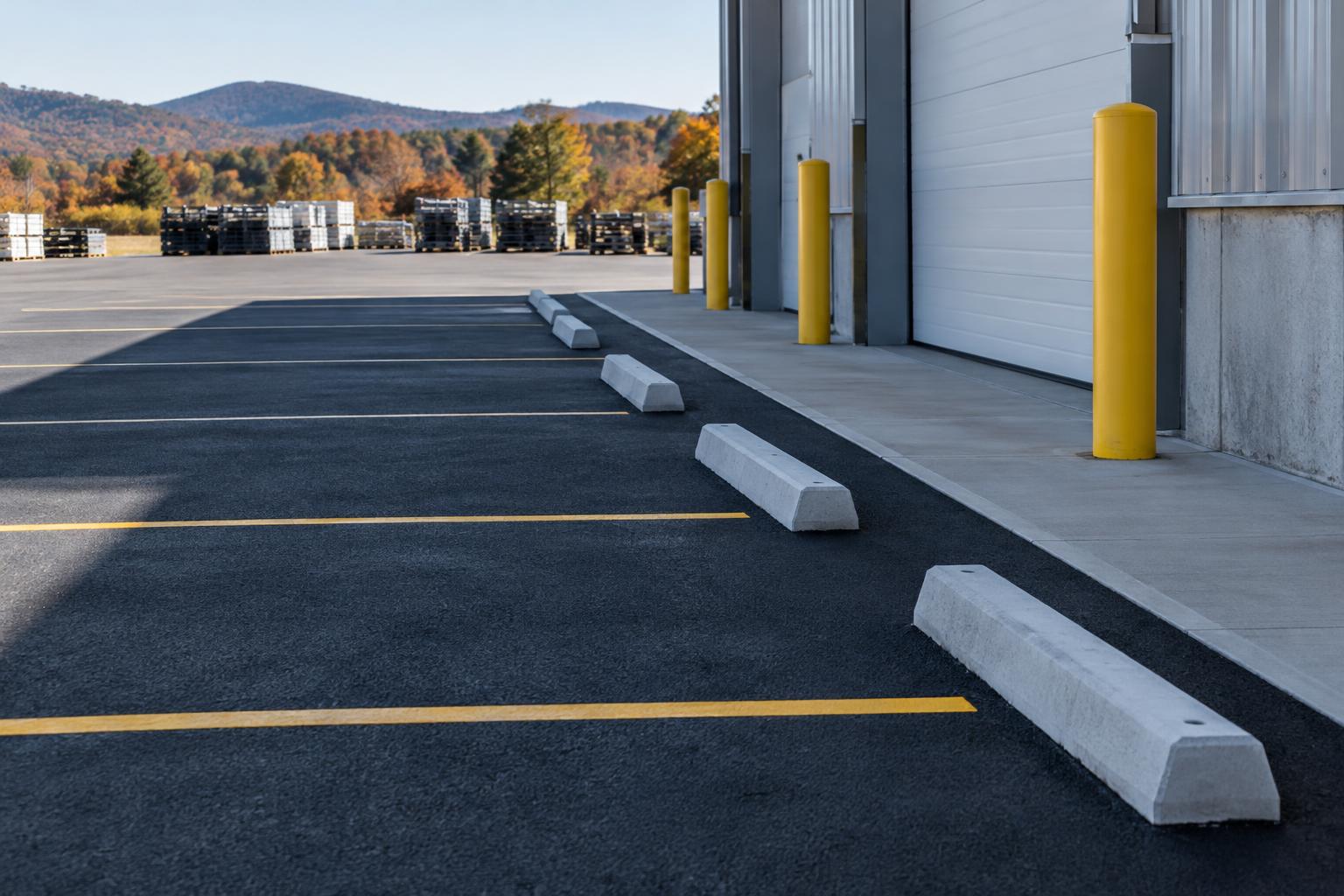
We’ve released a practical guide for manufacturing facilities in Hopewell Junction on planning bollards and wheel stops alongside pavement support and installation schedules. It covers how these choices fit around loading docks, doorways, walkways, and equipment. It also explains an important distinction: wheel stops help position parked vehicles, but they are not impact barriers. Bollard placement and support need to account for vehicle movement, pedestrian routes, and the work happening around them.
For Hudson Valley property owners and facility managers, these decisions connect protection with everyday operations. Trucks and forklifts need room to turn. Walkways, maintenance access, and snow removal routes need to stay usable. Regional freeze-thaw conditions and drainage also belong in the planning. We see a sensible starting point as reviewing the site’s pavement, support, utilities, and traffic patterns together. From there, installation can be phased around shifts, receiving, and maintenance rather than planned apart from them.
Avello Asphalt & Construction has published a practical guide for manufacturing facilities in Hopewell Junction on coordinating bollards, wheel stops, pavement support, and phased installation. The guide addresses a problem facility managers face regularly: protecting people and equipment from vehicle strikes without interrupting production or shipping schedules. This resource helps facility managers weigh vehicle-protection upgrades against the realities of a working plant.
For more details, visit https://avelloasphalt.com/blacktop-paving-construction-report/bollards-wheel-stops-and-protection-at-manufacturing-facilities-in-hopewell-junction
Loading docks, doorways, pedestrian walkways, rack aisles, and utility equipment are common areas where manufacturing sites consider vehicle-strike protection, according to industry guidance on facility layout. Dock bollards, for instance, are often positioned beside door tracks and controls to guard against forklift strikes, though the layout must preserve the full door opening and allow normal forklift turns. For a Hopewell Junction plant where forklifts, trucks, and trailers share tight work areas daily, these placement decisions carry real consequences for both safety and workflow.
The guide draws a distinction that often gets overlooked: wheel stops are not impact barriers. They help position parked vehicles, but research on parking-facility safety points out that improperly placed wheel stops can become trip hazards, particularly within pedestrian walkways or foreseeable walking paths. Proper use calls for secure anchoring along with keeping the stops visible and clear of debris, snow, and ice, a detail that matters for facility managers setting safety priorities across a busy site.
Beneath these above-ground choices sits a foundation question the guide treats as central rather than incidental. Structural surface-mounted bollards generally need suitable concrete support, since anchoring them to asphalt alone is generally not appropriate for resisting impact. Layouts also must account for truck, forklift, and trailer turning movements, while preserving snow removal, maintenance access, and pedestrian circulation, which is why the guide ties bollard selection to an assessment of pavement and support rather than treating posts as an afterthought.
Hudson Valley winters add another consideration the guide addresses directly: freeze-thaw movement, drainage, and snow removal all affect how protection holds up over time. Foundation detailing and site drainage need to suit regional conditions, since shallow installations may shift once the ground repeatedly freezes and thaws. The goal is protection that lasts through a full winter season, beyond the months when paving work is easiest to schedule.
Taken together, the guide walks facility managers through assessing pavement and support, choosing between bollards and wheel stops, coordinating foundations and utilities, and phasing the work so shifts, receiving, and maintenance can continue during construction. Hopewell Junction manufacturing facilities can review the guide or contact Avello Asphalt & Construction to request a project assessment. Avello, a contractor serving commercial, municipal, and industrial properties across the Hudson Valley, positions itself as a resource for coordinated, operations-conscious installation work.
Company: Avello Asphalt & Construction Corp City: Poughkeepsie Address: 141 Daley Road Website: https://www.avelloasphalt.com
Mentioned in this news article: Hopewell Junction service area, Poughkeepsie service area
Have a property like this?
Tell us what you're seeing. We'll walk the site, explain the options plainly, and give you a clear scope.
Related Avello guidance
More news articles
- Commercial Parking Lot Paving in Poughkeepsie, NY: 2027 Asphalt Guide Released
- Beacon NY Medical Office Asphalt Trench Patch: Causes & Repair Guide Released
- Speed Bump Guide for Poughkeepsie Housing Authorities Released by Avello
- East Fishkill, NY Bank ADA Parking Rules - Repaving & Restriping Report Released