Asphalt Parking Lot Inspection: Poughkeepsie Paving's 30-Second Visual Guide
Avello's take
This item explains what a visual parking lot inspection can reveal about asphalt condition. It covers connected cracks that resemble reptile skin, standing water, potholes, and changes in surface color. It also explains why crack width and recurring potholes deserve attention when deciding what kind of repair may be needed. We see the value in its plain message: looking at the surface can help identify concerns, but some patterns point to problems beneath it.
For Hudson Valley property owners, managers, boards, and public works teams, these observations can help organize maintenance priorities while keeping safe, attractive parking areas in view. We believe a sensible next step is to use those observations as the starting point for a professional assessment. That assessment can help distinguish surface concerns from drainage or base problems and guide the choice between maintenance, deeper repairs, and section replacement.
Key Takeaways
- Property managers can identify critical parking lot damage through rapid visual assessment using cues like alligator cracking, standing water, and crack width measurements
- Immediate action on warning signs like active potholes and drainage issues prevents liability risks and saves thousands in repair costs
- Semi-annual inspections catch surface deterioration before major structural damage occurs
- Quick fixes applied at the right time extend asphalt lifespan by 10-15 years compared to reactive maintenance
Commercial property managers face a constant balancing act between maintaining safe, attractive parking areas and controlling maintenance costs. The difference between a quick visual assessment and costly emergency repairs often comes down to knowing exactly what to look for during those first moments of inspection.
Critical Visual Cues Property Managers Can Spot Quickly
A trained eye can assess parking lot condition faster than most property managers realize. The key lies in recognizing specific patterns, textures, and warning signs that indicate structural problems beneath the surface. Professional contractors have developed systematic approaches to rapid assessment, focusing on the most telling indicators of asphalt health.
The most reliable quick-assessment technique involves scanning for three primary categories: surface integrity, water management, and safety compliance. Each category contains visual markers that experienced inspectors can identify within moments of arriving on site. Avello Asphalt & Construction Corp has refined these rapid inspection methods through years of commercial property work throughout the Dutchess County region.
Surface color provides immediate insight into asphalt condition. Fresh, well-maintained asphalt appears deep black with uniform texture. Sun-faded gray coloring signals that UV exposure has broken down the binder, creating brittleness that leads to accelerated cracking. This discoloration often appears years before structural problems become visible, making it a valuable early warning system.
The High-Stakes Warning Signs That Demand Immediate Action
Certain visual cues indicate problems that require immediate professional attention. These warning signs represent structural failures that worsen rapidly without intervention, creating liability risks and exponentially increasing repair costs.
1. Alligator Cracking: Base Failure Red Alert
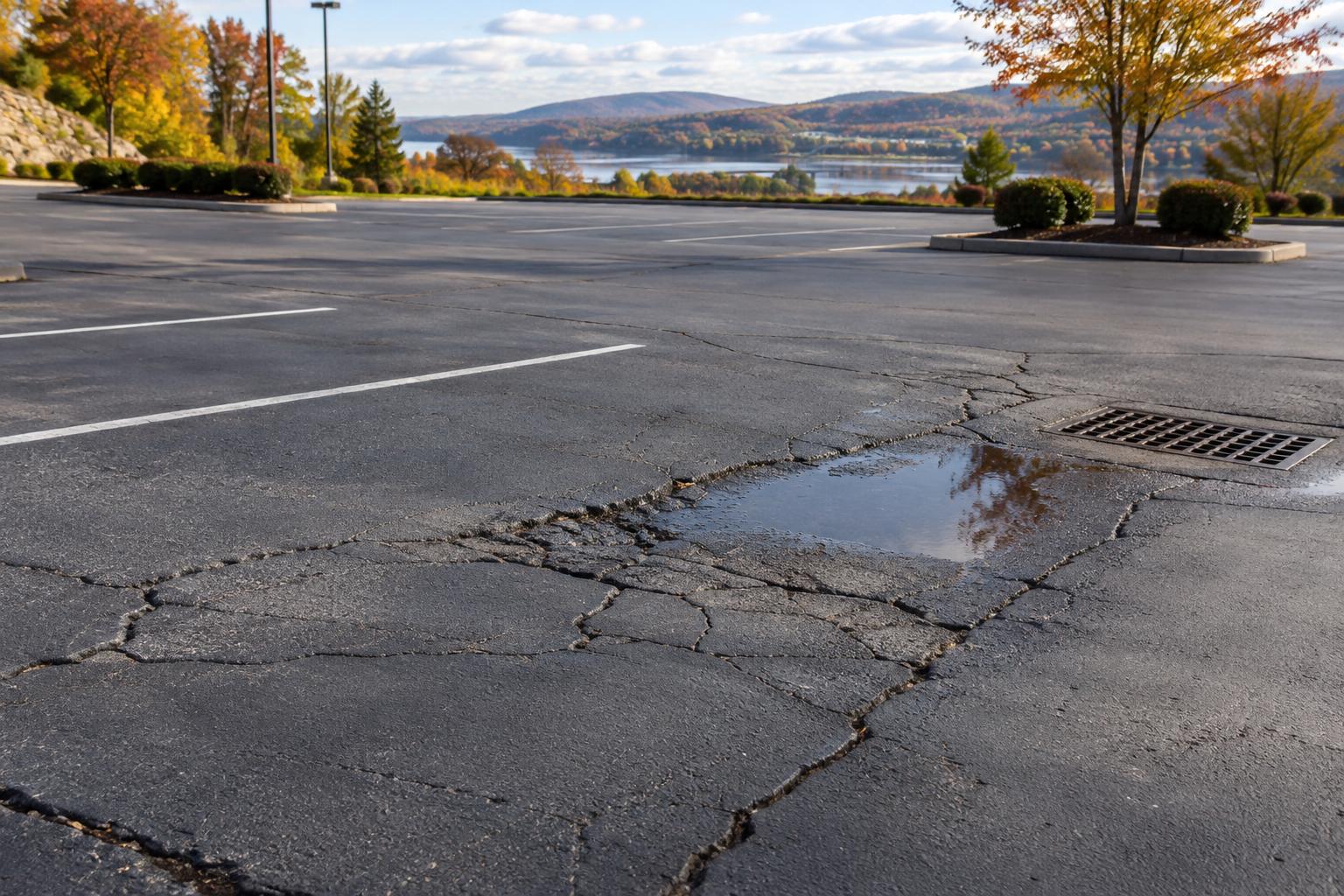
Alligator cracking resembles reptile skin, with interconnected crack patterns forming irregular polygon shapes across the pavement surface. This distinctive pattern indicates that the asphalt base or subgrade has lost structural integrity, causing the surface to flex and crack under traffic loads. Unlike isolated linear cracks, alligator patterns signal widespread foundation problems that cannot be addressed with surface treatments alone.
The progression from small interconnected cracks to large alligator patterns typically accelerates once water penetration begins. Property managers who spot early-stage alligator cracking - small interconnected lines covering areas larger than a parking space - should schedule professional evaluation immediately. Advanced alligator cracking requires full-depth patching or section replacement to prevent continued deterioration.
2. Standing Water: Drainage Crisis Indicator
Water pooling for more than 24 hours after rainfall indicates serious drainage problems or underlying base issues. Properly graded asphalt surfaces shed water quickly, directing runoff toward designated drainage points. Persistent pooling occurs when the pavement has settled unevenly, the base has shifted, or the original grading was inadequate.
Standing water accelerates asphalt deterioration through multiple mechanisms. It softens the base material underneath, creates freeze-thaw stress in colder months, and provides a pathway for water to penetrate deeper into the pavement structure. Areas with chronic pooling often develop potholes and base failures within one to two seasons if not addressed promptly.
3. Active Potholes: Liability Time Bombs
Potholes represent complete localized failure of the asphalt structure, creating immediate risks for vehicles and pedestrians. Active potholes - those showing fresh edges, loose material, or recent expansion - indicate ongoing deterioration that will accelerate without repair. The liability implications extend beyond property damage to include potential personal injury claims from trips, falls, or vehicle damage.
Potholes that return in the same location after previous repairs signal deeper structural problems. This pattern indicates that the underlying base has failed, making surface patching ineffective. Professional assessment becomes necessary to determine whether full-depth repair or section replacement is needed to achieve lasting results.
Surface Deterioration Signals Before Major Damage Strikes
Early detection of surface deterioration allows property managers to implement preventive measures before structural problems develop. These intermediate warning signs provide the opportunity for cost-effective maintenance that extends pavement lifespan significantly.
Crack Width Assessment: Measuring for Severity
Crack width provides a simple, reliable method for determining crack severity during quick inspections. Cracks wider than approximately 1/4 inch allow water penetration that can weaken the sub-base over time. Cracks narrower than 1/4 inch can often be addressed with crack sealing, while wider cracks may require more extensive repair methods.
Crack patterns provide valuable diagnostic information about underlying problems. While various factors can contribute to crack formation, understanding these patterns helps property managers prioritize maintenance efforts and determine appropriate repair strategies.
Color Changes That Predict Breakdown
Systematic color changes across the pavement surface reveal the progression of asphalt aging and deterioration. The natural black color of fresh asphalt gradually fades to dark gray, then light gray as UV exposure breaks down the binding agents. This color progression typically spans several years, providing advance warning of surface integrity loss.
Localized color variations often indicate specific stress points or problem areas. Lighter patches may show where heavy vehicles regularly park or turn, while darker areas might indicate oil staining or recent repairs. Understanding these color patterns helps property managers prioritize maintenance efforts and budget for upcoming work.
Safety and Compliance Issues Hidden in Plain Sight
Some parking lot problems create immediate safety and legal compliance issues that property managers must address promptly. These problems often appear minor during casual observation but carry significant liability and regulatory implications.
Faded Striping and ADA Violations
Parking lot striping serves multiple functions beyond basic organization. Clearly defined spaces prevent vehicles from damaging landscaping or curbs, while proper ADA-compliant markings ensure legal accessibility requirements are met. Faded striping creates confusion about parking boundaries, traffic flow, and accessibility spaces.
ADA compliance requires specific dimensions, markings, and access routes for designated accessible parking spaces. Faded or missing accessibility markings can result in compliance violations and potential legal issues. Regular restriping maintains both safety and legal compliance while improving the property's professional appearance.
Loose Pavement Under Traffic
Pavement that feels soft or shows new cracking after heavy vehicles pass indicates that the underlying base has lost compaction or structural integrity. This condition often develops gradually, making it difficult to detect without focused attention during inspections.
Areas of loose pavement typically worsen under continued traffic stress, eventually developing into potholes or larger structural failures. Early detection allows for proactive repair that addresses base issues before surface problems become severe. Property managers should pay particular attention to areas where delivery trucks turn, park, or frequently travel.
Timing Your Inspections for Maximum Protection
Strategic timing of parking lot inspections maximizes the detection of problems while they remain manageable and cost-effective to address. Proper scheduling also ensures that seasonal factors don't interfere with accurate assessment of pavement condition.
Semi-Annual Assessment Schedule
Semi-annual inspections provide optimal timing for detecting problems before they become major issues. Spring inspections reveal winter damage from freeze-thaw cycles, salt exposure, and snow removal equipment. Fall assessments identify summer heat damage, UV deterioration, and issues that need attention before winter weather arrives.
Scheduling inspections during mild weather conditions allows for thorough evaluation without seasonal interference. Spring inspections should occur after the last frost but before heavy rain seasons begin. Fall evaluations work best during stable weather periods when temperature fluctuations won't affect surface conditions.
Post-Storm Priority Checks
Severe weather events can reveal existing weaknesses or create new problems that require immediate attention. Heavy rainfall exposes drainage deficiencies and highlights areas where water penetration might occur. Storm damage assessment should focus on areas where water pooled, debris accumulated, or unusual stress occurred.
Post-storm inspections serve dual purposes: identifying immediate safety hazards and documenting storm-related damage for insurance purposes. Prompt documentation and professional assessment help property managers respond quickly to urgent problems while maintaining proper records for potential claims.
When Quick Fixes Save Thousands Versus Costly Replacements
The economic impact of timing maintenance decisions correctly cannot be overstated. Professional contractors consistently emphasize that preventive maintenance costs a fraction of reactive repairs, while reactive repairs cost significantly less than premature replacement.
Crack sealing performed on hairline cracks prevents water infiltration that leads to base deterioration. This simple preventive measure, costing pennies per linear foot, can prevent thousands of dollars in structural repairs within just a few seasons. The key lies in addressing cracks while they remain at the surface level, before water penetration compromises deeper layers.
Sealcoating applications every 1-3 years for commercial properties protect asphalt binder from UV damage and water penetration, extending surface life significantly. Properties that maintain consistent sealcoating schedules often achieve 25-30 year lifespans from their asphalt surfaces, compared to 10-15 years for surfaces that receive only reactive maintenance.
The transition point between cost-effective repair and necessary replacement occurs when base failure becomes widespread. Alligator cracking covering more than 25% of a parking area, recurring potholes, or chronic drainage problems typically indicate that the foundation has failed beyond the point where surface treatments remain effective.
Avello Asphalt Brings Professional Inspections to Your Property
Professional asphalt inspection combines rapid visual assessment with technical knowledge to provide property managers with actionable information about their parking lot condition. Experienced contractors can identify subtle warning signs that indicate developing problems, recommend appropriate timing for maintenance activities, and provide accurate cost estimates for both preventive and corrective measures.
The value of professional inspection extends beyond immediate problem identification. Qualified contractors provide documentation that supports maintenance planning, budget development, and insurance claims when necessary. They also offer knowledge in prioritizing repairs based on safety requirements, cost-effectiveness, and long-term property value considerations.
Regular professional assessment helps property managers transition from reactive maintenance approaches to strategic planning that maximizes pavement lifespan while controlling costs. This approach provides predictable budgeting, reduces emergency repair situations, and maintains property appearance and safety standards consistently.
For professional asphalt inspection and maintenance services throughout the Poughkeepsie and Dutchess County area, contact Avello Asphalt & Construction Corp to schedule your professional parking lot assessment.
Company: Avello Asphalt & Construction Corp City: Poughkeepsie Address: 141 Daley Road Website: https://www.avelloasphalt.com
Mentioned in this blog post: Poughkeepsie service area
Have a property like this?
Tell us what you're seeing. We'll walk the site, explain the options plainly, and give you a clear scope.