How a Hyde Park campus bus loop gets rebuilt between the last bell and the first
A worked example: mill and overlay of a bus loop, fire lane and staff lot delivered entirely inside the summer recess window.
Have a property like this in Hyde Park?
Three quick steps. Free site walk, written scope, no obligation.
Illustrative scenario. This is a worked example of the scope, sequencing and specifications Avello uses on this type of property — written so you can see exactly how your project would be planned and priced. It is not a record of a specific named client project.
The situation we'd be walking into
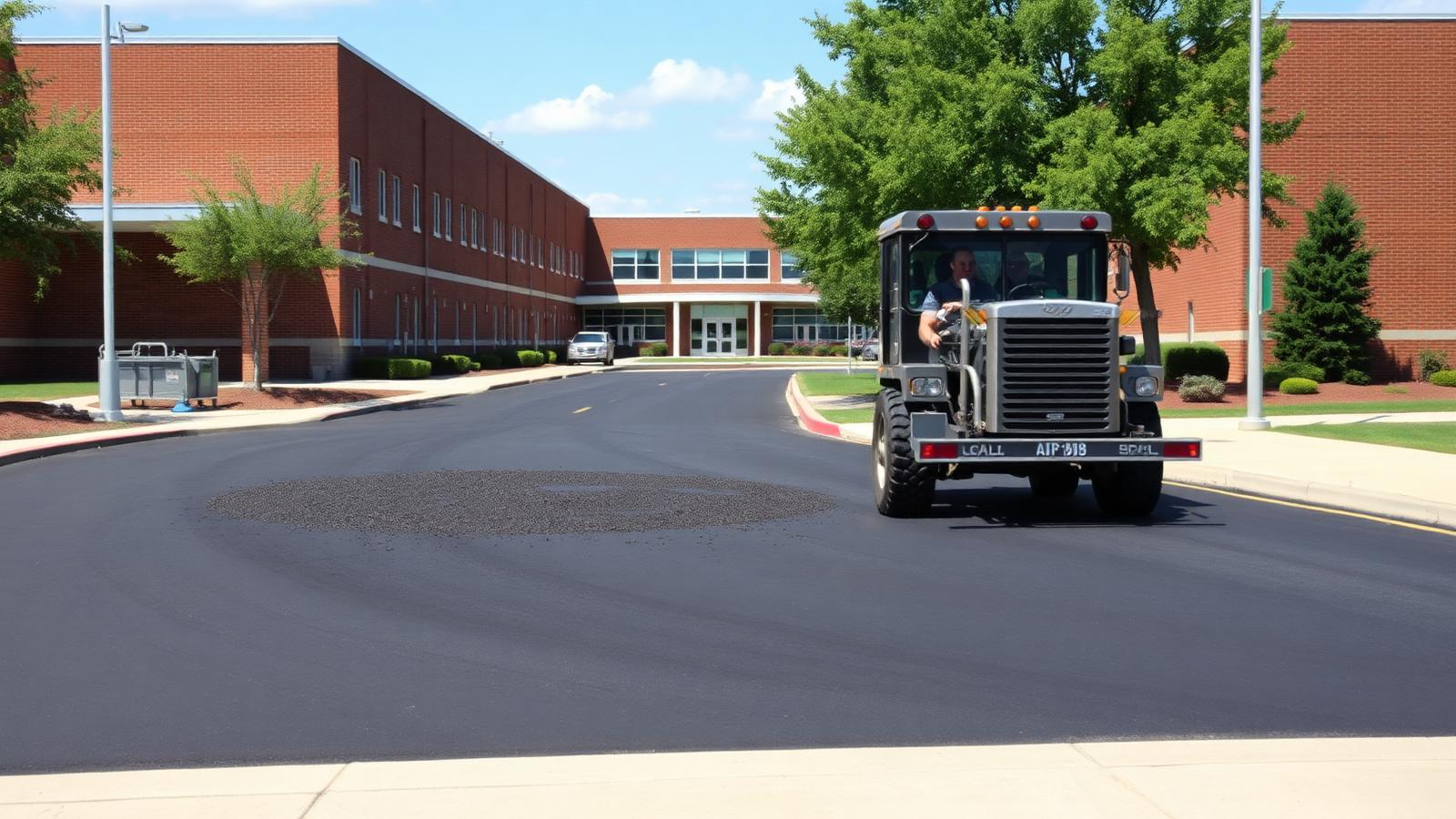
Picture this: The bus loop surface had raveled to the point that buses were tracking loose aggregate onto the sidewalks, and the fire lane markings were gone. The district had a hard window: work could not start before the last day of school and had to be finished, cured and striped before staff returned in August.
Example property profile: K-12 school campus, Hyde Park NY
School pavement is judged by a tougher audience than any commercial lot: parents in a pickup line, bus drivers on a fixed schedule, a facilities director with a fixed budget, and a board that has to approve it in public. It also has the narrowest possible construction window — the summer weeks between the last bus out and the first bus in.
This scenario walks through how Avello Asphalt & Construction would plan a mill-and-pave of a Hyde Park school campus: bus loop, parent drop-off, staff lots and the service drive. It covers the condition assessment, the specification, the accessibility and crossing work that has to be part of any school project, and above all the calendar — how the work is broken into weeks so the campus is fully open and striped before staff return.
This is an illustrative worked example, not a record of a named district project.
If that sounds like your property, the rest of this page is the plan we'd put in writing for you — free, before you commit to anything.
Assessing a campus as separate traffic zones
A school campus is not one pavement. The bus loop carries the heaviest repetitive loading on site and almost always shows distress first. The parent loop sees light vehicles but heavy stop-and-go in the same wheel paths. Staff lots are the least stressed surfaces on campus. The service drive to the kitchen and boiler room carries delivery trucks that nobody accounts for when the lot is designed.
We assess and price each of those zones on its own, because they rarely need the same treatment in the same year. It is common for the right answer to be mill-and-pave on the bus loop, surface repair and crack seal on the parent loop, and nothing but striping on a staff lot.
- Bus loop: rutting and base distress at wheel paths and turning points
- Parent loop: block cracking and worn crossing markings
- Staff lots: oxidation and raveling with sound structure underneath
- Service drive: localized full-depth failure at delivery turnarounds
- Crossings and accessible routes: faded markings, curb ramp issues
Why mill-and-pave rather than an overlay
On a campus, milling before paving is usually not optional. Curbs, sidewalks, door thresholds and existing drainage set fixed elevations. Adding two inches of asphalt on top without removing two inches first reduces curb reveal, buries basin rims, and can create a lip at a door or a ramp that fails accessibility requirements.
Milling also gives us a clean, textured bonding surface and lets us correct minor grade problems in the milled plane. On a bus loop with base distress, we mill, then repair the failed areas full-depth in the milled surface, then pave the whole zone as one continuous mat — which is what gives you a smooth loop instead of a quilt of patches.
Accessibility and traffic safety as part of the scope
Any school paving project should end with the accessible routes, crossings and accessible parking in fully compliant condition, and it costs very little to do it during a job that is already re-striping the campus. That means correctly dimensioned accessible stalls and access aisles with proper signage, crossings placed where children actually walk, and ramp transitions that are flush with the new mat.
We include a striping and signage layout drawing for the district to review and approve before any paint is applied. That drawing is also a useful record for the district when questions come up later.
- Accessible stalls, access aisles and signage brought to current standards
- Crosswalks placed on the desk lines students actually use
- Bus staging and queue markings sized for your fleet
- Fire lane markings and no-parking zones coordinated with local officials
- Speed table, stop bar and directional arrow layout reviewed with administration
The summer calendar, week by week
The single most important promise on a school job is the date. We build a written week-by-week calendar before the contract is signed and hold to it, with sequencing designed so that if weather takes a week, the schedule absorbs it without threatening opening day.
A typical sequence: mobilize and complete milling and full-depth repairs in the first weeks, pave zone by zone so that no area of campus is inaccessible for more than a day or two, complete curb and accessibility items, then stripe with a deliberate cure buffer built in before staff return. Custodial and maintenance staff working through the summer keep vehicle access throughout.
- Written week-by-week calendar issued before mobilization
- Weather contingency built into the sequence, not tacked onto the end
- Zone-by-zone paving so summer staff always have access
- Striping completed with cure time to spare before staff return
- Final walkthrough with the facilities director before demobilization
Working on a public site
District work carries requirements that private jobs do not. We supply certificates of insurance naming the district and any required additional insureds, coordinate prevailing wage documentation where applicable, and provide submittals for mix designs and materials before placement.
We also plan for the fact that a campus is never truly empty. Summer programs, athletics, food service deliveries and contractors on other trades all move through the site, so the traffic control plan and daily communication with the facilities office matter as much as the paving itself.
What waiting another year costs
On a campus, deferred pavement turns into three separate problems at once: a structural problem that gets more expensive every winter, an accessibility problem when crossings and accessible routes degrade below compliance, and a visibility problem the first time a parent photographs a pothole in the drop-off line. The structural side alone typically triples in cost once surface distress becomes full-depth failure under bus loading.
Scope & specification highlights
- 2 in. mill and 2 in. top course across the loop and staff lot
- Full-depth repair at 9 base failures identified during milling
- Raised concrete pedestrian island at the loading zone
- Fire lane re-established with code-compliant markings and signage
- Bus queuing positions numbered and marked
- Crosswalks with high-visibility ladder markings at every building door
Materials we'd specify
- Wearing course
- NYSDOT-conforming hot mix asphalt sized for bus loading in the loop and standard duty in staff lots.
- Milling
- Cold planing to a controlled depth with a textured, cleaned bonding surface prior to paving.
- Crack sealant
- Hot-applied rubberized sealant used on retained pavement outside the paving limits.
- Markings
- High-build traffic paint campus-wide; thermoplastic or preformed markings available at crossings.
How we'd run the project, step by step
- Step 1Pre-summer walk
Scoped in April so the district could approve the purchase order before the fiscal year closed.
- Step 2Locked schedule
A day-by-day calendar tied to the recess window, with weather contingency days built in.
- Step 3Mill and repair
Milling first, then base repairs at anything that showed up underneath.
- Step 4Pave and stripe
Paved in one continuous operation, then striped after full cure.
- Step 5Pre-opening walk
Walked with facilities and transportation before staff returned.
Typical time on site for a scope this size: 17 calendar days inside summer recess
What actually drives the price
Public and institutional work is usually budgeted a year ahead and often has to survive a bid or quote process, so the scope has to be written to be comparable. We provide square footages, milling depth, mat thickness, mix designation, striping counts and any accessibility items as discrete lines, so a district can hold every bidder to the same specification instead of comparing lump sums. Where the full campus does not fit a single year, we identify which surfaces are safety-critical, which are structurally urgent and which can wait, and provide a two- or three-summer program in priority order.
- Milling depth and area
Milling adds cost but is what protects curb reveal, drainage rims and accessible transitions. It is rarely worth skipping on a campus.
- Full-depth repair quantity in the bus loop
Bus loops carry the heaviest loading on site; the amount of base repair found during milling is the main variable.
- Accessibility and curb work
Ramps, accessible stalls, signage and flush transitions are priced separately so the district can see the compliance cost on its own.
- Striping and layout complexity
Crossings, bus staging, fire lanes and directional markings vary widely campus to campus.
- Schedule compression
A short window may require additional crews or extended shifts to guarantee an opening-day completion.
The maintenance plan that protects the investment
- Year 1
Post-winter walk with the facilities director. Seal any reflective cracking that appears at repair perimeters.
- Year 2-3
Hot-applied crack sealing across the campus and re-stripe crossings, which wear fastest.
- Year 3-4
Full campus re-stripe including accessible stalls and fire lanes.
- Year 5-8
Program the next zone. A rolling zone-by-zone plan keeps the campus in good condition without a single large capital year.
What a scope like this is built to deliver
- Completed 6 days ahead of the staff return date
- Loose aggregate tracking eliminated at building entrances
- Fire lane and bus queuing formally re-established and signed
- Student lot scoped and budgeted for the following summer
What you'd have in hand for ownership or a board
- What the board needs to see
- A specification-level scope with quantities that can be bid apples-to-apples, plus a priority-ordered multi-year option.
- Opening-day guarantee
- A written week-by-week calendar with weather contingency and a completion date ahead of staff return.
- Compliance
- Accessible routes, stalls, signage and crossings brought to current standards as part of the same project.
- Documentation
- Insurance certificates naming the district, material submittals and an approved striping layout drawing.
Your next step is simple
- 1. Tell us the property and what's failing (2 minutes, form above or a phone call).
- 2. We walk and measure the site — free, no obligation.
- 3. You get a written, line-itemed scope with phased options you can take to ownership or a board.
Hyde Park project questions
Can you finish a school lot inside summer recess?+
Yes — that is how most campus work in Dutchess County has to be done. We build the calendar backwards from your staff return date with weather days included.
When should a district scope summer paving?+
Late winter or early spring. That gets the purchase order approved before the fiscal year closes and locks a summer slot before the schedule fills.
Do you handle fire lane and crosswalk approvals?+
We lay out the markings to the district and fire marshal's requirements and walk it with them before final striping.
Why commercial and municipal clients hire Avello
More projects like this
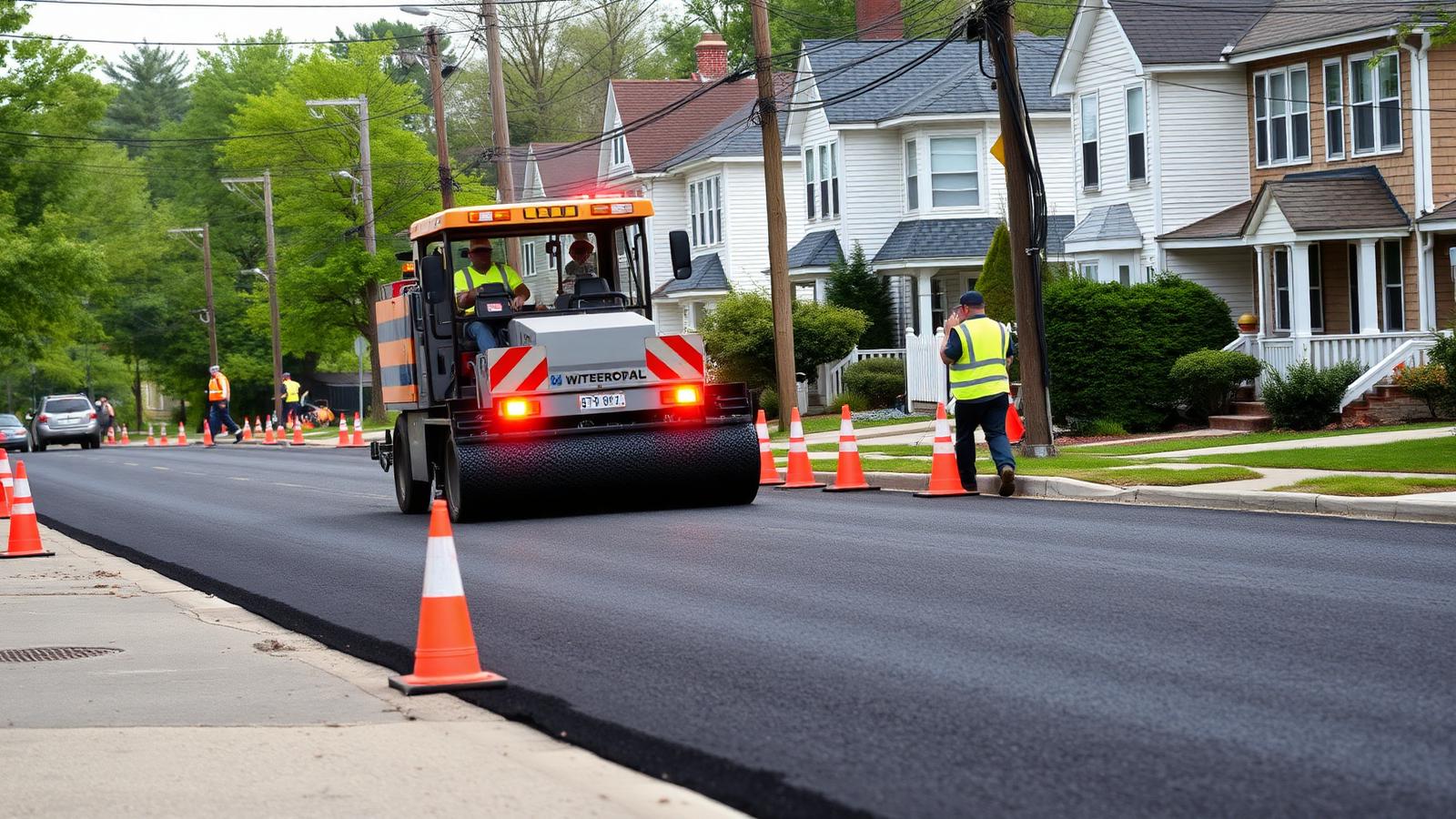
How a Beacon-style roadway program becomes a written, bid-ready plan instead of another pothole invoice
A worked example: milling, resurfacing and utility-trench restoration across seven residential streets under a public bid package.
See how we'd run it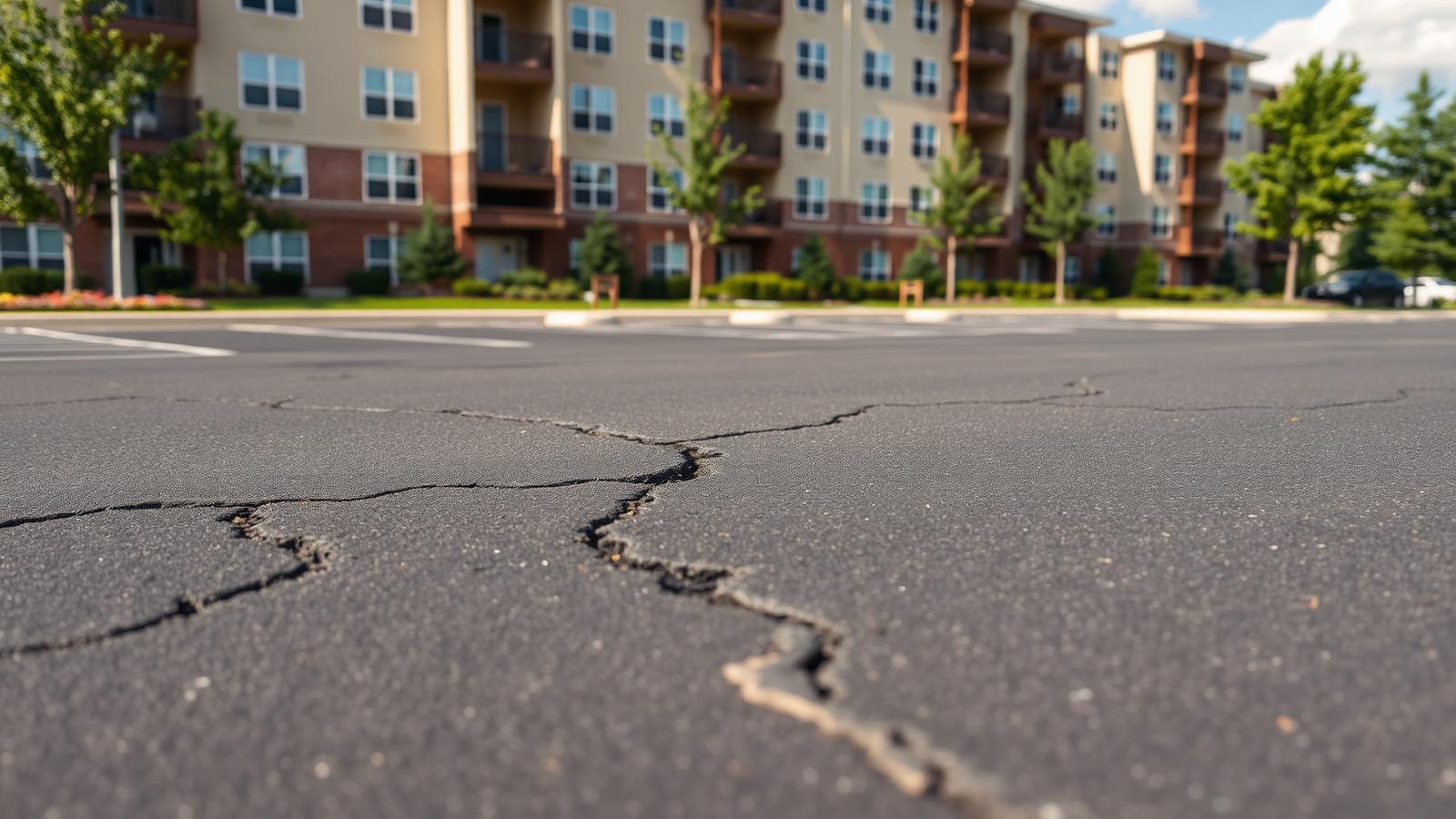
How a 340-unit East Fishkill community could buy seven more years of pavement
A worked example: a routed and sealed crack program priced at a fraction of the resurfacing it defers.
See how we'd run it
How a Hopewell Junction office park could recover 22 parking spaces with paint
A worked example: restriping and a redesigned circulation layout that adds capacity without adding an inch of pavement.
See how we'd run itReady for a real number on your Hyde Park property?
Same process as this project: we walk it, measure it, and hand you a written, line-itemed scope with phased options.