What Changes Commercial Paving Quotes - Beacon Contractor Breaks Down Costs
Avello's take
This item explains why commercial paving quotes can look different even when they cover the same parking lot. We see the value in looking beyond the bottom line to understand what each estimate includes. The guide covers drainage, soil conditions, existing pavement, traffic, layout, and scheduling. It also explains how base preparation, asphalt mix, and layer thickness shape the proposed work. A lot used mainly by cars may need a different pavement design than an area used by delivery trucks.
For Hudson Valley property owners, managers, boards, and public works teams, those details make comparisons more useful. Local hills and seasonal rain make drainage and grading especially relevant. Keeping a property open during construction can also affect the scope. We think a sensible next step is a detailed site walk followed by a review of itemized written estimates. Comparing the work area, preparation, materials, and traffic assumptions helps clarify whether each contractor is proposing the same work.
Key Takeaways
- Site conditions like poor drainage, soft soil, and old deteriorated pavement often add prep work that two quotes may handle very differently
- Truck-heavy properties need thicker asphalt layers and stronger mixes than lots that only see car traffic, which changes material and labor costs
- Larger lots can sometimes cost less per square foot once mobilization and crew time are spread across more area, while tight layouts with islands or curves add time
- Scheduling paving work for late season rather than peak spring and summer months may open up savings for flexible property owners
- Comparing itemized quotes line by line reveals whether contractors are actually pricing the same scope of work
A parking lot quote for a local apartment complex and one for a retail plaza down the street can look nothing alike, even if both lots measure roughly the same size. That difference confuses a lot of property managers who assume paving is priced like carpet, by the square foot and nothing else. The real story involves what's happening below the surface, how many vehicles roll across the lot each day, how the site is laid out, and when the work gets scheduled.
Understanding these variables helps landlords read a quote the right way instead of just comparing a single number at the bottom of the page. This guide walks through the biggest factors shaping paving quotes in the Hudson Valley, from drainage work to long-term maintenance planning.
Why Two Quotes Never Match
Two contractors can walk the same property and come back with estimates that differ by thousands of dollars, and both can be completely fair. The gap usually comes down to assumptions. One contractor might price a straightforward overlay while another has budgeted for milling out failed sections first. One might spec a thinner surface course for light car traffic while another plans for the delivery trucks that visit twice a week.
Without a detailed site walk, a contractor can easily miss these details, and without a detailed written estimate, a property manager can just as easily miss them too. A useful estimate spells out the work area, the base preparation involved, the asphalt mix being used, and the compacted thickness of each layer. No single standard thickness or base depth applies to every commercial lot, which is exactly why quotes vary so much from one contractor to the next.
What's Under the Surface Matters Most
The pavement surface gets all the attention, but the layers underneath often determine whether a paving job lasts five years or twenty-five. Commercial asphalt pavement typically lasts somewhere between 15 and 25 years, and where a particular lot falls in that range usually traces back to how well the ground was prepared before paving ever began.
Drainage, Grading, and Subgrade Issues
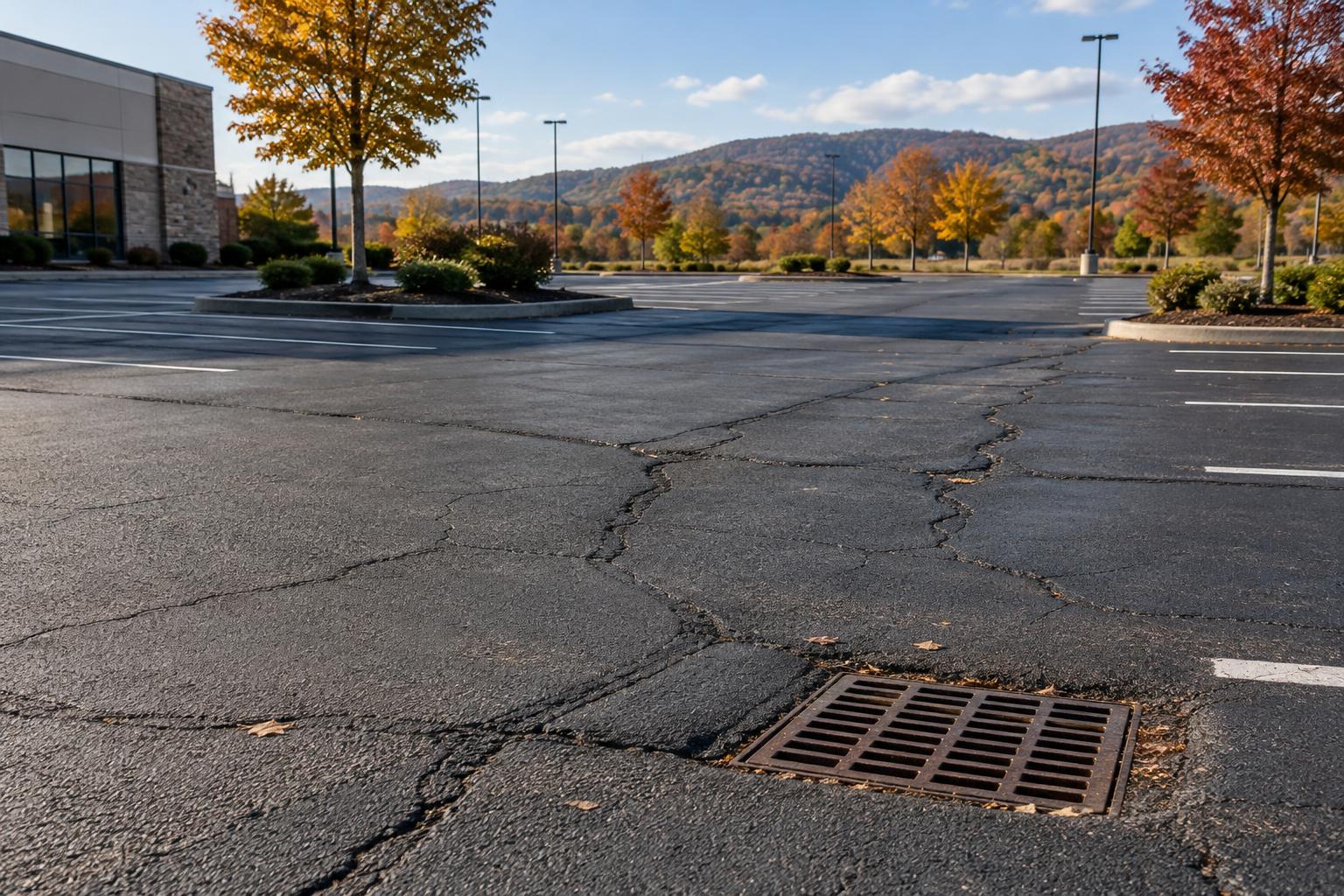
Standing water, uneven terrain, and soft spots in the subgrade rank among the most common reasons a quote comes in higher than expected. Before paving begins, the subgrade should be checked for soft or unsuitable areas, often through proof-rolling with heavy equipment to find spots that need to be dug out and replaced. Skipping this step might shave a little off the upfront price, but it practically guarantees cracking and potholing within the first few seasons.
A stable base keeps pavement from failing early. Grading that directs water away from the lot, combined with proper base materials, protects the investment far more than an extra half-inch of surface asphalt ever could. The hilly terrain and seasonal rain found throughout the Hudson Valley make this step especially important for commercial landlords managing larger lots or properties near slopes.
When Milling or Base Repair Gets Added
Deteriorated pavement sometimes needs to be milled down before new asphalt goes on top, and that step adds real cost. Full-area milling can bring a commercial resurfacing project to roughly $4.00 to $9.00 per square foot, while full removal and replacement of badly failed pavement runs closer to $7.00 to $14.00 per square foot, according to The Pavement Directory. The amount of pavement that's actually failed, along with any drainage or utility adjustments needed, plays a big role in where a project lands in that range.
Regrading a lot or adding catch basins to fix a drainage problem adds another line to the budget, and properties that need to stay open during construction often require temporary signage, flagging, or phased lane closures. These logistics matter more for an occupied apartment complex or a busy retail center than for a lot that can simply close for a weekend.
Traffic Dictates Mix and Thickness
The type of vehicles using a lot every day shapes the entire pavement design, affecting far more than a single line item. A daycare parking lot and a distribution center loading area need completely different pavement systems, even if they cover similar square footage.
Truck-Heavy Sites vs. Light-Use Lots
Light-duty lots built mainly for cars can often work with a design like the Illinois Asphalt Pavement Association's typical minimum: roughly 6 inches of aggregate base, a 2.5-inch asphalt base layer, and a 1.5-inch surface layer, though the right design always depends on subgrade conditions and expected traffic. Sites with heavier truck traffic need more. A municipal pavement design guide from the City of Hudson, New York describes its heaviest traffic classification as handling up to around 200 trucks per day, which calls for a thicker, stronger pavement structure than a typical office park would ever need.
Thicker pavement means more material, more hauling, and more labor, so a trucking yard or distribution center naturally costs more per square foot to pave than a medical office parking lot. Choosing a mix that matches real traffic patterns protects against premature rutting and cracking, which ends up costing far more to fix than it would have cost to design correctly the first time.
Entrances, Loading Docks, and Dumpster Pads
Some parts of a lot take a beating no matter how light the overall traffic is. Entrances, exits, drive-throughs, loading docks, and dumpster pads face some of the most severe pavement loading on a property, since vehicles tend to turn, brake, and idle in these exact spots. Because of that repeated stress, these areas often get extra pavement thickness or reinforced base material even when the rest of the lot uses a standard design.
A site assessment worth trusting notes pavement distress, drainage paths, and traffic patterns around these high-use zones specifically. Leaving them out of the design, or treating them the same as a standard parking stall, is one of the more common reasons pavement fails early right where it's needed most.
Size, Layout, and Site Access Add Up
Square footage matters, but it only tells part of the story. How a lot is shaped and how easily crews can get equipment onto the property both shift the final number on a quote.
Economies of Scale on Larger Lots
Larger paving projects can sometimes cost less per square foot than smaller ones, since mobilization costs and crew setup time get spread across more area. Commercial parking lots generally run $2.50 to $5 per square foot for the asphalt portion of the work alone, not including curbs, drainage, striping, or engineering, while heavier-duty commercial specifications can run $4.50 to $8.00 per square foot according to the project management platform Projul. A sprawling office park lot might land toward the lower end of that range simply because of its size, while a smaller lot with a thicker, truck-rated design could land higher despite covering less ground.
Islands, Corners, and Tight Entrances
Layout complexity adds time, and time adds cost. Landscaped islands, medians, curved corners, and tight entrances all slow crews down compared to a simple rectangular lot with wide-open access. A shopping plaza with several planted islands and multiple access points takes noticeably more attention than a straightforward warehouse lot of the same size.
Limited staging space creates its own set of headaches too. Properties tucked into busy commercial corridors, or those with narrow entrances that make it hard to bring in paving equipment, often need extra logistics planning that shows up as added cost on the quote.
Timing and Long-Term Upkeep Shift Costs
When a project happens, and what happens after the paving crew leaves, both affect the total amount a landlord ends up spending over the life of the pavement.
Peak Season vs. Late-Season Scheduling
Asphalt plants in northern states like New York operate seasonally, and demand climbs sharply during spring and summer. That seasonal demand tends to push prices higher during the busiest months. Scheduling work later in the paving season can sometimes come with better pricing, since crews may be looking to fill out their calendar before plants shut down for winter. Property managers who can plan ahead and stay flexible on timing sometimes find more room to negotiate.
Sealcoating and Crack Sealing as Cost Strategy
The cheapest quote upfront isn't always the cheapest option over time. Sealcoating and crack sealing help extend pavement life by protecting the surface from water intrusion and sun damage, two of the biggest reasons pavement deteriorates early. A landlord comparing two quotes should also compare what kind of maintenance plan each contractor recommends going forward, since skipping routine maintenance often means paying for a full resurfacing years sooner than necessary.
Comparing Quotes Line by Line
The only fair way to compare two paving quotes is to make sure they're actually describing the same project. A good estimate spells out the proposed approach, whether that's a patch repair, a mill-and-overlay, or a full reclamation, and explains how drainage, accessible routes, project sequencing, exclusions, change orders, payment terms, and warranty coverage are all handled.
Before accepting a bid, property managers should check that each quote includes:
- The exact work area and scope, including any ADA-compliant access routes required
- Base preparation details, including whether milling or subgrade repair is included
- The specific asphalt mix and compacted thickness for each layer
- How drainage issues, if any, will be addressed
- A maintenance recommendation, such as sealcoating or crack sealing timelines
- Clear terms for exclusions, change orders, payment schedule, and warranty coverage
A lower number without these details attached isn't a lower price. It's often just a quote for less work.
The Real Cost Comes from Specifications, Not Just Size
Square footage gives a rough starting point, but the real number on a commercial paving quote comes from everything underneath that number: the condition of the subgrade, the drainage plan, the traffic the lot needs to support, the layout's complexity, and the long-term maintenance strategy attached to the job. Landlords throughout the Hudson Valley who understand these factors are in a much stronger position to compare bids fairly and avoid the surprise of a mid-project change order.
Asking contractors to spell out their specifications, rather than just their price, turns a confusing bidding process into a clear one. Property managers ready to start that conversation can reach out to Avello Asphalt & Construction Corp to walk through a project's specifications before requesting bids, making it much easier to spot which quotes are actually comparable. https://avelloasphalt.com/blacktop-paving-construction-report/what-drives-the-cost-of-commercial-paving-for-commercial-landlords-in-beacon
Company: Avello Asphalt & Construction Corp City: Poughkeepsie Address: 141 Daley Road Website: https://www.avelloasphalt.com
Mentioned in this blog post: Poughkeepsie service area, Beacon service area, Hudson service area
Have a property like this?
Tell us what you're seeing. We'll walk the site, explain the options plainly, and give you a clear scope.