Best Time for School Paving? Poughkeepsie Contractor Weighs Options
Avello's take
This item looks at how schools can choose a practical window for paving. Summer break is generally preferred because students, staff, and buses are away from active work zones. But the school calendar is only part of the decision. Cooler fall weather leaves crews less time to compact hot-mix asphalt properly. The article also covers pavement condition, drainage, striping, accessible routes, and how phasing can keep access open during construction.
For Hudson Valley property managers, school boards, and public works teams, these details matter because scheduling and site needs belong in the same conversation. We see the value in looking beyond an open date on the calendar. A sensible next step is a property walkthrough to note cracking, standing water, worn markings, and uneven accessible routes. Reviewing those observations alongside the campus schedule can help clarify the work involved and whether it needs to happen in phases.
Key Takeaways
- Summer break is generally the preferred window for school paving projects because it keeps students, staff, and buses away from active work zones
- New York paving guidance points to Columbus Day as an informal cutoff for hot-mix work, since cooler fall temperatures leave less time to compact asphalt properly
- A school resurfacing project may include milling 1.5 to 2 inches of old asphalt, repairing base failures, adjusting drainage grates, and restriping for ADA compliance
- Phasing plans can keep one entrance and an accessible route open throughout construction
- Project costs for school resurfacing typically fall between $15,000 and $250,000 depending on square footage, base condition, and drainage needs - the details below explain what drives that range
Every facilities director juggling a school paving project faces the same puzzle: find a window when the weather cooperates, the campus is empty enough to work safely, and the crew still has time to do the job right. Poughkeepsie's climate adds its own wrinkle, since the compaction window for hot-mix asphalt narrows fast once fall settles in. Getting the timing right protects both the budget and the pavement for years to come.
Summer Break Is the Paving Target
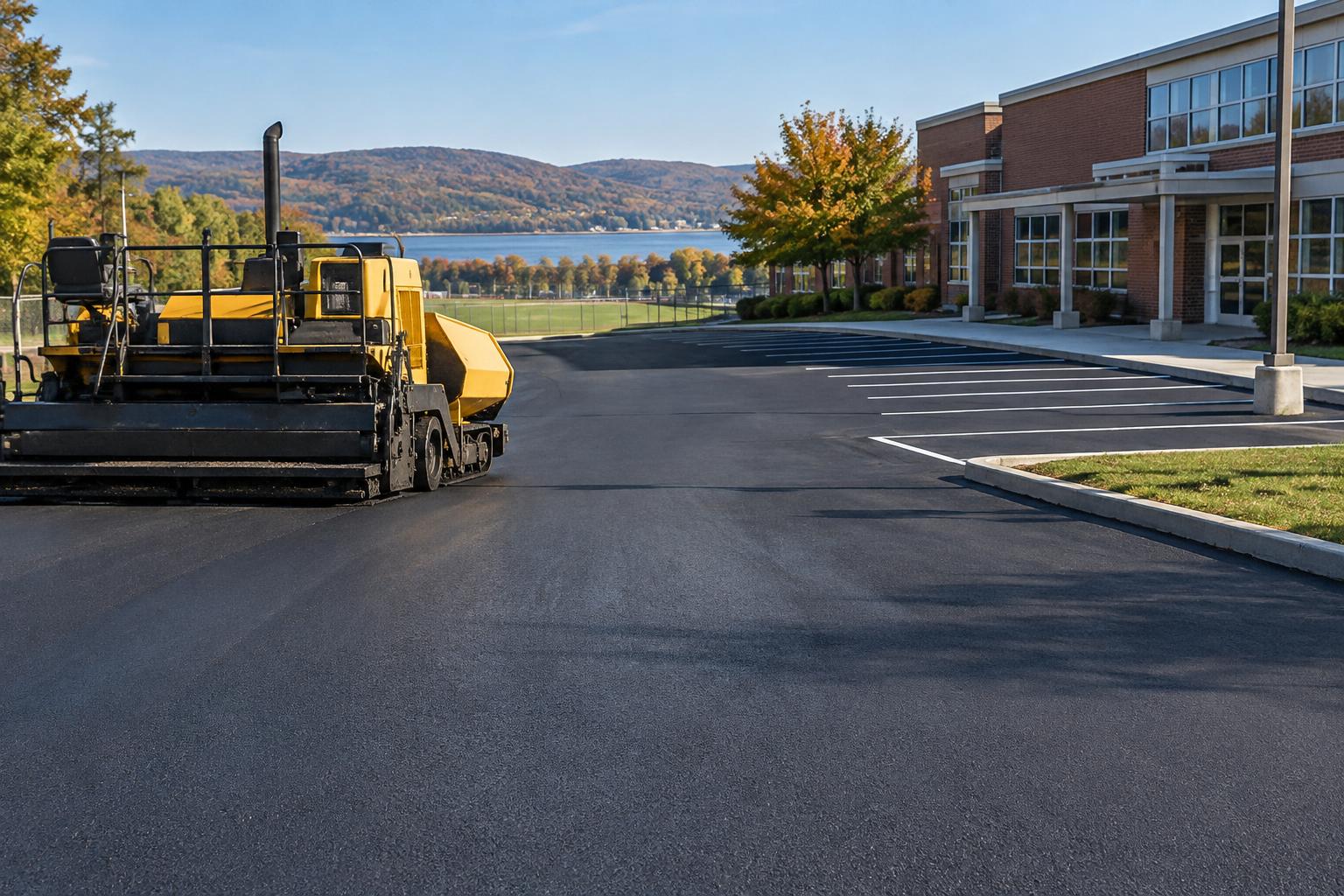
Summer break is the natural target for school paving because it clears the single biggest obstacle: people. Buses aren't running their loops, parking lots sit empty, and the usual foot traffic from students and visitors disappears for weeks at a stretch. That combination lets crews work longer hours, move equipment freely, and finish a project without constantly rerouting pedestrians around wet asphalt.
Timing a project around the school calendar takes planning that starts months in advance, not weeks. A blacktop paving construction report can help a facilities team understand what a project actually involves before locking in dates, from site prep through final striping. Early planning also guards against a summer calendar filling up, since paving contractors across the Hudson Valley tend to book their summer schedules quickly.
Still, summer isn't automatic. A district with a tight academic calendar, a phased renovation already underway, or drainage issues that need fixing before paving can begin may find that early fall or even spring works better for a particular phase. The right answer depends on the condition of the pavement and how much flexibility the campus calendar allows.
Signs Your Campus Pavement Needs Attention
Knowing when to schedule paving starts with knowing what to look for. Pavement doesn't fail overnight, and a facilities team walking the property regularly can usually catch problems before they turn into safety hazards or budget surprises.
Bus Loops, Drop-Off Zones, and Student Parking
Bus loops take a pounding that few other surfaces on a school campus experience. The repeated weight of buses turning the same tight corners day after day accelerates cracking, and that cracking often shows up first at the edges of the loop where the pavement flexes most. Drop-off and pickup zones face a similar problem, since cars idle and pivot repeatedly in the same small area, which can cause the asphalt underneath to fail even when the surface still looks intact.
Student parking lots tend to show different wear patterns. Rutting and alligator cracking are common where cars sit for long stretches, and potholes often form near storm drains or low spots where water collects. A facilities director walking these areas each season can catch small problems while they're still cheap to fix.
Drainage, Striping, and ADA Access Gaps
Drainage problems rarely announce themselves clearly. Water pooling near a walkway or building entrance after a rainstorm is often the first visible sign that grading or a drainage grate needs attention, and left unaddressed, that standing water speeds up pavement deterioration through freeze-thaw cycles each winter.
Faded striping is easier to spot but just as important to track, especially after a full summer of sun exposure wears down paint in high-traffic lanes. ADA compliance gaps deserve particular attention on school campuses, since accessible routes connecting parking to building entrances and athletic facilities need to meet specific slope and clearance requirements. A few things worth checking during a walkthrough include:
- Cracking concentrated in bus-loop turning radii or student parking stalls
- Standing water near entrances, walkways, or low points in the lot
- Faded or barely visible striping in crosswalks and parking lanes
- Accessible routes with uneven pavement, missing curb ramps, or insufficient width
- Snow-plow damage along curb lines and pavement edges
Why Weather Still Has the Final Say
Even with a summer window reserved and a phasing plan ready, weather has the final word on when asphalt can actually go down. Hot-mix asphalt behaves differently depending on temperature, and pushing a paving schedule too far into cooler months can compromise the finished surface no matter how well the project was planned.
Columbus Day: New York's Informal Fall Cutoff
The New York State Local Technical Assistance Program points to Columbus Day, around October 12th, as an informal cutoff for hot-mix paving across the state. Work completed after that point risks not leaving enough time for proper compaction before the mix cools too much to respond to rolling. That guidance matters for any district eyeing a fall paving window as a backup to summer, since a project that slips past mid-October carries real risk of a weaker finished surface.
The Narrow Window Between 50°F and 185°F
Asphalt paving has a fairly specific comfort zone. The New York State Local Technical Assistance Program calls for air temperature above 50°F, nighttime temperatures not dropping below 45°F, and pavement temperature staying above 70°F for thin wearing courses. On the other end of the scale, the Asphalt Institute notes that asphalt mix needs to be placed and compacted before it cools below 185°F. Once the mix drops below roughly 175°F, a point the Texas Department of Transportation calls the cessation temperature, further rolling generally stops improving density. That means crews are working within a narrow band every single day, and cooler ambient conditions shrink that band fast.
Why Thicker Lifts Buy More Compaction Time
Lift thickness plays a bigger role in cool-weather paving than many people realize. AsphaltPro reports that a 3-inch lift of asphalt retains heat for roughly four times as long as a 1.5-inch lift of the same mix under the same conditions. That extra heat retention gives crews more working time to achieve proper density before the mix cools past the point where rolling stops helping. Experienced paving crews adjust lift thickness and scheduling together rather than treating them as separate decisions, especially as a project pushes closer to the fall cutoff.
Planning Phases That Keep Students Safe
A paving schedule built around summer break still needs a phasing plan, especially on campuses with summer programs, athletic camps, or maintenance crews working through the break. The goal is finishing the job without creating unsafe conditions for anyone still using the property.
Working Backward From the First Day of School
The most reliable way to build a summer paving schedule is to start from the first day of school and work backward. One district's 2026 RFP scheduled campus-wide paving from May 26th through August 1st, giving the project a firm completion date well ahead of when students and buses would return. That approach leaves a buffer for weather delays, unexpected base repairs, or striping that needs extra curing time before the lot reopens for drop-off traffic.
Keeping One Entrance and an Accessible Route Open
Even during a summer closure, campuses rarely sit completely empty. Summer school staff, athletic programs, and maintenance crews often still need access, and a well-built phasing plan accounts for that from the start. Splitting a site into halves or quadrants allows paving crews to keep at least one entrance and a compliant accessible route open throughout construction, which matters both for day-to-day access and for emergency vehicle routes that can't be blocked under any circumstances. One district case study described coordinating concrete work ahead of asphalt paving and adjusting weekend shifts to stay within a two-month completion window while active childcare programs and community events continued nearby.
What a Resurfacing Project Actually Involves
Understanding the steps involved in a resurfacing project helps a facilities director set realistic expectations for both timeline and budget, and makes it easier to explain the scope to a school board or finance committee.
Milling, Base Repair, and Restriping Steps
A typical school resurfacing project follows a fairly consistent sequence. Crews mill 1.5 to 2 inches of the old surface asphalt, which removes the worn top layer while preserving a sound base underneath. Isolated base failures get repaired before any new asphalt goes down, since paving over a weak spot just hides the problem temporarily. Utility covers and drainage grates are adjusted to match the new grade, the milled surface gets paved in fresh hot-mix lifts, and the final step is restriping, including ADA-compliant layouts for accessible parking and routes.
Typical Timelines and Budget Ranges
Most commercial paving projects run 2 to 7 working days, though active school sites are often phased across nights or weekends to minimize disruption. School resurfacing projects typically fall between $15,000 and $250,000, with the final number depending heavily on total square footage, how much base repair is needed, drainage work, and how complex the phasing plan turns out to be. A smaller parking lot with a sound base will land toward the lower end, while a campus-wide project involving multiple lots, extensive drainage corrections, and night-shift phasing will push toward the higher end.
Lead Time Protects Both the Schedule and the Mat
Building in lead time isn't just a scheduling courtesy - it directly affects whether a paving crew has the flexibility to wait for ideal weather rather than rushing to beat a deadline that leaves no margin for error. A district that starts planning in winter or early spring for a summer paving project gains the ability to shift dates if a stretch of rain or an unexpected base repair pushes the timeline a few days. That flexibility is what keeps a summer project from turning into a late-fall scramble against the Columbus Day cutoff.
For a facilities director weighing options, early conversations with a paving contractor about phasing, access needs, and realistic budget ranges make the eventual decision easier to defend to a school board or finance office. Starting that conversation well before the ideal paving window arrives gives everyone involved more room to plan around the realities of weather, compaction time, and campus operations. For a closer look at how a paving project moves from planning to finished surface, Avello Asphalt & Construction Corp's blacktop paving construction report breaks down the process step by step.
Company: Avello Asphalt & Construction Corp City: Poughkeepsie Address: 141 Daley Road Website: https://www.avelloasphalt.com
Mentioned in this blog post: Poughkeepsie service area
Have a property like this?
Tell us what you're seeing. We'll walk the site, explain the options plainly, and give you a clear scope.
More blog posts
- Municipal-Grade Paving Scope: East Fishkill Contractor Explains the Standard
- Warehouse Pavement for Heavy Trucks: Poughkeepsie Contractor Explains Design
- Water Ponding in Shopping Center Lots: Fishkill Paving Contractor Cites Causes
- Paving Around Resident Schedules: Wappingers Falls HOA Project Planning