How we'd clear a Poughkeepsie plaza's liability problem in nine days — with every store open
A worked example: targeted full-depth patching, crack repair and restriping across a 210-space retail plaza off Route 44/55.
Have a property like this in Poughkeepsie?
Three quick steps. Free site walk, written scope, no obligation.
Illustrative scenario. This is a worked example of the scope, sequencing and specifications Avello uses on this type of property — written so you can see exactly how your project would be planned and priced. It is not a record of a specific named client project.
The situation we'd be walking into
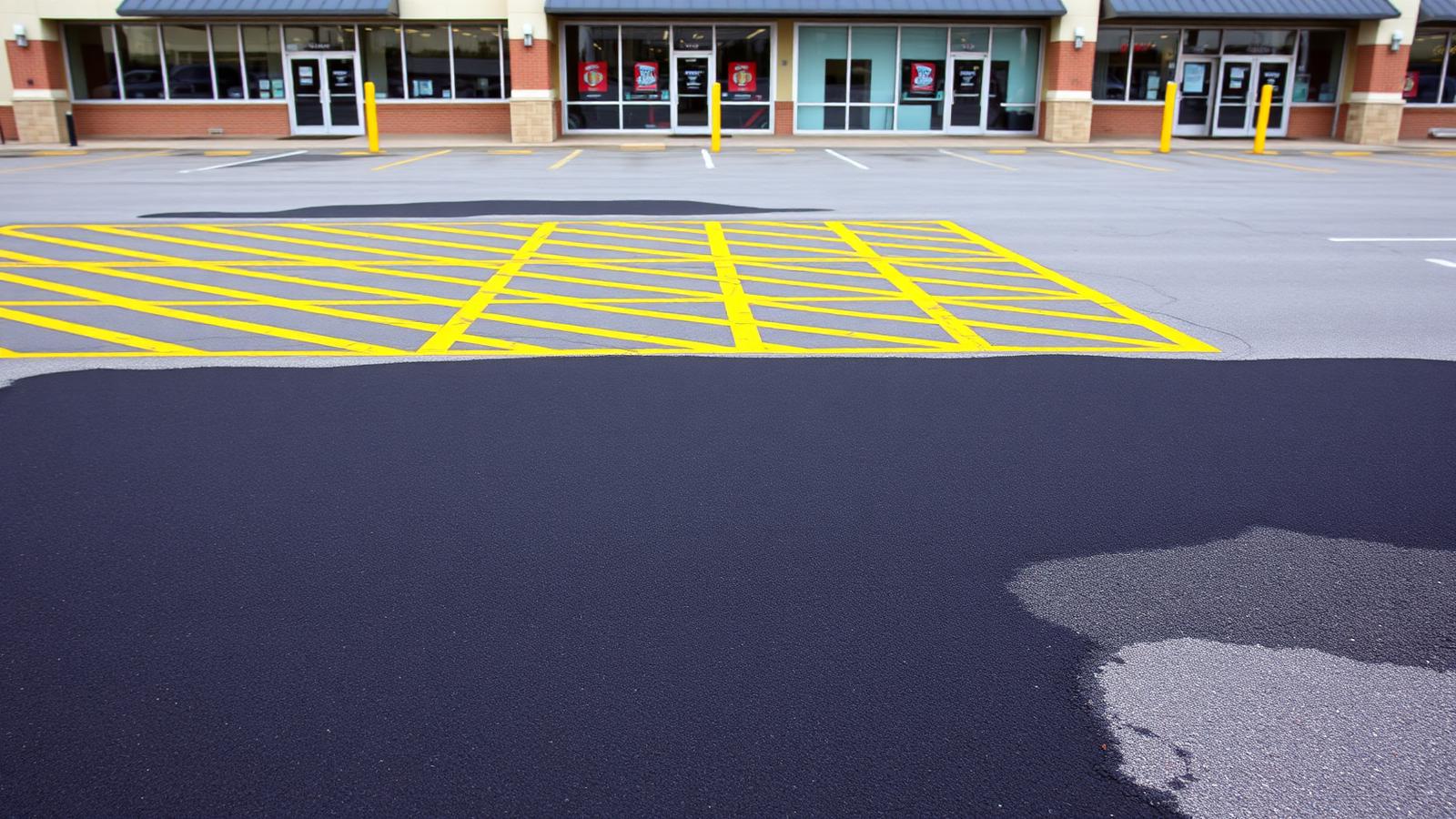
Picture this: The plaza owner had received a tenant complaint letter and one slip-and-fall notice tied to a pothole near the anchor entrance. Striping had faded to the point that the fire lane was unenforceable, and the ADA stalls no longer met signage and marking requirements.
Example property profile: Multi-tenant retail plaza, Poughkeepsie NY
A retail plaza lives or dies on the first fifteen seconds a driver spends in the lot. Long before anyone reads a sign or walks into a store, they have already decided whether the property is cared for. Cracked, patched-over, ponding asphalt with faded stalls tells shoppers the center is on its way out — and it tells tenants the same thing at renewal time.
This scenario walks through how Avello Asphalt & Construction would approach a mid-size Poughkeepsie shopping plaza with roughly 120,000 square feet of pavement, a dozen tenants, and no realistic option to close. It is written the way we would write it for you: the failures we would expect to find, why they happened, exactly what we would specify, how we would phase the work around business hours, what drives the number, and what the property should look like in year one, year three and year seven.
Nothing here is a claim about a specific named client. It is a worked example of a job Avello is fully equipped to plan, price and self-perform.
If that sounds like your property, the rest of this page is the plan we'd put in writing for you — free, before you commit to anything.
What we would expect to find on the walk
A plaza this age in Poughkeepsie almost always shows the same pattern. The heaviest distress is concentrated in the drive aisle loop where delivery trucks and daily traffic overlap, not in the parking stalls themselves. You see block cracking in the low-traffic perimeter, alligator cracking where the base has softened at the aisle, and depressions holding water within twenty feet of the catch basins.
We would map every distress type with paint on the ground and measure it, not eyeball it. That map becomes the repair plan: full-depth areas, surface-patch areas, crack-seal areas and leave-alone areas each get their own square footage and their own line item. Owners are often surprised how much of a lot does not need to be touched — the point of the walk is to spend money only where the pavement has actually failed.
- Alligator cracking at drive-aisle wheel paths indicating base failure
- Standing water within 20 feet of catch basins after rain
- Raveling and loss of surface aggregate along the perimeter
- Failed cold-patch repairs that were never cut square or compacted
- Faded stalls and non-compliant accessible aisle markings
Why the pavement failed here
Almost no commercial lot fails because the asphalt was bad. It fails because water got underneath it. Once a crack opens wider than about a quarter inch, surface water reaches the base course, the base loses its load-carrying strength, and traffic pumps fines out of it until the surface deflects and cracks in an interconnected pattern. Hudson Valley freeze-thaw cycling does the rest, expanding trapped moisture roughly nine percent every time it freezes.
The second cause on retail sites is drainage grade that was marginal on the day it was built and got worse as the lot settled. A plaza that ponds today usually ponded a little on day one. Any surface overlay placed over that geometry will pond again, which is why we treat grade correction and structural repair as prerequisites to overlay rather than optional add-ons.
The scope we would write
The written scope is organized so it can be read by an owner, a property manager and a lender without translation. Each section states the area, the specification, the material, and the acceptance condition.
For a plaza like this the core of the scope is: sawcut and full-depth removal of failed drive-aisle sections; undercut and replacement of soft subgrade where probing shows it; leveling course to correct ponding at basins; a uniform 1.5 to 2 inch surface course over the repaired area; hot-applied crack sealing of all remaining working cracks outside the overlay limits; and a full re-stripe to a layout drawing you approve before any paint hits the ground.
How we phase it around a lot that cannot close
No plaza can lose its parking for a week, so the schedule is a real part of the engineering. We divide the lot into quadrants, sequence them so that every tenant keeps a usable entrance and an accessible route at all times, and post the plan in advance so tenants can tell staff and customers what is happening and when.
Milling and paving happen in single-day cycles per section: mill in the morning, pave in the afternoon, open to traffic that evening once the mat has cooled. Striping is scheduled for the following early morning or a Sunday. In practice, most tenants only see crews in front of their door for one day.
- Quadrant sequencing with a maintained accessible route at all times
- Advance tenant notice letter and lot map, prepared by us
- Mill and pave the same section same day; open by evening
- Striping scheduled off-hours to avoid tracking and closures
- Deliveries and trash pickup coordinated around the paving window
What good looks like when we leave
A finished job is not just new blacktop. Joints between new and existing pavement should be sealed and flush enough that you cannot feel them at driving speed. Water should reach the basins with no standing puddles deeper than a quarter inch after a rain event. Stall lines should be crisp, uniform, and laid out to the drawing you signed, with accessible stalls, aisles and signage in the right places and at the right dimensions.
We walk the finished lot with you, list anything you want addressed, and close those items before final invoicing. You keep the as-built striping layout and the material documentation for your files.
What waiting another year costs
Untreated alligator cracking in a drive aisle typically progresses to full-depth failure within two to four Hudson Valley winters. At that point the repair changes from a 2-inch surface correction to full-depth removal, subbase repair and replacement — commonly three to five times the cost per square foot. Ponding water accelerates the same process underneath the surface where you cannot see it, and every trip hazard in a customer-facing lot is a slip-and-fall claim waiting for the right weather.
Scope & specification highlights
- 3,400 sq ft of full-depth saw-cut patching at 4 in. binder + 2 in. top
- Infrared repair at 11 isolated defects to avoid unnecessary saw cuts
- 2,900 linear ft of routed and hot-rubber crack sealing
- Full restripe: 210 stalls, 6 ADA stalls with access aisles and signage
- Fire lane re-marked to the local fire marshal's layout
- Two speed tables at the pedestrian crossing to the anchor entrance
Materials we'd specify
- Surface course
- NYSDOT-conforming hot mix asphalt, 9.5mm or 12.5mm top depending on aisle loading.
- Base repair
- Full-depth binder course placed in lifts over compacted, proof-rolled subbase.
- Crack sealant
- Hot-applied rubberized sealant, routed where crack width and condition justify it.
- Pavement markings
- High-build traffic paint with glass bead where required; thermoplastic available for high-wear crossings.
How we'd run the project, step by step
- Step 1Condition assessment
Every defect photographed, mapped and priced so the owner could see exactly what was safety-critical versus cosmetic.
- Step 2Priority scope
We split the estimate into Tier 1 (liability), Tier 2 (deterioration), Tier 3 (appearance).
- Step 3Tenant notice plan
Signage and a section calendar delivered to every tenant two weeks ahead.
- Step 4Repairs and striping
Patching and crack sealing by section, then a full night-shift restripe.
- Step 5Closeout
Before/after photo set and an ADA compliance sheet for the owner's insurer.
Typical time on site for a scope this size: 9 working days
What actually drives the price
Repair-and-overlay work on a plaza of this size is normally budgeted as a range, not a single number, until the pavement is measured and cored or probed. The variables that move it most are the percentage of the lot requiring full-depth removal, the number of catch basins that need to be reset, and whether striping is a straight re-layout or a re-design for ADA compliance. In a written Avello scope you receive line-item pricing for each of those components separately, so you can approve, defer or phase any one of them without re-bidding the whole project. Most owners in this position choose a two-phase plan: safety and structural repairs in the first budget year, overlay and striping in the second.
- Percent of lot needing full-depth repair
The single largest variable. Surface repair and full-depth reconstruction differ by three to five times per square foot, which is why we measure rather than estimate.
- Drainage and structure work
Resetting catch basin rims to finished grade, adding an inlet, or regrading a ponding area adds cost up front and prevents the overlay from failing early.
- Overlay thickness and mix
A 1.5-inch mat is adequate for stall areas; drive aisles and truck paths generally justify 2 inches of a heavier-duty mix.
- Striping scope and ADA re-layout
A like-for-like re-stripe is inexpensive. Re-designing stall counts, adding accessible aisles or installing new signage and bollards is a separate, quotable line.
- Work hours and phasing
Night or Sunday work costs more per shift but protects tenant revenue. We price both so the owner can choose.
The maintenance plan that protects the investment
- Year 1
Walk the lot with us at no cost after the first winter. Seal any new reflective cracking and confirm drainage performance.
- Year 2-3
Hot-applied crack sealing of working cracks. This is the highest-return dollar you will spend on pavement.
- Year 3-4
Re-stripe. Traffic paint in a retail lot typically reads as faded by year three, and faded stalls undo the visual value of the pavement.
- Year 5-7
Sealcoat or a thin surface treatment on stall areas, plus targeted repair of any isolated failures, to push the next overlay out several more years.
What a scope like this is built to deliver
- All identified trip hazards eliminated in the first three days
- ADA parking brought into compliant marking and signage
- Insurer accepted the documented remediation package
- Owner deferred a full overlay by three budget years with a written maintenance plan
What you'd have in hand for ownership or a board
- What you can take to ownership
- A line-itemed written scope with square footages, specifications and separately priced components you can approve or defer individually.
- Liability position
- Trip hazards, ponding and non-compliant accessible parking are the three items most often cited in premises claims. The scope addresses all three explicitly.
- Tenant impact statement
- A phasing map and notice letter you can forward to tenants, showing exactly which days affect which storefronts.
- Insurance and compliance
- Certificates of insurance issued to your entity and any lender or management company before mobilization.
Your next step is simple
- 1. Tell us the property and what's failing (2 minutes, form above or a phone call).
- 2. We walk and measure the site — free, no obligation.
- 3. You get a written, line-itemed scope with phased options you can take to ownership or a board.
Poughkeepsie project questions
Do you have to close the whole lot?+
No. Retail lots in Poughkeepsie are almost always done in sections so every tenant keeps an entrance and frontage parking.
Is patching a waste of money if the lot needs an overlay later?+
Not if the patching is full depth. Full-depth patches become the strongest part of the lot and stay in place under a future overlay. Skin patching is the waste.
Will repairs fix my ADA exposure?+
Repairs plus compliant striping, signage and access aisles will. We document the finished layout so you have something to hand your insurer.
Why commercial and municipal clients hire Avello
More projects like this
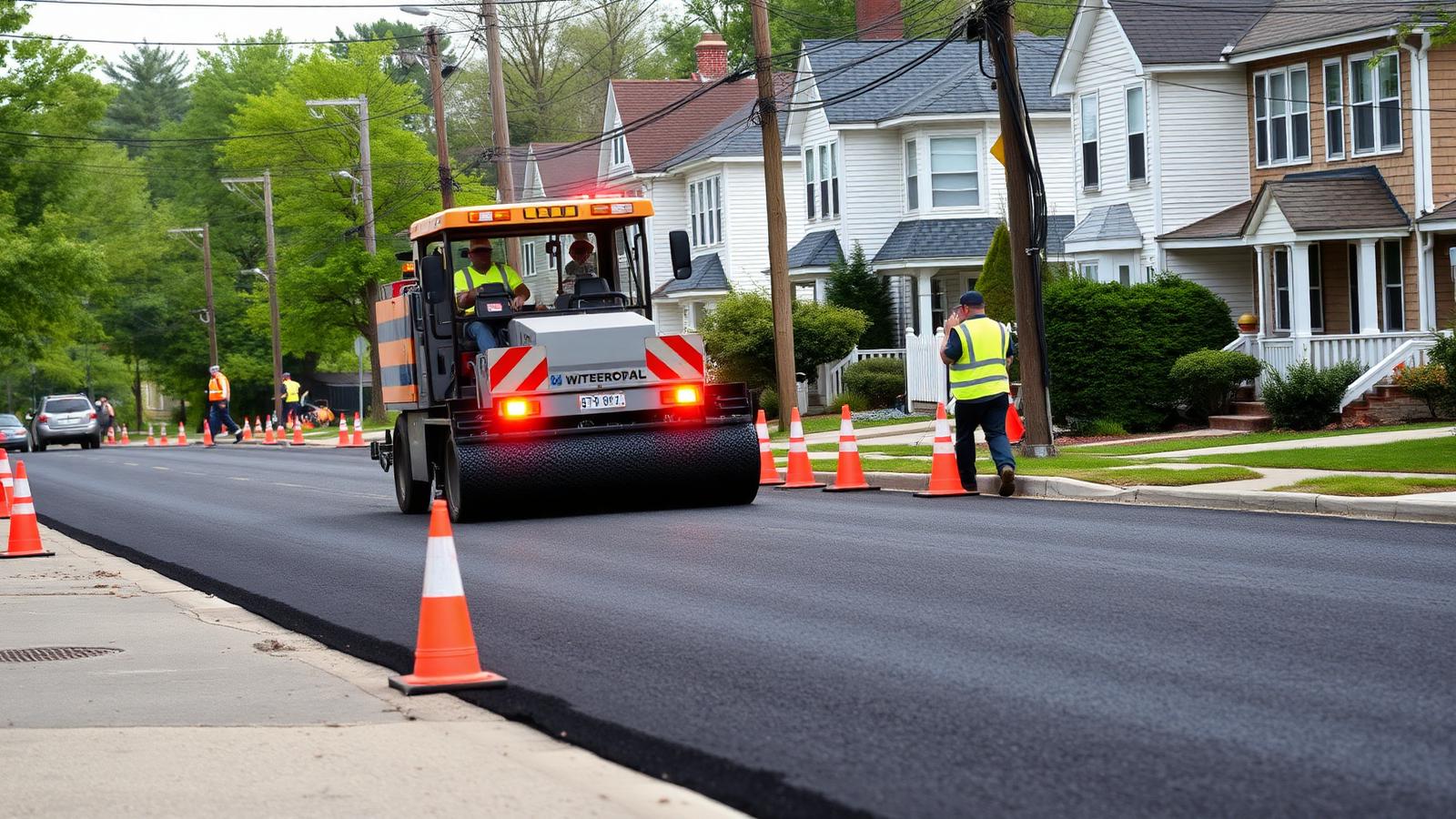
How a Beacon-style roadway program becomes a written, bid-ready plan instead of another pothole invoice
A worked example: milling, resurfacing and utility-trench restoration across seven residential streets under a public bid package.
See how we'd run it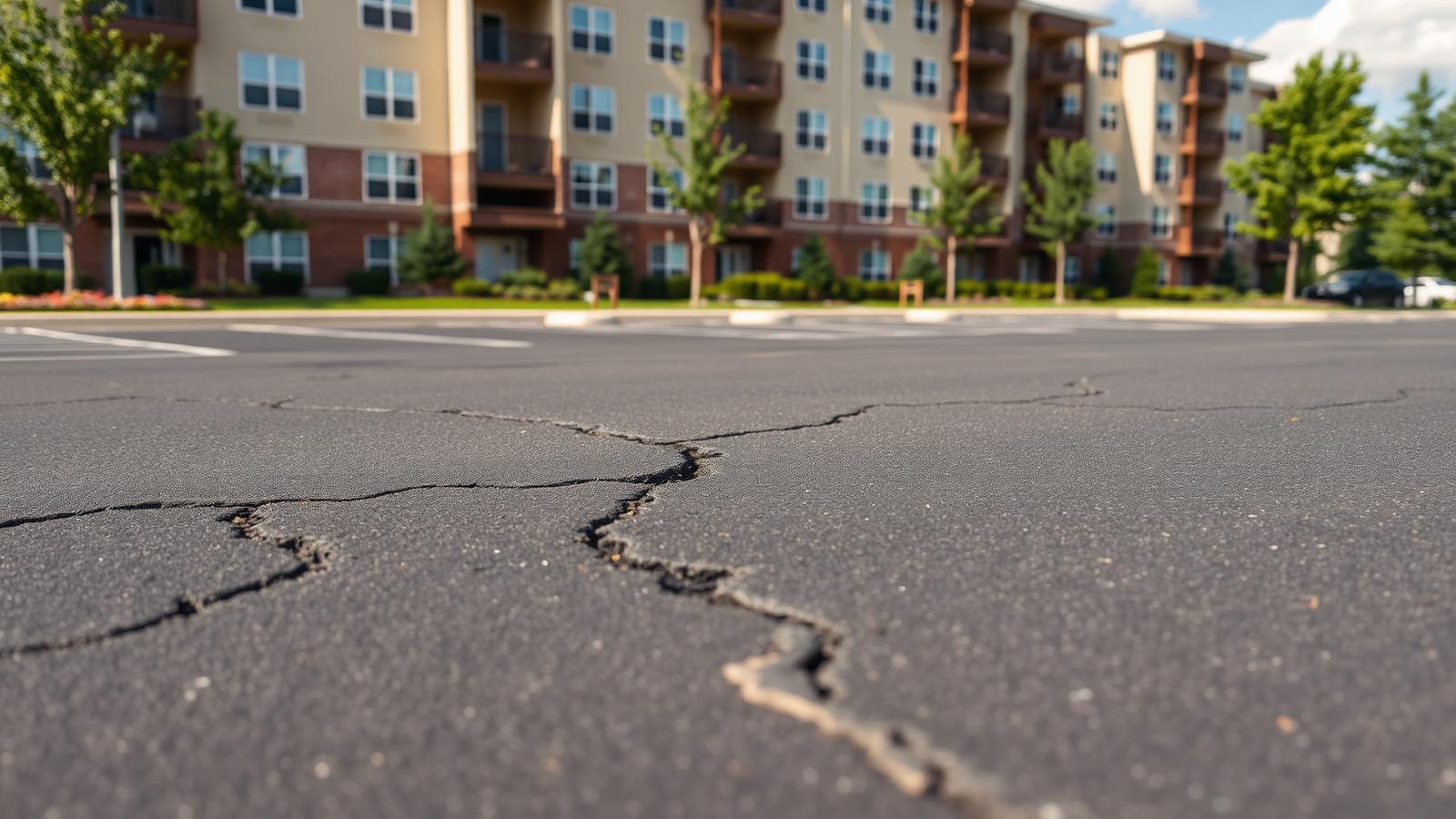
How a 340-unit East Fishkill community could buy seven more years of pavement
A worked example: a routed and sealed crack program priced at a fraction of the resurfacing it defers.
See how we'd run it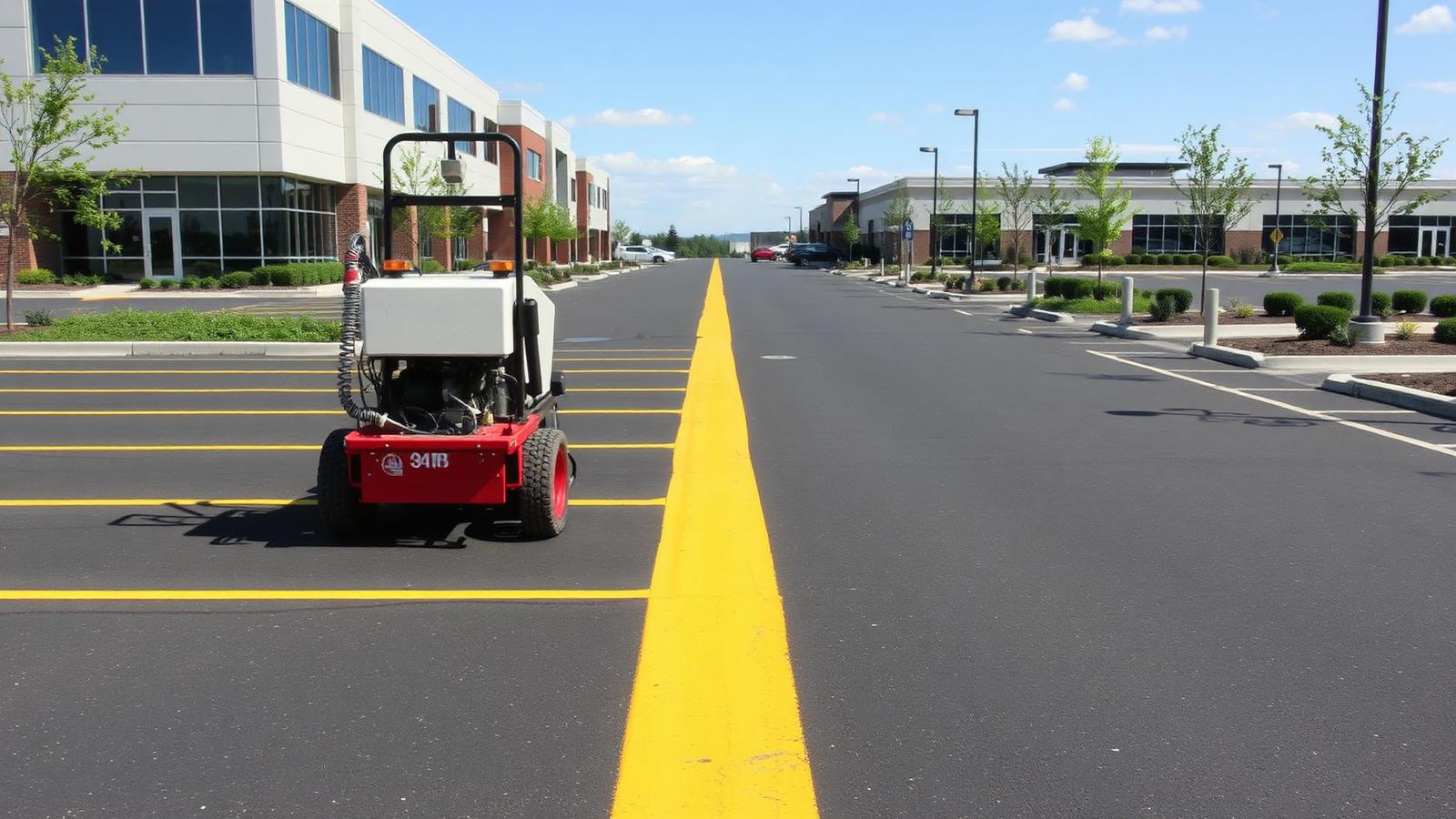
How a Hopewell Junction office park could recover 22 parking spaces with paint
A worked example: restriping and a redesigned circulation layout that adds capacity without adding an inch of pavement.
See how we'd run itReady for a real number on your Poughkeepsie property?
Same process as this project: we walk it, measure it, and hand you a written, line-itemed scope with phased options.