Pre-Winter Crack Filling Guide for Wappingers Falls Public Pavement Released
Avello's take
We released this guide to help Wappingers Falls public works teams plan pre-winter crack filling for police-station pavement. It covers which cracks may be suitable for treatment, how weather and product requirements shape scheduling, and how to plan work around station access. It also explains the limits of crack treatment. Keeping water out of a crack does not restore support beneath the pavement or correct a drainage problem.
For Hudson Valley property managers and public works teams, that distinction matters when setting a maintenance scope and keeping repair records clear. A sensible starting point is a condition survey, with stable, level cracks considered for treatment and broken, depressed, or soft areas noted for separate evaluation. We explain why documenting excluded areas matters for later repair planning. From there, a written scope and phased work zones can help align pavement work with patrol movements, staff arrivals, and public visits.
Avello Asphalt & Construction Corp has released a practical guide for Wappingers Falls municipal public works teams responsible for police-station pavement, addressing pre-winter crack filling before freezing weather arrives. The guide walks staff through identifying which cracks are good candidates for treatment, working around weather limits, and keeping the station accessible while crews are on site. Rather than offering general advice, it functions as a planning tool built around the realities of a facility that cannot tolerate unplanned closures.
More information is available at https://avelloasphalt.com/blacktop-paving-construction-report/crack-filling-public-pavement-before-winter-in-wappingers-falls
A central theme of the guide is the difference between a crack that can be treated and a pavement problem that needs separate attention. A facility that misapplies maintenance dollars, or that fails to document which areas were excluded from treatment, risks confusing its own repair planning down the road.
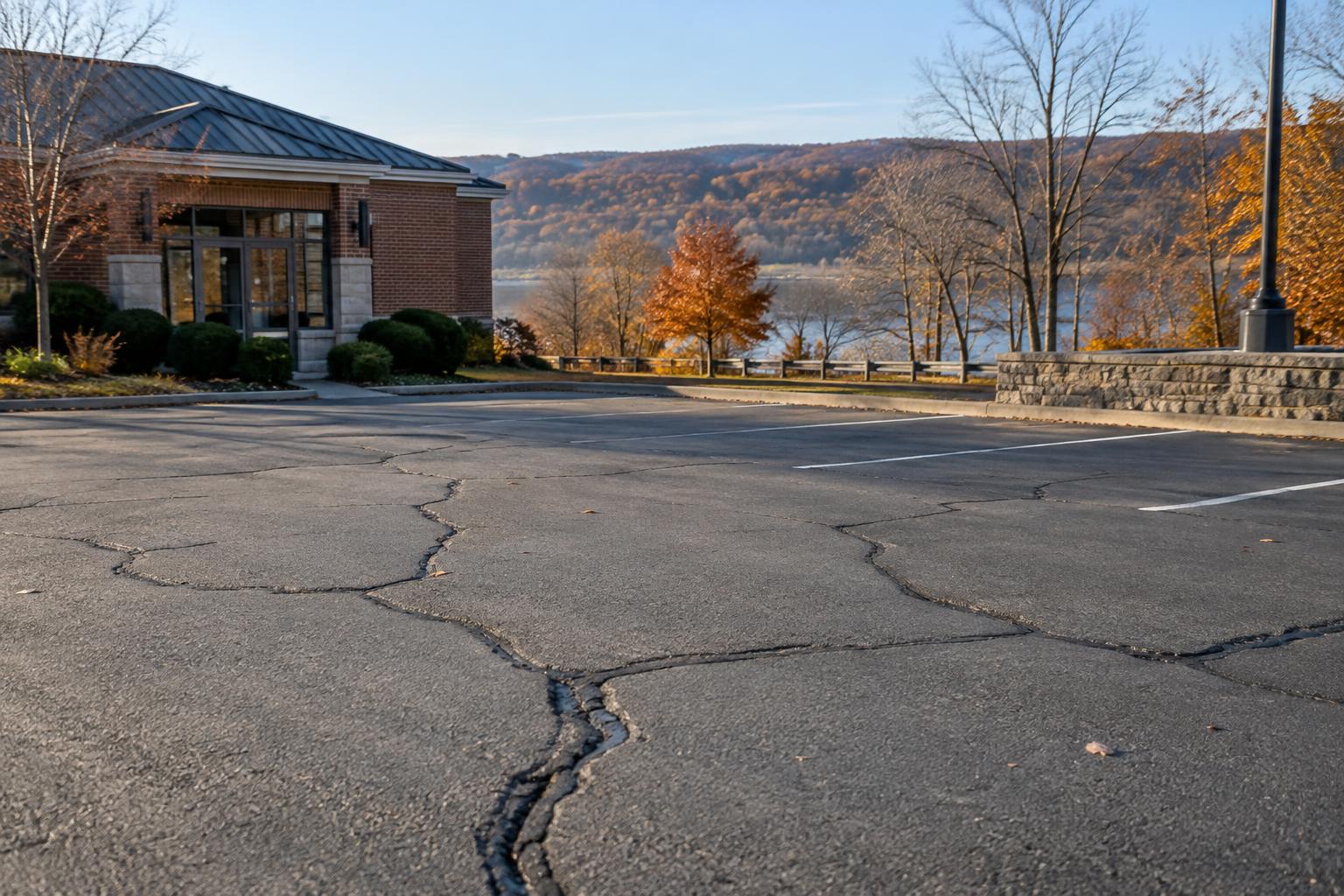
The guide begins with a condition survey rather than a calendar date. Individual cracks with stable, level edges may be reasonable candidates for crack treatment, while broken, depressed, or soft pavement sections call for a separate evaluation before any material goes down. Keeping that distinction clear, according to the guide, protects municipal budgets and keeps maintenance records accurate for whoever plans the next round of repairs.
Timing matters as much as crack selection. Federal pavement-maintenance guidance points to a moderately cool range, roughly 7 to 18°C, as generally favorable for seasonal crack sealing work. Separately, that guidance notes that dry pavement paired with air temperatures at or above 4°C and rising is a commonly cited favorable condition, though manufacturer-specific requirements still govern any given product. Minnesota's transportation department cautions that applying heat to cracks containing ice can push moisture toward the crack sidewalls, which may weaken adhesion rather than improve it.
Favorable weather alone does not guarantee a lasting result, which is why the guide draws a firm line around what crack treatment can accomplish. Filling or sealing a crack limits water from entering the pavement structure, but it does not restore structural support beneath the surface or correct a drainage problem causing water to collect in the first place. Potholes typically trace back to moisture, freeze-thaw cycling, traffic loading, or weak underlying support rather than surface cracking alone, so treating the crack by itself will not prevent every failure.
For a police station, operational continuity shapes how the work gets scheduled. The guide describes planning small work zones in phases and coordinating directly with station contacts, so patrol vehicle movements, staff arrivals, and public visits can continue without interruption. Avello structures its municipal projects around written scopes that define exactly which pavement is included and which operational needs must be protected throughout.
Avello Asphalt & Construction serves municipalities and commercial properties across the Hudson Valley, with an approach built around clear communication and accountability from the first conversation through completion. Wappingers Falls public works managers reviewing pre-winter pavement needs for a police station or similar facility can use the published guide or contact Avello directly to discuss a pavement assessment before winter weather sets in.
More information about Avello Asphalt & Construction is available at https://www.AvelloAsphalt.com
Company: Avello Asphalt & Construction Corp City: Poughkeepsie Address: 141 Daley Road Website: https://www.avelloasphalt.com
Mentioned in this news article: Wappingers Falls service area, Poughkeepsie service area
Have a property like this?
Tell us what you're seeing. We'll walk the site, explain the options plainly, and give you a clear scope.
Related Avello guidance
More news articles
- Speed Bump Guide for Poughkeepsie Housing Authorities Released by Avello
- East Fishkill, NY Bank ADA Parking Rules - Repaving & Restriping Report Released
- 10-Year Pavement Plan for Poughkeepsie Office Parks: Budgeting & Specs Guide
- Fishkill Medical Office Paving: New Report Covers Patient Access, Phasing