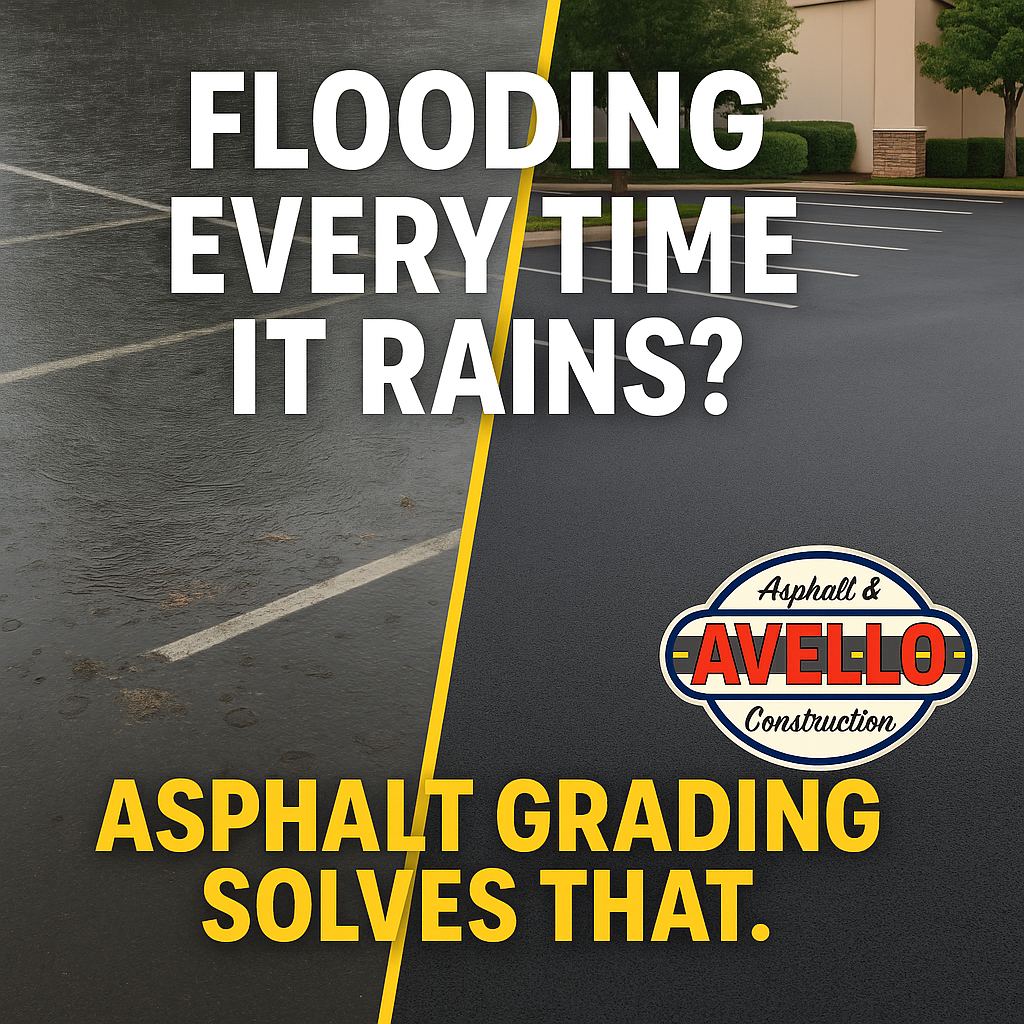
A parking lot does not need to look steep to drain well. Small, continuous changes in elevation direct water toward intended outlets. When grades flatten, pavement settles, drains sit too high, or outside water enters the site, ponding can affect access and accelerate deterioration. A useful drainage plan traces the full path of water before choosing a repair.
Drainage begins with the path of water
Water may come from the paved surface, roofs, neighboring land, landscaped islands, snow-storage areas, or an uphill driveway. The first step is to identify where it enters, where it slows or ponds, and where it is supposed to leave. Fixing a single low spot without understanding that path can move the problem somewhere else.
Conditions that deserve a closer look
- Ponding that remains after surrounding areas have dried.
- Sediment lines that show repeated water depth or flow.
- Cracking, potholes, or settlement around catch basins.
- Water crossing sidewalks, accessible routes, entrances, or winter walking paths.
- Downspouts or roof drains discharging directly onto pavement.
- Low pavement along curbs, islands, utility trenches, or repaired areas.
What a drainage review should measure
Visual observation is useful, but elevations provide the clearer answer. A review may compare high and low points, drain rim elevations, curb flow lines, entrances, adjoining surfaces, and available outlet elevations. The contractor should also inspect whether a drain is blocked, damaged, undersized, or simply higher than the pavement around it.
Possible correction strategies
- Localized removal and regrading where the surrounding elevations allow positive drainage.
- Adjustment, repair, or replacement of catch basins and their pavement transitions.
- Larger milling and paving limits where broad settlement has changed the surface profile.
- Redirecting roof or off-site water before it reaches the parking area.
- Drainage improvements paired with base repair where saturated support has weakened.
- A phased plan when the complete correction must coordinate with a future resurfacing project.
Seeing this on your property?
Avello walks the lot, scores the pavement, and gives you written findings — free, no obligation.
What grading cannot solve by itself
Surface grading cannot create an outlet where none exists, repair a collapsed pipe, or stop water entering from another source. It also cannot always preserve every existing doorway, curb, drain, and adjoining elevation without compromise. A clear proposal should state the controlling elevations and any limits on the expected result.
Winter and operating concerns
Standing water can become an ice concern in winter and can interfere with pedestrians, parking, deliveries, and snow operations. Phasing should preserve safe routes and keep critical drainage paths open. Snow-storage locations should also be considered because melting piles can feed water back across the lot.
Start with a site conversation
Avello can walk the drainage path with you, review the visible grades and structures, and explain which corrections appear practical. The next step is a clear scope based on how water actually moves through the property.
2026 Commercial Pavement Budget Planner
A contractor-built worksheet for budgeting parking lot and roadway work: cost ranges by scope, a condition-scoring sheet, phasing guidance, a bid-comparison checklist, and the questions to ask before you sign.
Common questions
How much standing water is acceptable?+
A small wet area immediately after rain is different from ponding that remains long after nearby pavement dries. Duration, depth, location, and whether it affects access or deterioration all matter.
Can a low spot be paved over?+
Sometimes localized regrading is possible, but simply adding material can create weak edges or redirect water. Available elevations and tie-ins must be checked first.
Does a drainage problem always require a new catch basin?+
No. The cause may be settlement, blocked infrastructure, roof discharge, off-site flow, or a broad grading issue. The solution should follow the cause.
Should drainage be corrected before resurfacing?+
Drainage should be evaluated before resurfacing so low areas, structures, and base concerns can be incorporated into the paving scope.
Can drainage work be phased?+
Yes, when the phases are designed around the complete water path and do not leave a temporary condition that redirects water toward buildings or active areas.
Avello provides free commercial pavement assessments across the Hudson Valley. No obligation — you keep the documentation either way.