
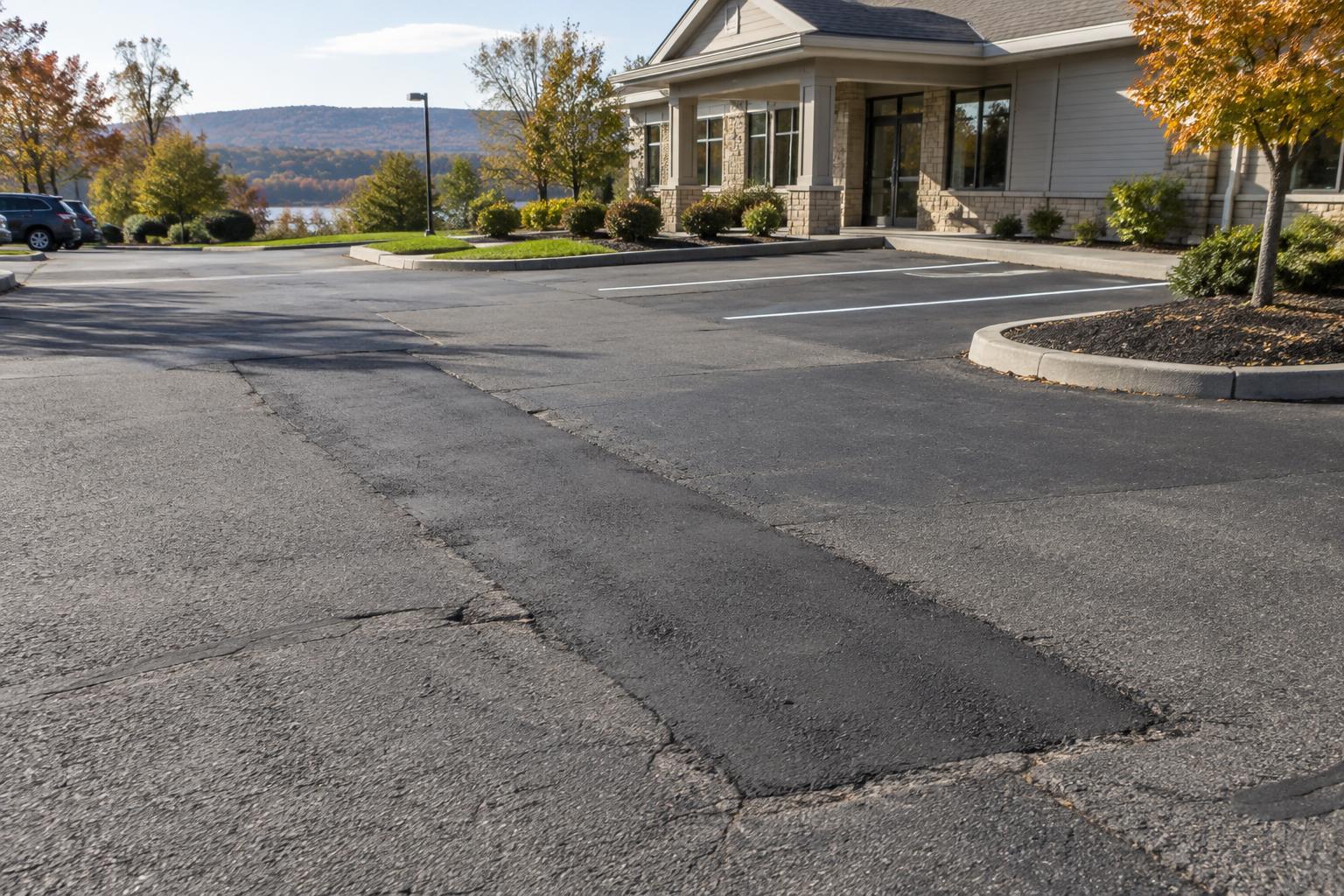
A sunken utility patch usually needs more than another layer of asphalt. Settlement can start in loose trench backfill, wet soil, a damaged pavement base, or a leaking utility. At a Beacon medical office, the right repair also has to preserve patient access and keep runoff away from entrances. This guide explains how to assess the depression, choose between a surface correction and deeper restoration, and organize the work around daily operations. It also covers Hudson Valley weather, written scope requirements, and the information managers should gather before construction.
Utility trench patches at medical offices in Beacon: why they settle and how to restore them
Utility trench patches settle when the material below them moves, compresses, or washes away. The asphalt is often only the visible symptom. Restoring the pavement means finding the cause, removing material that no longer provides support, rebuilding the trench properly, and paving a smooth connection to the surrounding lot.
A utility excavation interrupts ground that may have supported a parking lot for years. After a water, sewer, electrical, or communications line is installed, the trench must be filled again. If that backfill goes in too deep at once, contains unsuitable material, or is compacted at the wrong moisture level, it can compress later under vehicles.
Other causes require different corrections. A leaking pipe can carry fine soil out of the trench, while runoff entering an open pavement joint can soften the base. Poor support beside a utility structure can create a localized dip even when most of the trench remains stable. Adding asphalt without addressing these conditions leaves the underlying movement unresolved.
At a Beacon medical office, the repair decision should reflect both pavement condition and patient use. A depression crossed by wheelchairs, walkers, or patient transport vehicles deserves a different access plan from one behind a storage area. We approach trench restoration as a support-and-drainage repair first, then plan the asphalt work around the routes the practice needs to keep available.
Read the depression before choosing the repair depth
Start by comparing the damaged area with the original utility route. A narrow depression that follows the excavation closely points toward a trench-related problem. Damage extending well beyond that route may indicate that adjacent base material was disturbed, water is spreading underneath, or the surrounding pavement has its own structural weakness.
- A smooth, shallow dip with intact asphalt: possible settlement beneath an otherwise sound surface.
- Open seams along both sides of the patch: potential water entry and movement between old and new pavement.
- Cracks, loose pieces, or crushed edges: damage that may require removal beyond the original patch limits.
- Water remaining after nearby pavement dries: a drainage low point, not just a cosmetic difference.
- Visible wetness during dry weather or soil washing out: a reason to investigate a water source or utility leak.
- Changes after winter, heavy rain, or delivery traffic: evidence that conditions underneath may still be changing.
Photographs taken from consistent locations help distinguish an old, stable depression from continuing settlement. Record when the utility was installed, whether the patch was described as temporary, and whether earlier repairs have sunk again. A straightedge and elevation measurements can document the shape, but appearance alone cannot establish how deep the problem extends.
A contractor may recommend pavement cores, small test openings, or further utility investigation before finalizing the repair. These checks can reveal asphalt thickness, wet aggregate, or loose fill that is invisible from above. Keep patients away from inspection openings, and have suspected utility problems evaluated by the appropriate utility owner or qualified trade before pavement work proceeds.
To understand the work behind these options, compare Avello’s utility trench restoration services.
Match the restoration method to what is moving
Not every settled patch needs excavation down to the pipe. Equally, not every depression can be corrected with a thin asphalt layer. The practical choice depends on whether the underlying support is stable, whether water is involved, and whether the finished surface can drain without creating new obstacles.
- Monitor a stable, minor depression. This can fit an area with no loose material, troublesome edge, or drainage problem. Establish a review point rather than assuming it will remain unchanged.
- Use a temporary surface correction. A suitable patching material can reduce an uneven transition while utility investigation or seasonal conditions delay permanent work. Identify it clearly as temporary.
- Mill and replace the affected asphalt. Removing a controlled depth of pavement can correct a shallow surface defect where the supporting material is sound and finished elevations allow it.
- Remove the pavement and rebuild the base. This fits damaged asphalt over weak or saturated aggregate when deeper trench backfill is otherwise competent.
- Re-excavate and restore the trench. Loose deeper fill, recurring settlement, voids, or a utility defect may require coordinated work below the pavement base.
A leveling layer is useful only when there is reliable support beneath it and enough room to maintain proper transitions. A very thin edge can break away under turning tires or snowplows. Raising the patch can also redirect water toward an entrance or create an awkward crossing beside an accessible parking aisle.
Repair boundaries should follow sound pavement and suitable working space, not simply the outline of the visible dip. Deeper excavation must also protect the utility and its bedding—the material placed immediately around the pipe or conduit. Where the required depth is uncertain, a written allowance and approval process are more useful than an unsupported promise of a surface-only repair.
Account for Beacon slopes and Hudson Valley weather
Beacon properties can have parking areas and driveways that carry runoff downhill across a utility patch. A trench cutting across that flow can become a shallow dam if its surface is too high, or a collection channel if it is too low. The finished grade must work with the whole drainage path, not just look level at the patch.
Water can also travel through trench backfill below the surface. On a sloped site, that path may bring moisture from an uphill area into the repair. If wet material returns after excavation, the scope may need a drainage investigation rather than repeated replacement of the same softened aggregate.
Hudson Valley freeze-thaw cycles magnify moisture problems. Water in frost-susceptible soil can contribute to winter heaving, followed by reduced support as the ground thaws. Spring thaw is therefore a useful time to observe recurring dips, but saturated or frozen material is not a sound foundation for permanent paving.
The usual April–November paving season is a planning window, not a promise that every day is suitable. Air and pavement temperatures, rain, base condition, asphalt availability, and the amount of time available for compaction all affect scheduling. A temporary correction may bridge unsuitable conditions, with permanent restoration scheduled when the foundation and weather are appropriate.
Winter maintenance matters after the work, too. Plow blades can catch raised seams, and salt-laden meltwater can enter open joints. Smooth transitions, properly treated asphalt joints, and a drainage path that does not leave standing water are more useful than simply making the new patch thicker.
Sequence the work around the trench and patient access
The trench location often determines the operating plan. A repair across the only driveway creates a different constraint from one through a row of parking stalls. Before construction, map patient arrivals, staff parking, deliveries, and pedestrian travel, then identify which routes can remain safely separated from excavation and equipment.
- Confirm utility records, arrange required locating through New York's 811 process, and determine whether private utilities need separate locating. Identify permit and inspection requirements before excavation.
- Set up barriers, signs, and a usable alternate patient route. Reserve nearby replacement spaces where appropriate, and tell staff which entrance and parking area to direct patients toward.
- Sawcut and remove damaged pavement to suitable limits. Inspect the exposed base and backfill, then confirm whether deeper work or utility repair is necessary.
- Correct the identified cause and rebuild support in compacted layers. Coordinate utility protection, inspections, and any specified testing before covering the work.
- Place and compact asphalt, treat joints, restore affected markings, and check transitions and drainage. Reopen each phase only when the contractor determines it is ready for the intended use.
Working on one portion at a time may preserve access, but it is not always feasible across a narrow entrance. The plan must allow enough space for excavation support, equipment movement, and safe travel. If there is no suitable alternate route, a planned closure outside appointment hours may be the more workable choice.
Do not treat loose boards or unplanned coverings as a patient crossing. Any temporary crossing needs to be suitable for its loads and users, with safe transitions and appropriate protection. Give the practice one field contact who can explain schedule changes before staff begin directing patients through the affected area.
Put the repair depth, drainage, and unknowns in writing
A clear trench-restoration scope should explain what is being repaired and why. “Patch utility cut” does not establish whether the contractor will replace asphalt only, rebuild the aggregate base, or address deeper backfill. It also leaves unanswered who handles a utility defect found during excavation.
The scope should identify repair limits on a sketch or marked photograph and distinguish known work from possible additional work. Specify removal depths where established, proposed replacement materials, and compacted thicknesses. Asphalt and aggregate are placed in layers, often called lifts; their thickness and compaction approach should suit the materials, equipment, utility constraints, and project requirements.
- Utility locating, private-line investigation, utility-owner coordination, and protection of existing services.
- Permit applications, required inspections, and responsibility for any public right-of-way requirements.
- Removal and disposal, unsuitable-material handling, and the process for approving deeper excavation.
- Backfill and base materials, compaction requirements, and any specified testing or documentation.
- Asphalt replacement, joint treatment, transitions, drainage elevations, and affected pavement markings.
- Work phases, barriers, patient access, cleanup, reopening decisions, and weather-related scheduling changes.
For a property within the City of Beacon, confirm applicable requirements with the city building or engineering department and the utility owner. A connection near a street or work affecting the public right-of-way may involve additional approvals. Properties outside city limits should confirm the responsible town department rather than relying on the mailing address.
Finally, define how concealed conditions will be documented and priced before extra work proceeds. Photographs, measurements, and an identified owner representative make these decisions easier. The closing review should address finished transitions, visible drainage behavior, cleanup, and any remaining follow-up work.
Prepare the office and avoid repeat-repair mistakes
The most useful preparation is information, not a guessed repair specification. Gather utility installation records, earlier invoices, drawings, and photographs of the depression after rain. If another contractor installed the line, clarify who is responsible for the utility, trench backfill, and permanent pavement restoration before scheduling overlapping work.
Tell the paving contractor about appointment peaks, mobility assistance needs, medical deliveries, waste collection, and building service access. Identify a person authorized to approve changed conditions during excavation. Staff should also know where patients will park and how they will reach the correct door without crossing the work area.
The most common repair mistake is repeatedly filling the top of a depression without checking what is moving underneath. Other mistakes include compacting overly thick backfill layers, covering wet material, and ending the repair at broken pavement edges. Each can leave the new surface dependent on support that has not actually been restored.
Another mistake is treating the original utility cut as the only permitted repair footprint. Disturbed material and cracked asphalt can extend outside that line, and compaction equipment needs workable access. Conversely, a trench problem does not automatically justify resurfacing an otherwise sound parking lot; the repair should remain proportionate to the documented condition.
Avoid assuming that traffic should finish compacting the trench after paving. The support needs to be properly built before the final asphalt is placed. Also avoid booking restriping or opening reserved spaces before the contractor confirms the paving sequence and reopening conditions.
Use a short checklist before approving trench restoration
A useful approval decision connects the observed damage to the proposed repair. You should be able to explain why the trench settled, what evidence supports the diagnosis, and what the contractor will do if excavation reveals something different. There may still be unknowns, but they should have a clear decision process.
- The depression, cracks, and wet areas have been documented.
- The likely settlement cause and necessary investigation are identified.
- Utility locating, approvals, and inspection responsibilities are assigned.
- Repair limits, materials, depths, and compaction requirements are written down.
- Drainage and patient-route transitions are part of the finished-work review.
- Staff have a phased access plan and one construction contact.
- Additional-work approval and reopening procedures are understood.
After restoration, keep the project records with the property's utility information. Photograph the completed patch and observe it after rainfall and through the next seasonal change. Those observations provide a useful baseline for maintenance and help separate a new drainage issue from movement along the original trench.
At Avello Asphalt & Construction, we serve Dutchess County and the Hudson Valley from 141 Daley Road in Poughkeepsie. For a medical office, our trench-restoration planning starts with the support beneath the pavement and the access the property needs to maintain. A neat surface matters, but it should be the result of a sound repair rather than a cover for an unresolved condition.
To discuss utility trench restoration at your Beacon medical office, call Avello at 845-454-3650 or request a free quote.
2027 Commercial Pavement Budget Planner
A contractor-built worksheet for budgeting parking lot and roadway work: cost ranges by scope, a condition-scoring sheet, phasing guidance, a bid-comparison checklist, and the questions to ask before you sign.
Common questions
Can we just add asphalt to a sunken utility patch?+
Sometimes, if the supporting material is stable and the added asphalt can produce sound edges and proper drainage. It is not a reliable answer to loose backfill, a leaking utility, or saturated base material. An inspection should establish whether the depression has stopped moving and whether a surface correction would interfere with nearby parking aisles, sidewalks, or entrances.
How can we tell whether settlement is still continuing?+
Compare dated photographs and measurements taken from the same reference points. Note changes after heavy rain, spring thaw, and regular vehicle use. New seam openings, a deeper depression, or recurring damage after a surface patch suggest continued movement. A contractor may need test openings or utility investigation to distinguish ongoing settlement from an older depression that is now stable.
Does the entire medical office parking lot need to be repaved?+
Usually, a trench-related defect can be evaluated as a localized repair rather than an automatic reason to repave the whole lot. The repair may need to extend beyond the original trench where adjacent asphalt or base has been disturbed. Broader paving makes sense only when the surrounding pavement condition, drainage, or layout independently supports that work, not simply because a utility patch has settled.
Can patients still use the entrance while the trench is repaired?+
That depends on where the trench runs and how much usable space remains beside the work. Some sites allow separate work phases and a protected alternate route. Others need a planned entrance closure outside appointment hours. The access plan should account for mobility devices, patient drop-offs, deliveries, and required building access. An open excavation should never become an informal pedestrian shortcut.
Should we wait until spring for a permanent trench repair?+
Permanent asphalt work generally fits the Hudson Valley's April–November paving season, but suitable weather and foundation conditions matter more than the calendar. Frozen or saturated material needs attention before permanent paving. Where an uneven surface needs correction during unsuitable conditions, a contractor can assess a temporary treatment and define what must be removed or rebuilt when permanent restoration becomes practical.
Who is responsible if the trench was opened by a utility contractor?+
Responsibility depends on the installation agreement, property documents, utility arrangements, and applicable permit conditions. The utility installer, property owner, and paving contractor may have different responsibilities for the line, backfill, and final surface. Gather the original paperwork and ask for written clarification before new work begins. Also identify who approves and pays for additional excavation if the pavement contractor uncovers unsuitable material or a utility defect.
Avello provides free commercial pavement assessments across the Hudson Valley. No obligation — you keep the documentation either way.